
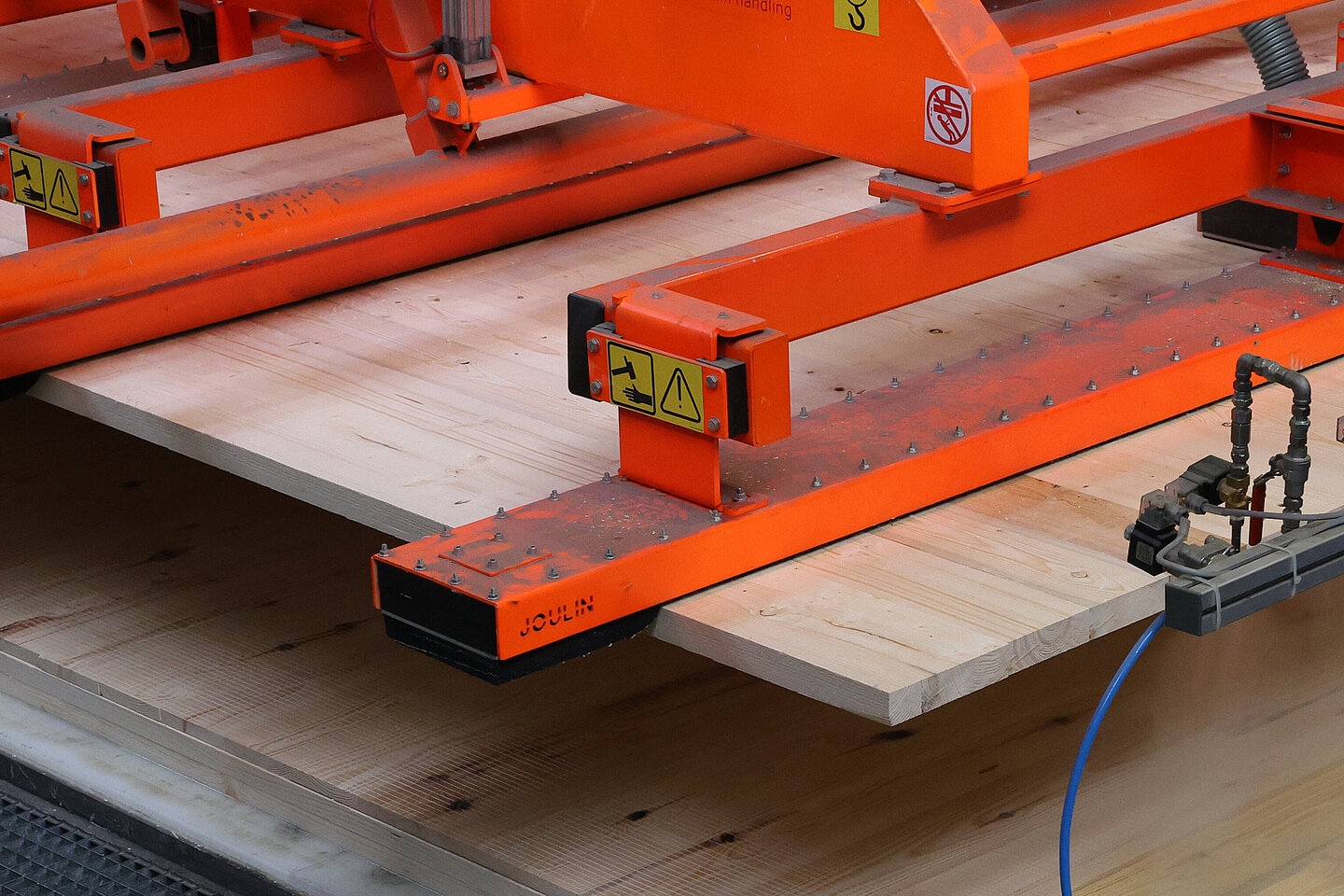
Industrial production of commercially available cross laminated timber © FLEX@HTWK Leipzig, Hannes Löschke
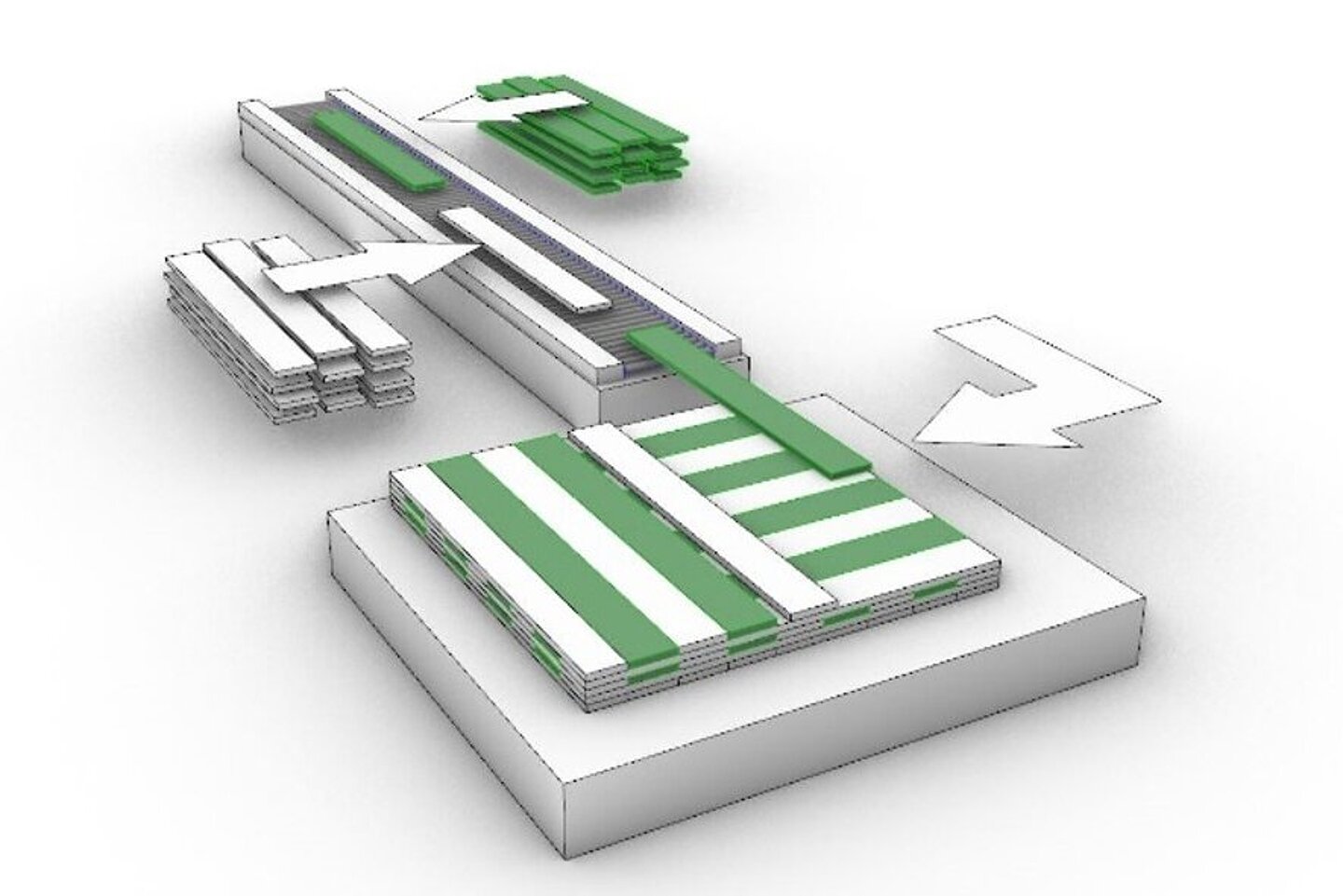
Schematic diagram of the modified production process © FLEX@HTWK Leipzig
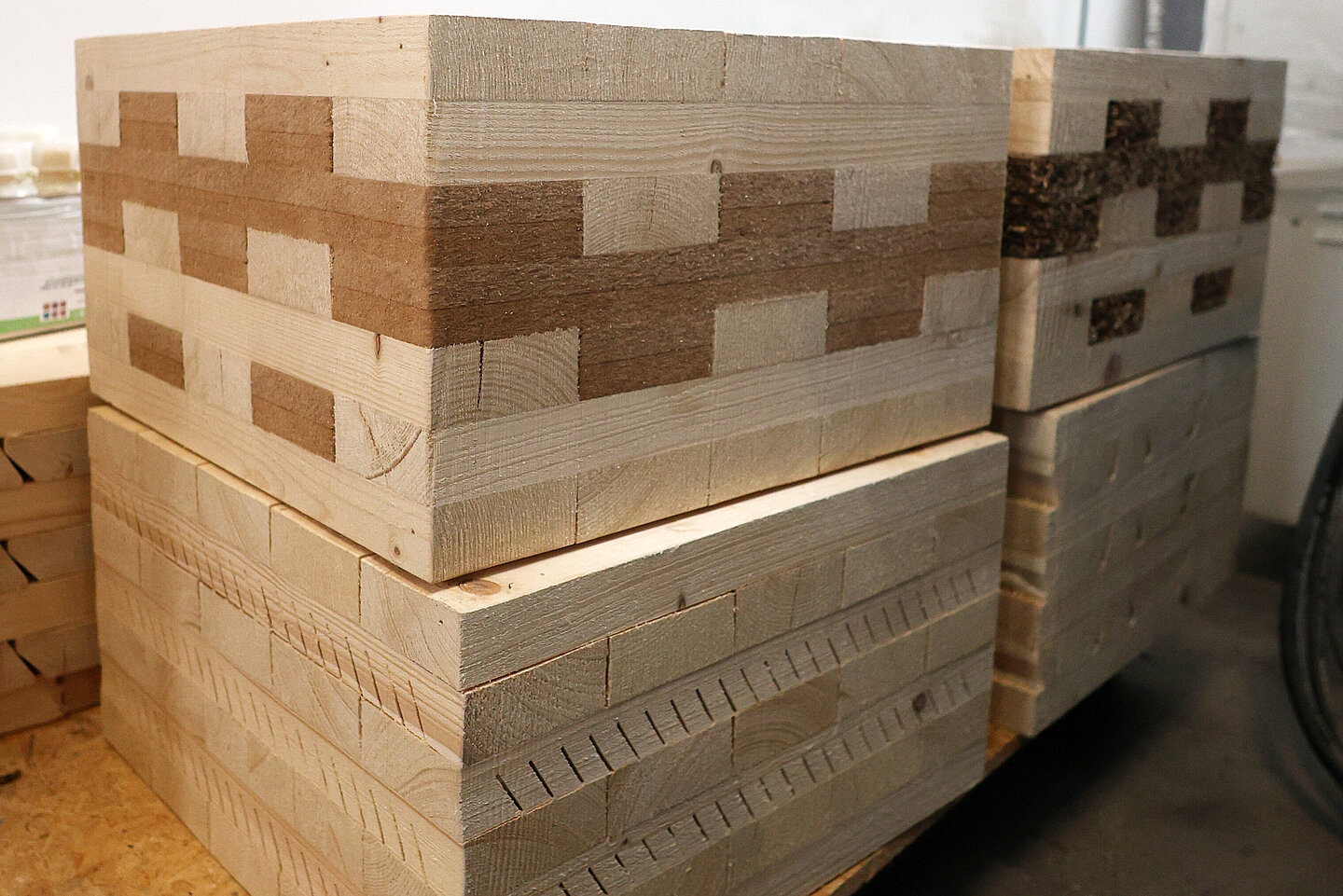
Test specimen with modified board layers © FLEX@HTWK Leipzig, Hannes Löschke
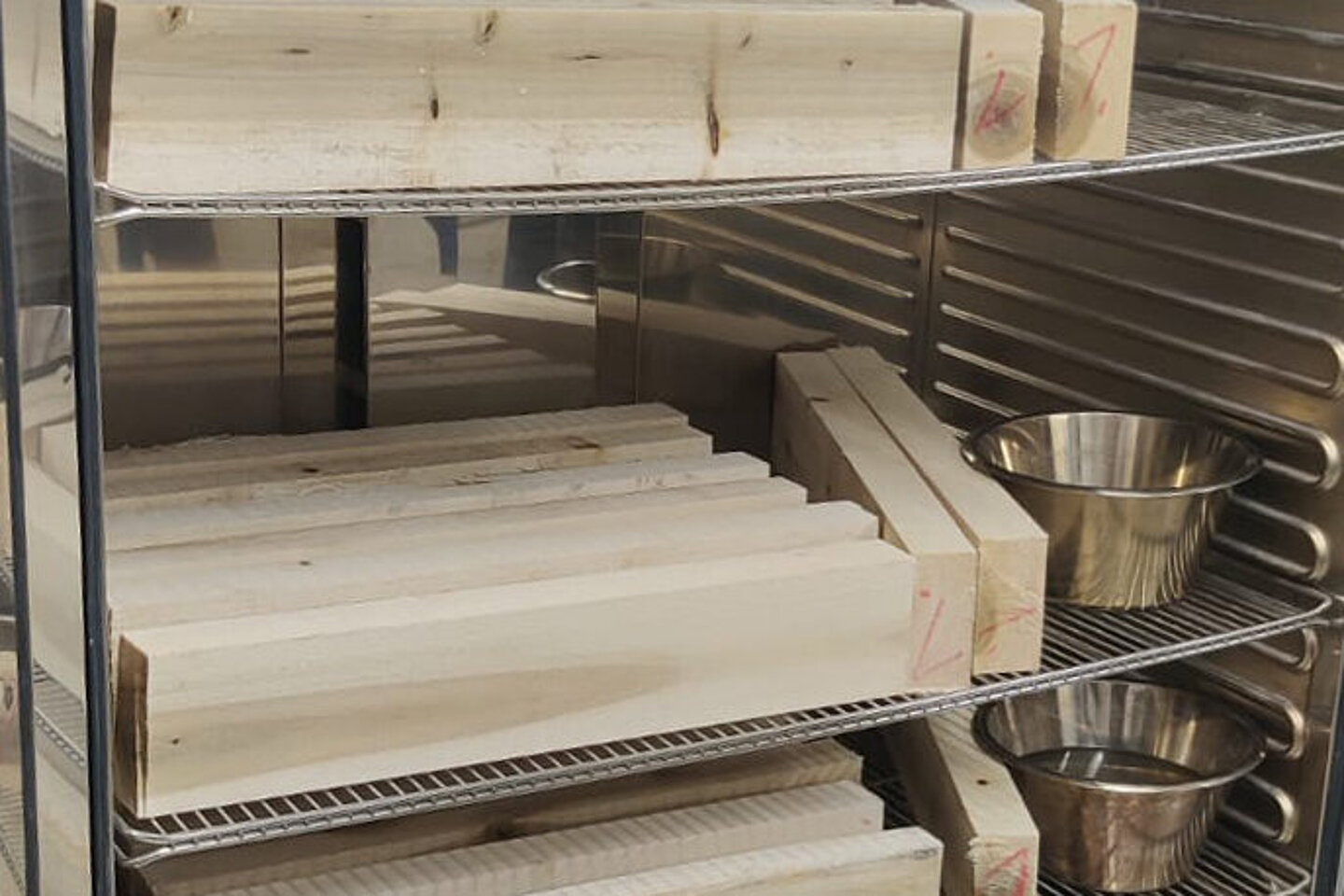
Drying poplar wood for test specimens © KOOP-Architekten & Ingenieure, Lars Christoph
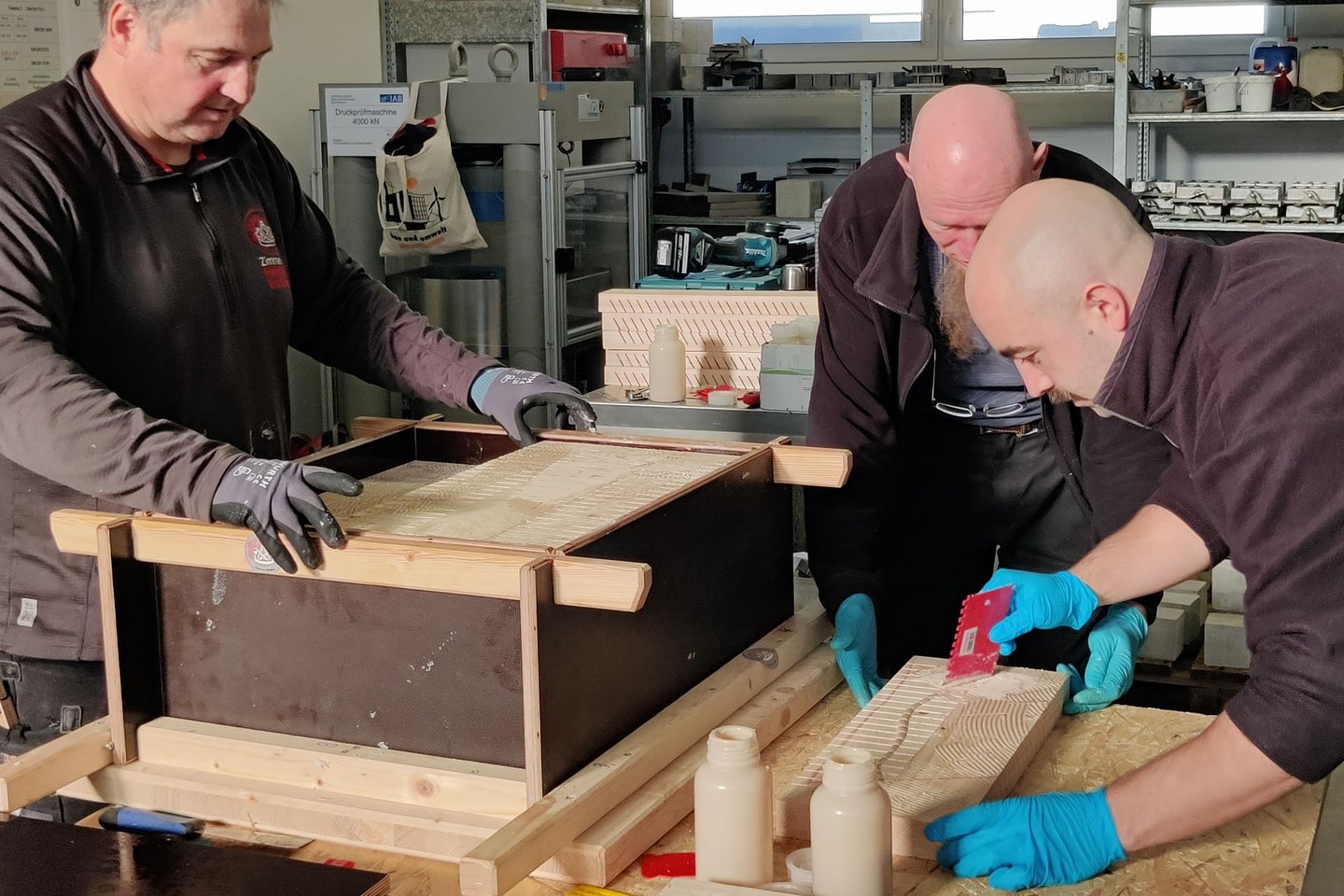
Herstellung des Probekörpers: Leimauftrag
The construction sector is facing considerable ecological and structural challenges. High greenhouse gas emissions, long and globalised supply chains and the intensive use of mineral building materials contribute significantly to climate pollution. At the same time, the need for efficiently producible, flexible and sustainable construction methods is growing. Timber construction offers great potential here, particularly through cross-laminated timber (CLT) as an industrially prefabricated, load-bearing and versatile construction element. In current practice, however, CLT production is highly centralised, technically highly standardised and can only be adapted to regional raw material availability or project-specific requirements to a limited extent. Functional properties such as thermal insulation, sound insulation or fire protection are often supplemented by additional layers and materials, which increases the use of materials, increases complexity and to some extent relativises ecological advantages. Against this background, the question arises as to how resource-efficient, regionally anchored and at the same time high-performance cross laminated timber production can be organised in the future.
The BSP-Modular joint project addresses these issues by developing an integrated concept for functionally modified cross laminated timber. The aim is to develop components that fulfil several physical and structural functions in the internal structure. To this end, variable layer structures, the targeted use of biogenic insulating materials and innovative connection concepts that are as metal-free as possible are being investigated. Central research questions concern the interactions between material, geometry, construction and manufacturing process as well as their effects on load-bearing behaviour, building physics, use of resources and carbon footprint. In addition, a digitally supported system model is being developed that maps these interdependencies and links planning decisions with production-related and ecological consequences at an early stage. Another focus is on modelling regional value chains and balancing material flows and transport routes in order to quantitatively assess the influence of regional production structures.
The FLEX research group plays a central role in the project in the development of the digital and systemic approach. FLEX's contribution includes the analysis and modelling of the process and value chain of cross laminated timber production as well as the development of an interactive, digital functional model. This model links design parameters, material properties and production logic and enables a transparent evaluation of design decisions. In addition, FLEX is responsible for the prototypical implementation of the digital tools, the integration into CAD-based planning environments and the scientific monitoring and evaluation of building physics and design analyses. FLEX thus represents the interface between research, digital planning and practical application.
A special feature of the project is the consistent combination of material research, digital planning and regional production logic. BSP-Modular does not pursue an isolated product approach, but sees cross-laminated timber as part of a networked system of forestry, planning, production and construction practice. The results should not only be tested as prototypes, but should also be transferable to real regional production structures in the future. The modular, open system approach creates a high transfer potential for other regions and fields of application in timber construction. At the same time, the project contributes to the further development of digital methods in the construction industry and to the qualification of specialists at the interface of architecture, engineering and digital production.
Keywords:Functionally modified cross-laminated timber (FMB), regional, value chain, process and system modelling, resource efficiency, timber construction production, end-to-end digital planning
Facts
Project management
- KOOP Architekten & Ingenieure
Project management
- Dipl.-Ing. Hannes Löschke
Editing
- Dipl.-Ing. Hannes Löschke
- Stefan Huth, M.A., architect
- Emily Seemann, B.A.
Co-operation partner
- KOOP Architekten & Ingenieure
- Zimmerei Hendrik Walther
Funding body
Federal Ministry of Research, Technology and Space
Project Management Organisation
Project Management Organisation Jülich (PTJ)
Project duration
05|2025 - 04|2028
Funding reference number
03WIR3609C
Funding amount
EUR 538,800 (total: EUR 1.03 million)