
RefoRe | Recycling for Reuse
Evaluation and processing of waste wood for reintroduction into the cycle
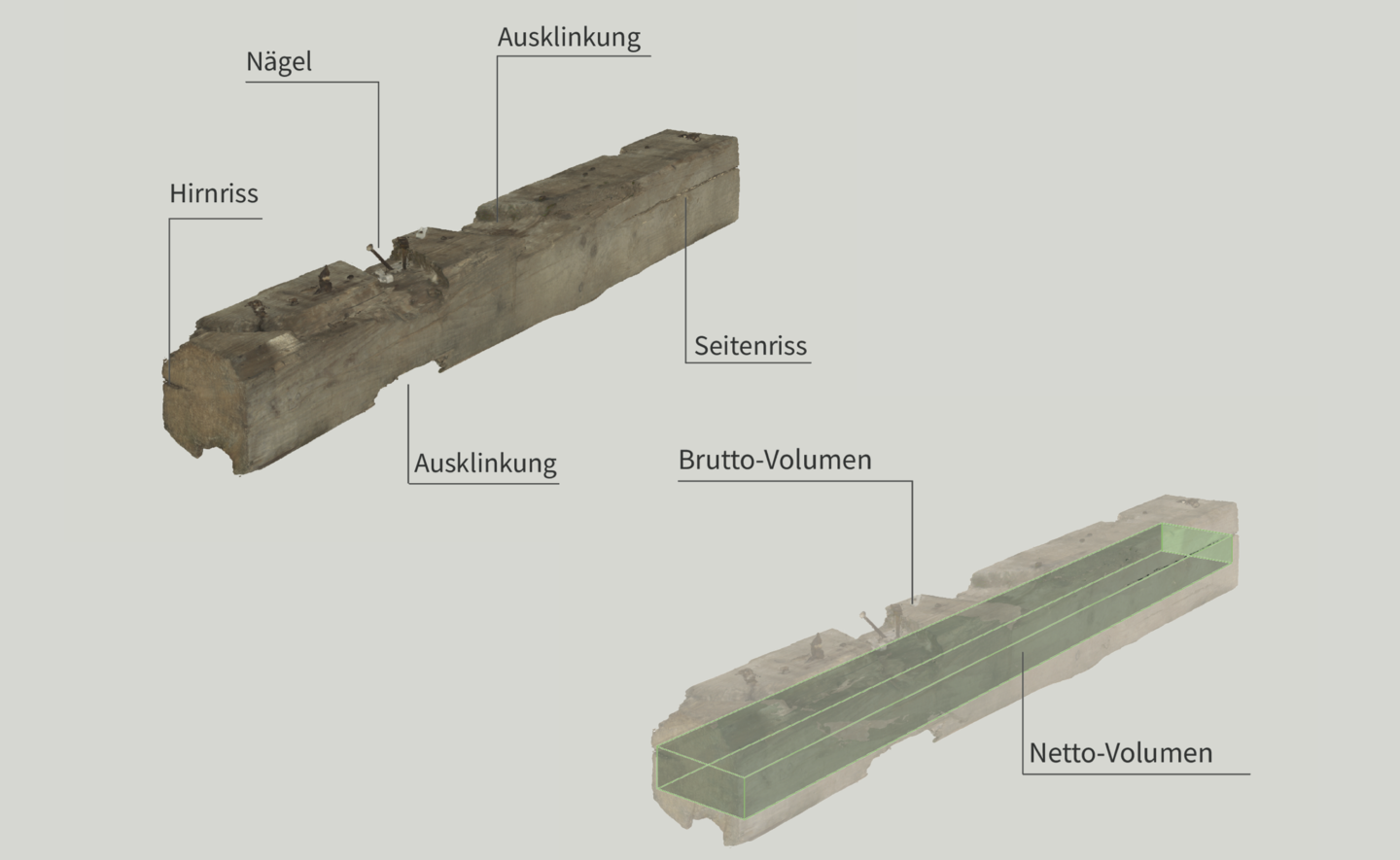
Determining the reusable cross-section within the 3D scanned component © FLEX@HTWK Leipzig, Luisa Sander
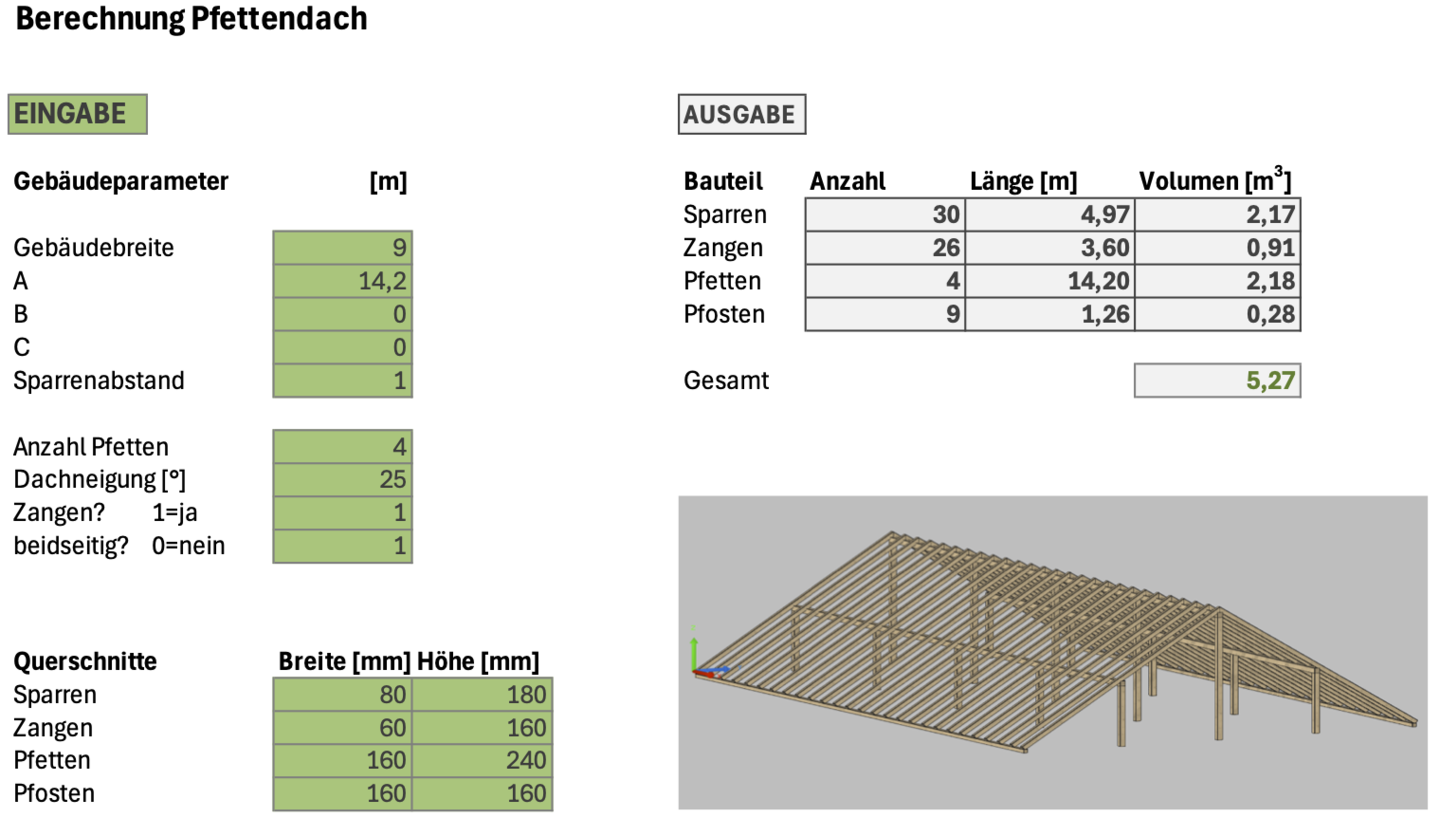
Calculation for predicting the amount of waste wood in roof structures © FLEX@HTWK Leipzig, Henri von Mulert, Benedikt Adrian
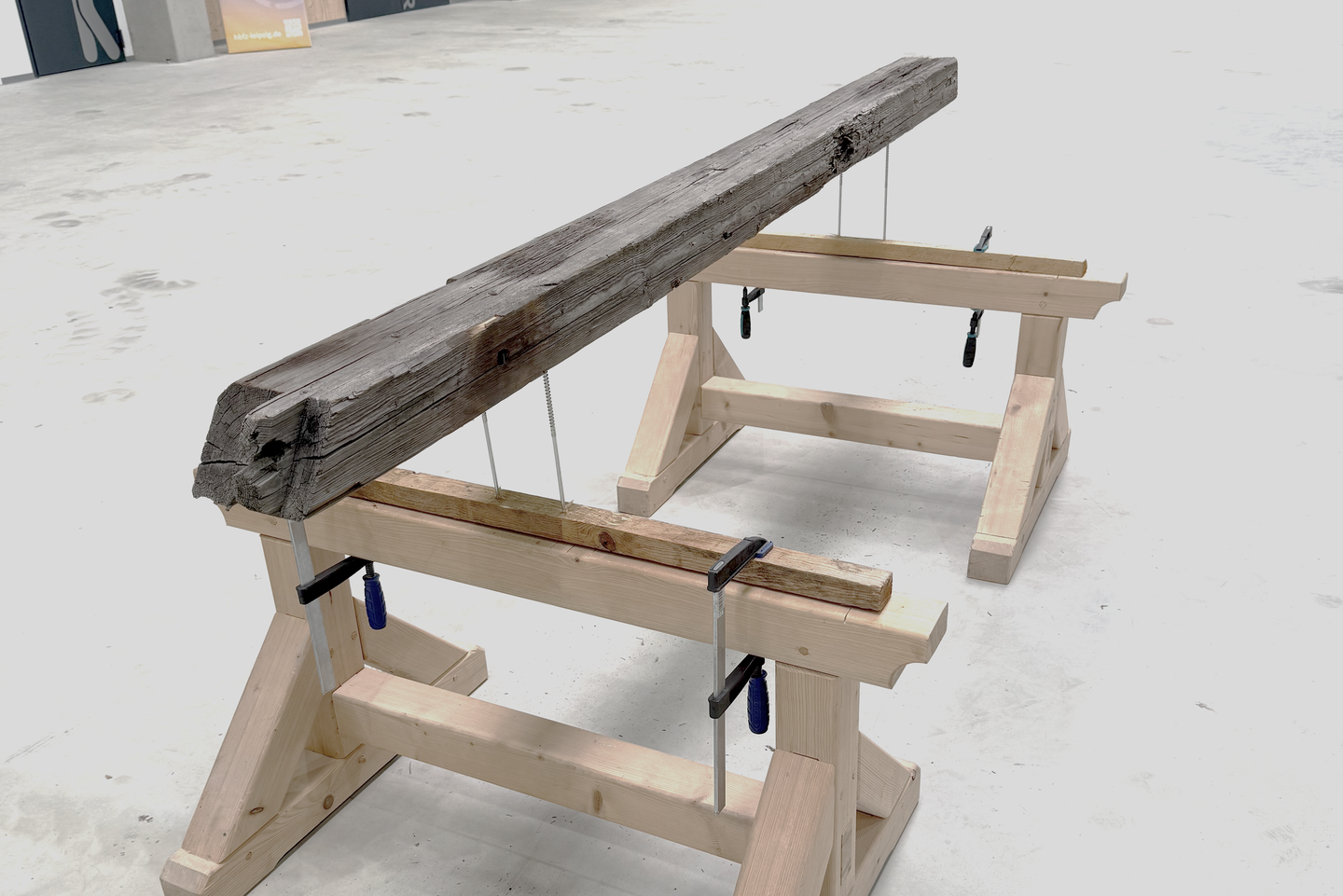
Test setup for the 3D scan of old wooden beams © FLEX@HTWK Leipzig, Luisa Sander
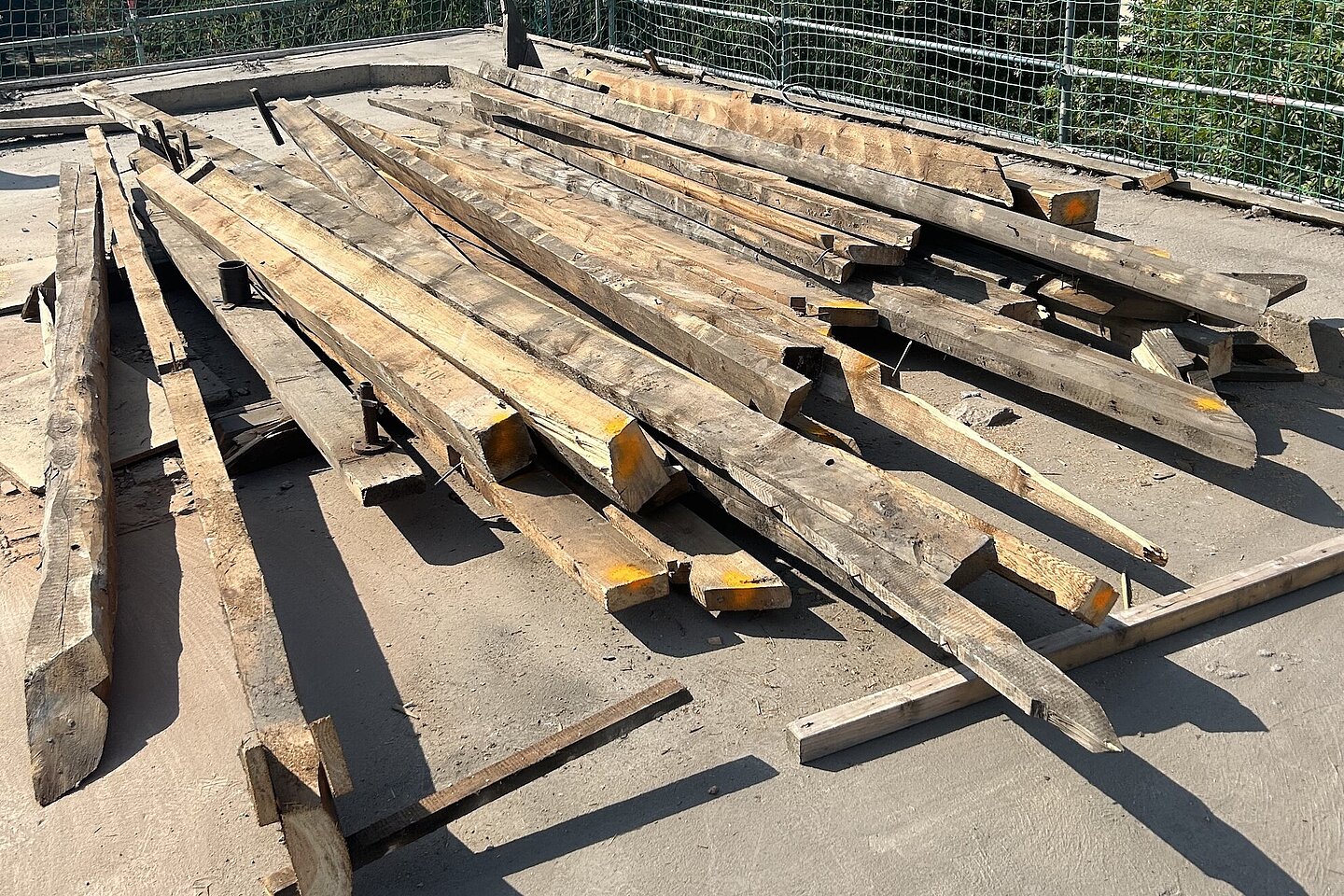
Old wooden beams of a roof truss deconstruction © FLEX@HTWK Leipzig, Luisa Sander
In Germany, between 7 and 8 million tonnes of waste wood are produced every year. The greatest potential for reuse, at approx. 32.6% (2.4 million tonnes), is the waste wood (from roof trusses, ceiling beams, etc.) from construction and demolition work (Döring and Mantau, 2018). Currently, only around 20 % of waste wood in Germany is utilised as material, with a share of approx. 48 % in chipboard. After the first utilisation phase, the remaining proportion is currently mostly sent directly for so-called "energy recovery".
Against the background of growing social interest in sustainable timber construction, the resulting increase in wood consumption and the already extremely high "utilisation rate" of the renewable raw material, the reuse of waste wood is increasingly becoming the focus of interest. However, the strategy of cascade utilisation in the sense of "extending" the material cycle of wood, which was conceived several years ago, has hardly been used to date.
The aim of the project is to develop strategies for the most comprehensive and high-quality reuse of timber components from the demolition of buildings. The aim is to define qualitative and quantitative standards that enable the safe return of waste wood to the building materials cycle. The aim is to increase the motivation to utilise waste wood in secondary building applications. The prerequisite for this is that the reclaimed and processed wood is free of harmful and impurities and achieves reliable strengths so that it can be used again in accordance with building regulations.
The research group FLEX research group is developing a concept for the systematic recording of dimensions and damage characteristics of reusable timber components from roof trusses, timber framing and timber beam ceilings. On this basis, a model is being developed that predicts the usable proportion of reclaimed timber beams. In addition, a logistics concept for procurement, sorting and transport is being developed. In addition, approaches will be developed to integrate waste wood-based components into construction planning processes in a legally secure manner in order to make the use of wood more efficient and practicable in the future.
Keywords: waste wood, waste wood beams, recycling, cascade utilisation, timber construction, existing timber constructions
Facts
Project management
- Prof. Dr.-Ing. Alexander Stahr
Project management
- Luisa Sander, M.A.
Editing
- Luisa Sander, M.A.
- Benedikt Adrian, M.Sc.
- Henri von Mulert, B.Eng.
Co-operation partner
- Institute for Building Construction and Timber Engineering (IB Holz)
- Fraunhofer Institute for Wood Research
Wilhelm Kauditz Institute (WKI)
- Institute for Machine Tools and
Manufacturing Technology (IWF)
- Ing.-Holzbau SCHNOOR GmbH
- RINNTECH-Metriwerk GmbH & Co. KG
- Peiner Entsorgungsgesellschaft mbH
- Nibelungen Wohnbau GmbH
- MiCROTEC Srl
- Schumann-Analytics
Funding body
Federal Ministry of Agriculture,
Food and Home Affairs (BMLEH)
Project management organisation
Agency for Renewable Resources (FNR)
Project duration
01|2024 - 12|2026
Funding code
2221HV031C
Funding amount
180,762.48 EUR HTWK Leipzig