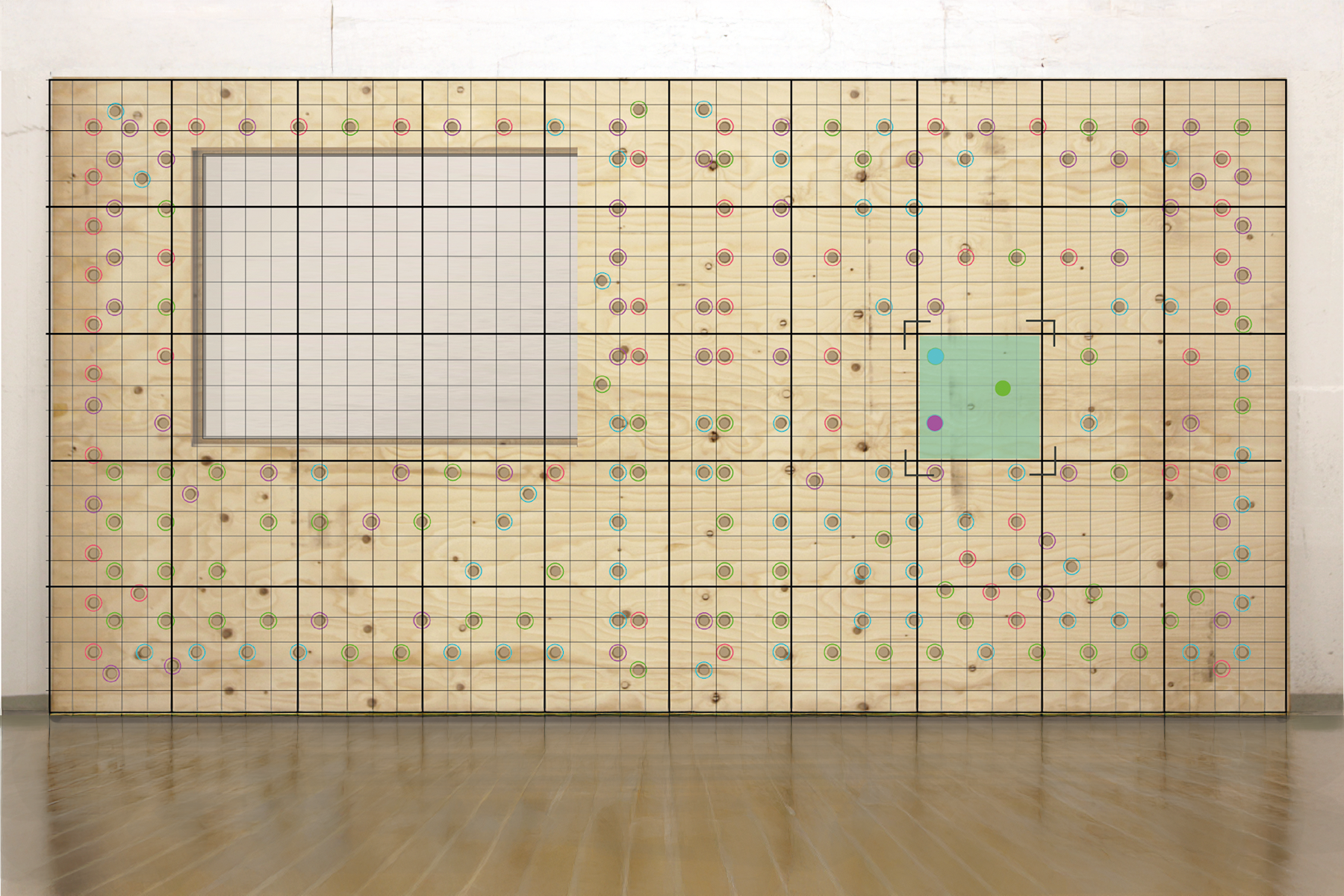

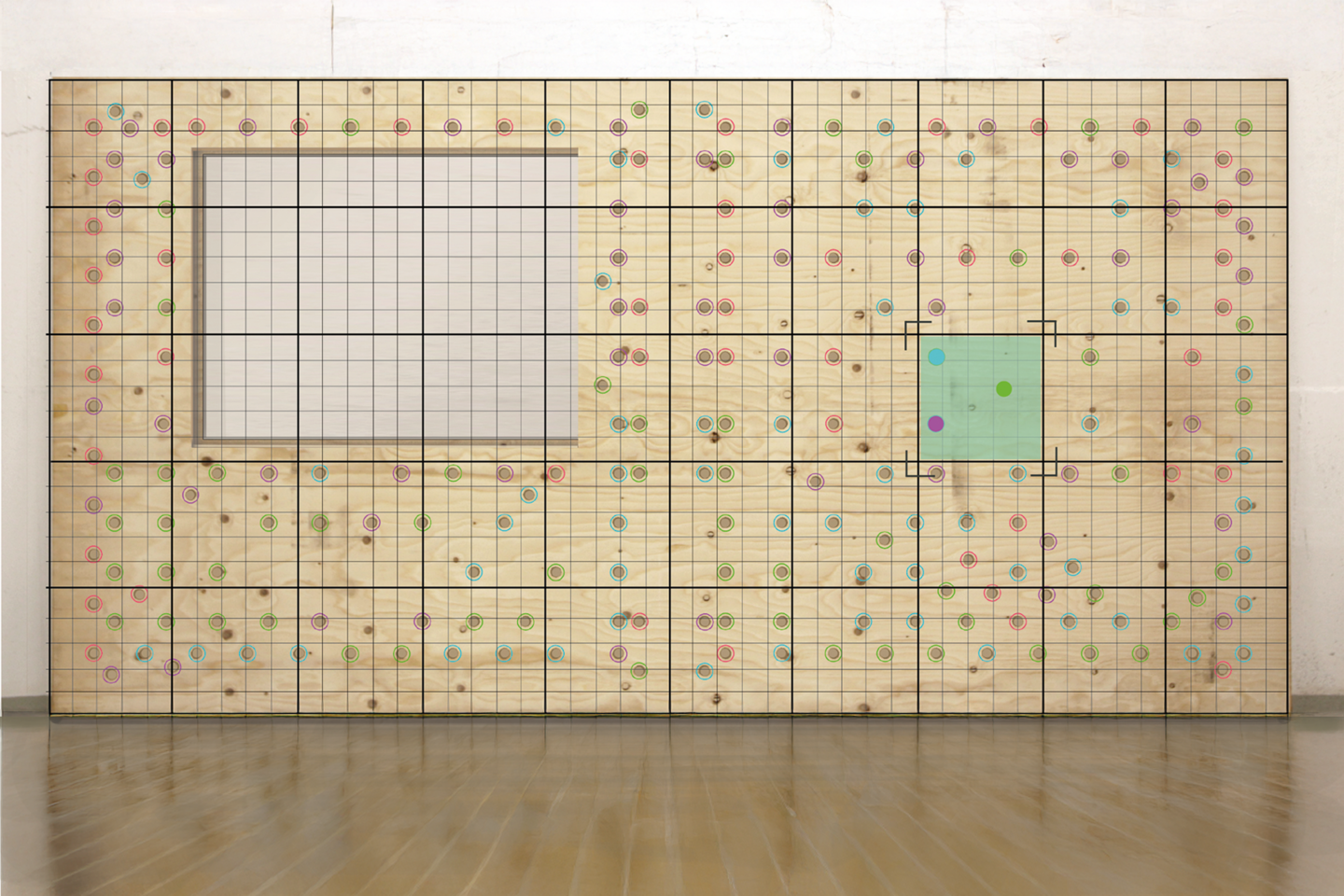
Visualisation of the zoning and coding of an IDS wall as the basis for the machine learning-based training of the dowel agents, © FLEX@HTWK Leipzig, Felix-Schmidt-Kleespies
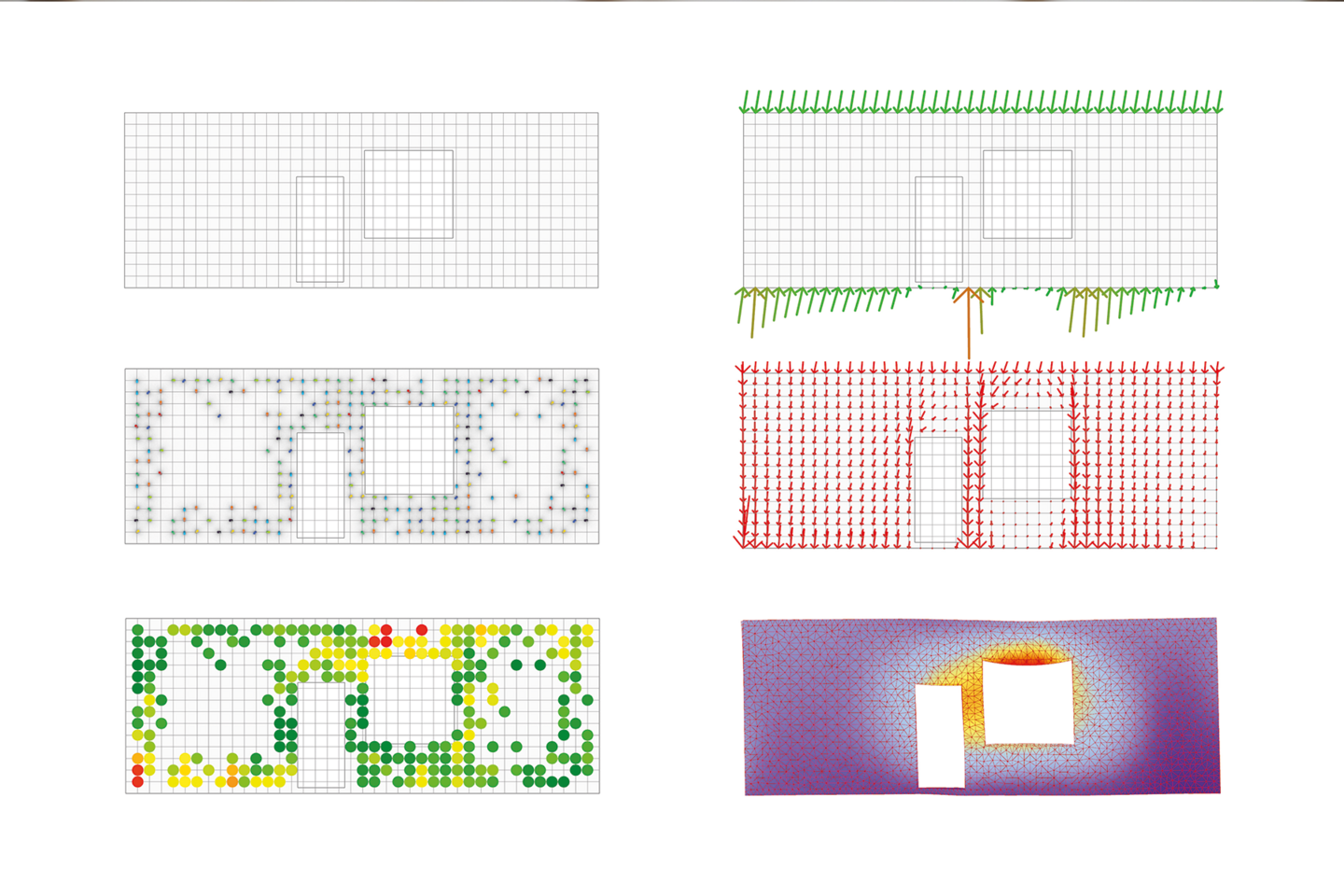
FEA simulation of a simplified model of three dowels connected to a plate by a positive-fit connection, © FLEX@HTWK Leipzig, Cristoph Dijoux
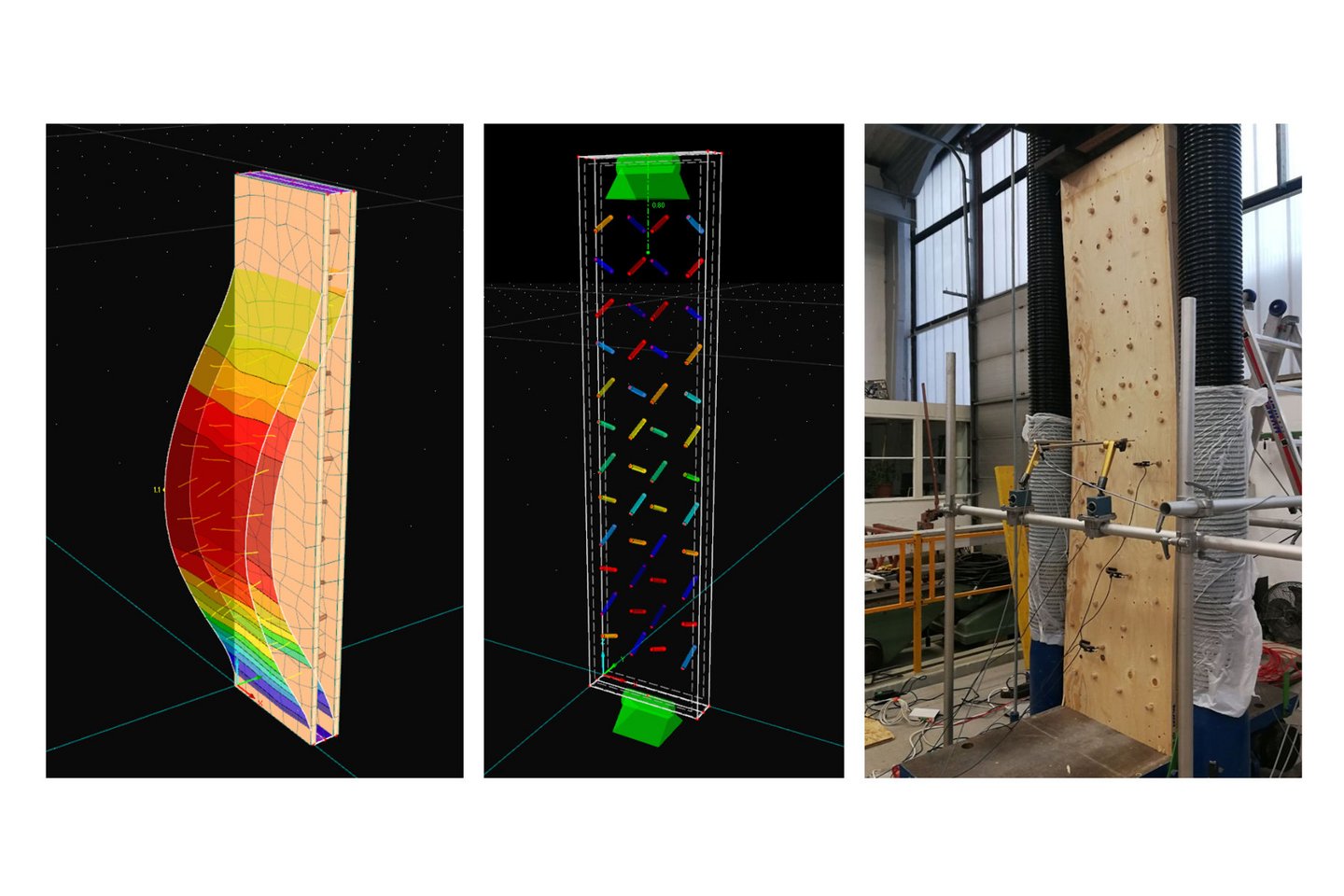
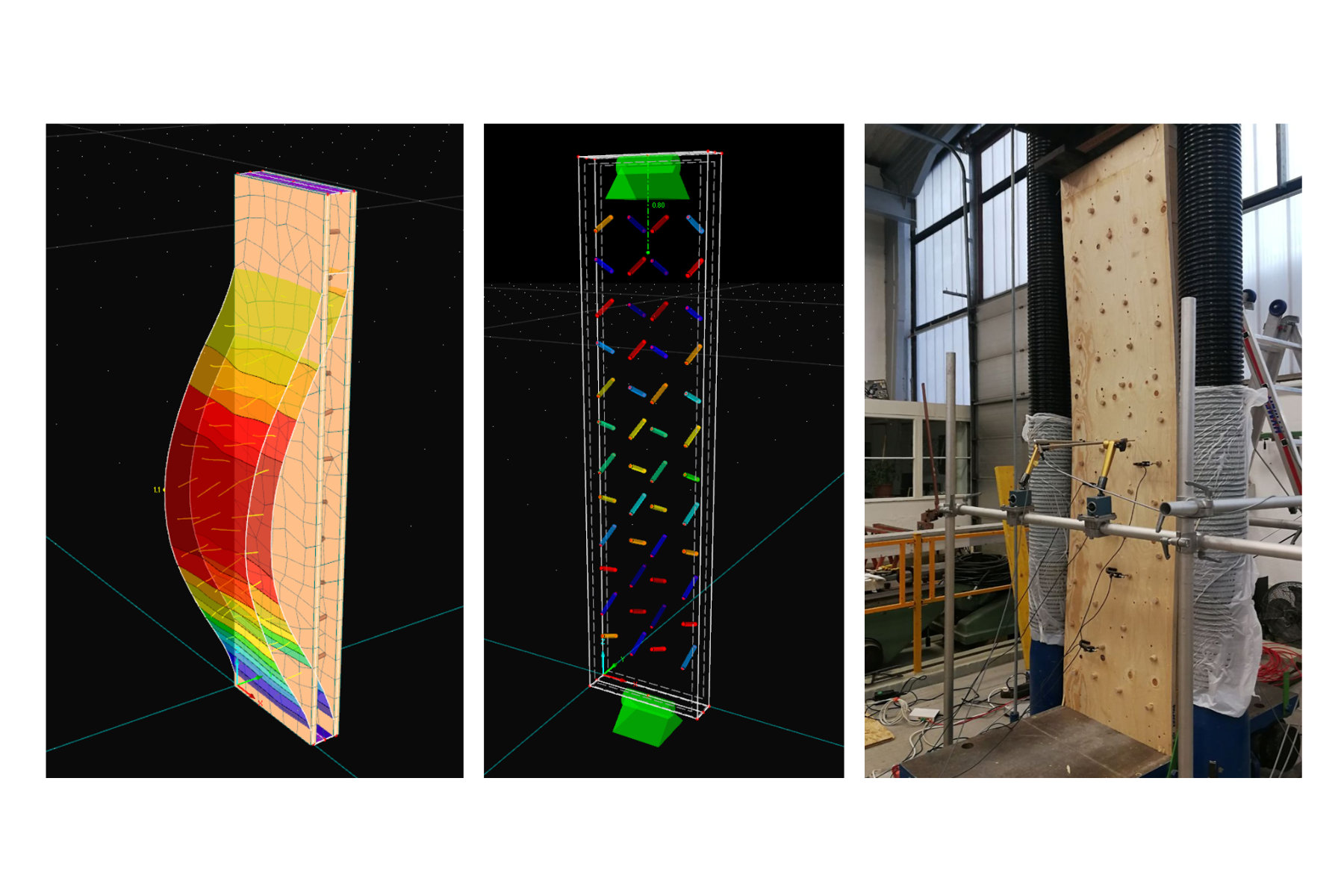
Prototype production of a cluster-like dowel arrangement. Copyright © FLEX@HTWK Leipzig, Felix-Schmidt-Kleespies
The design processes involved in timber panel construction are often time-consuming and require a wide range of manual, iterative work and processing steps during design and dimensioning. This frequently results in resource-intensive design work and unsatisfactory outcomes in terms of achieving the most economical and efficient use of materials. In particular, the numerous closely interlinked manual processes involved in the design of customised timber panels present a major organisational and engineering challenge.
The aim of the research project is to develop a planning methodology using machine learning (ML) algorithms. This methodology is intended to integrate structural, structural analysis and manufacturing elements into process steps that can be automated. The development of the ML-supported planning tool is intended to simplify and speed up the existing processes. Particular focus is placed on the Interlocking Dowel System (IDS), an innovative construction method that utilises wood-based panels and angularly interlocked wooden dowels without the need for additional metal fasteners. To this end, machine learning (ML) is used to infer suitable partial solutions and assemble these into the desired load-bearing structures (see Figs. 1 and 2). The focus here is on the extent to which ML algorithms can be integrated into CAD software and parametric geometric models, thereby enabling more precise and efficient designs of monomaterial wall elements.
The research is being driven forward through close collaboration between FLEX (Research, Teaching and Experiment) and LaBP (Laboratory for Biosignal Processing). Both research groups are based at HTWK Leipzig. LaBP leads the project from an organisational perspective and is responsible for the training, development and implementation of machine learning methods within the project. FLEX contributes its expertise in digital design and manufacturing methodology, particularly in integrating machine learning into CAD software, robotic manufacturing and parametric geometric models. The collaboration between FLEX and LaBP ensures the comprehensive utilisation of interdisciplinary expertise and resources to effectively achieve the project’s objective.
The research project forms part of the activities of the Leipzig Timber Construction Research Centre. The centre has robotic manufacturing technology at its disposal to put the developed concepts into practice (see Fig. 3). Organisational aspects, such as the coordination of the various work packages and the allocation of resources, are managed by the interdisciplinary team through close and trusting collaboration. Regular meetings and progress reports serve to monitor progress, ensuring that the work is continuously aligned with the defined content and time-related objectives. The Research and Transfer Centre (FTZ), based at HTWK Leipzig, provides the organisational framework for the project.
Keywords: timber construction, sustainability, robotics, machine learning, AI, optimisation, parametric design, simulations, FEM, experiments, IDS