
InNoFa and AMiCo | Individual Node Facade and Additive Manufacturing in Construction
Customised 3D-printed nodes for resource-efficient free-form structures
InNoFa Demonstrator
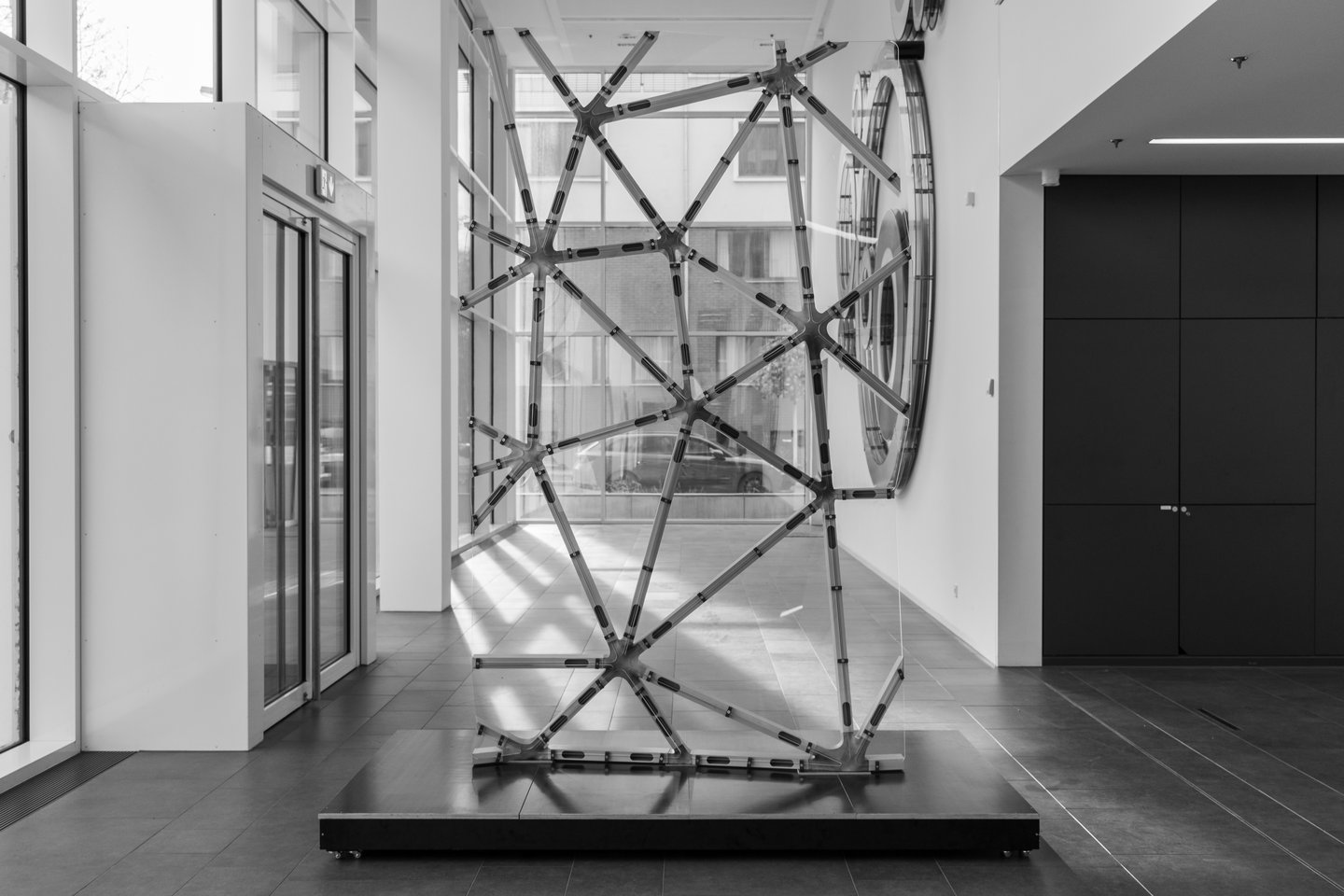
InNoFa Demonstrator
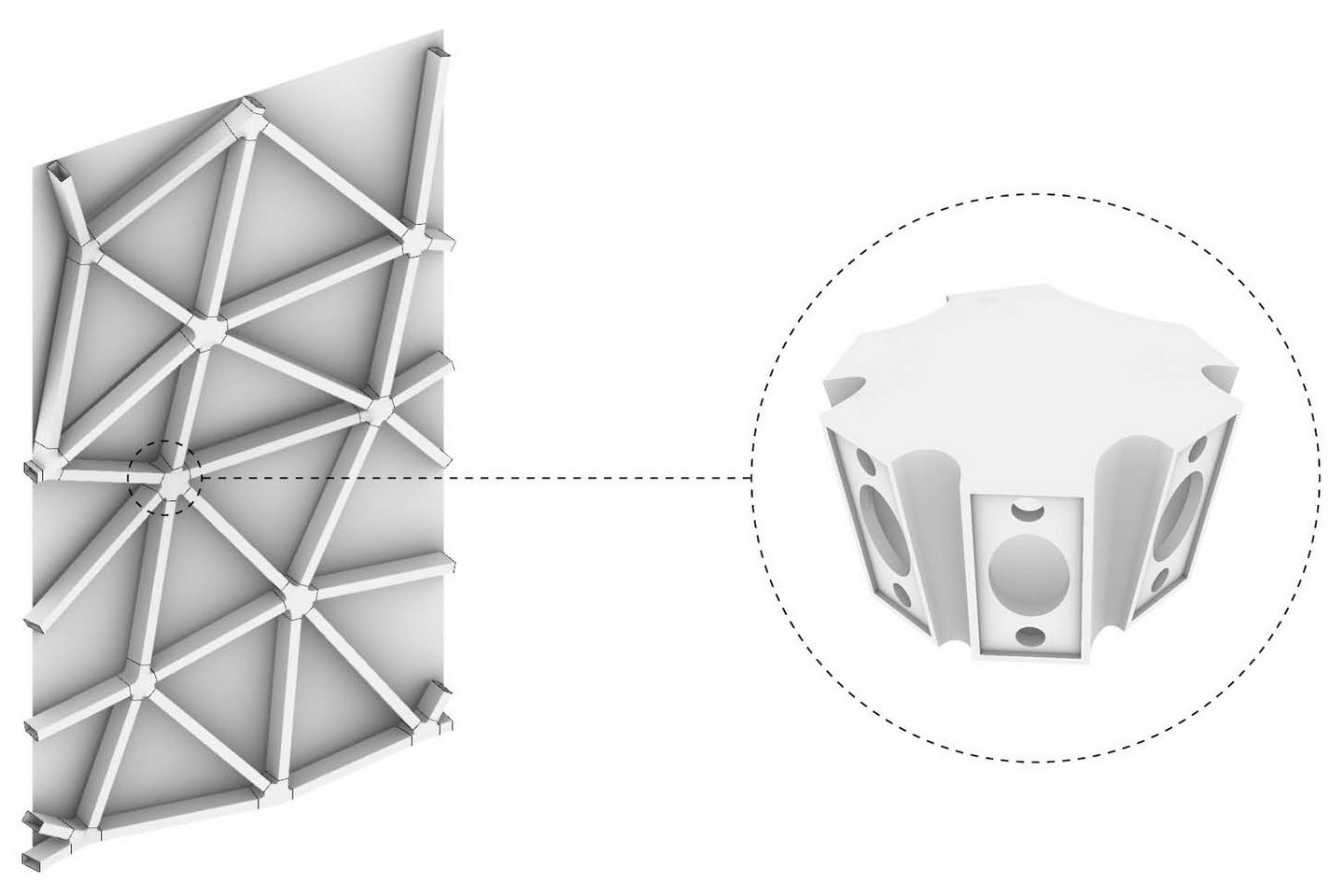
Nodes in the design
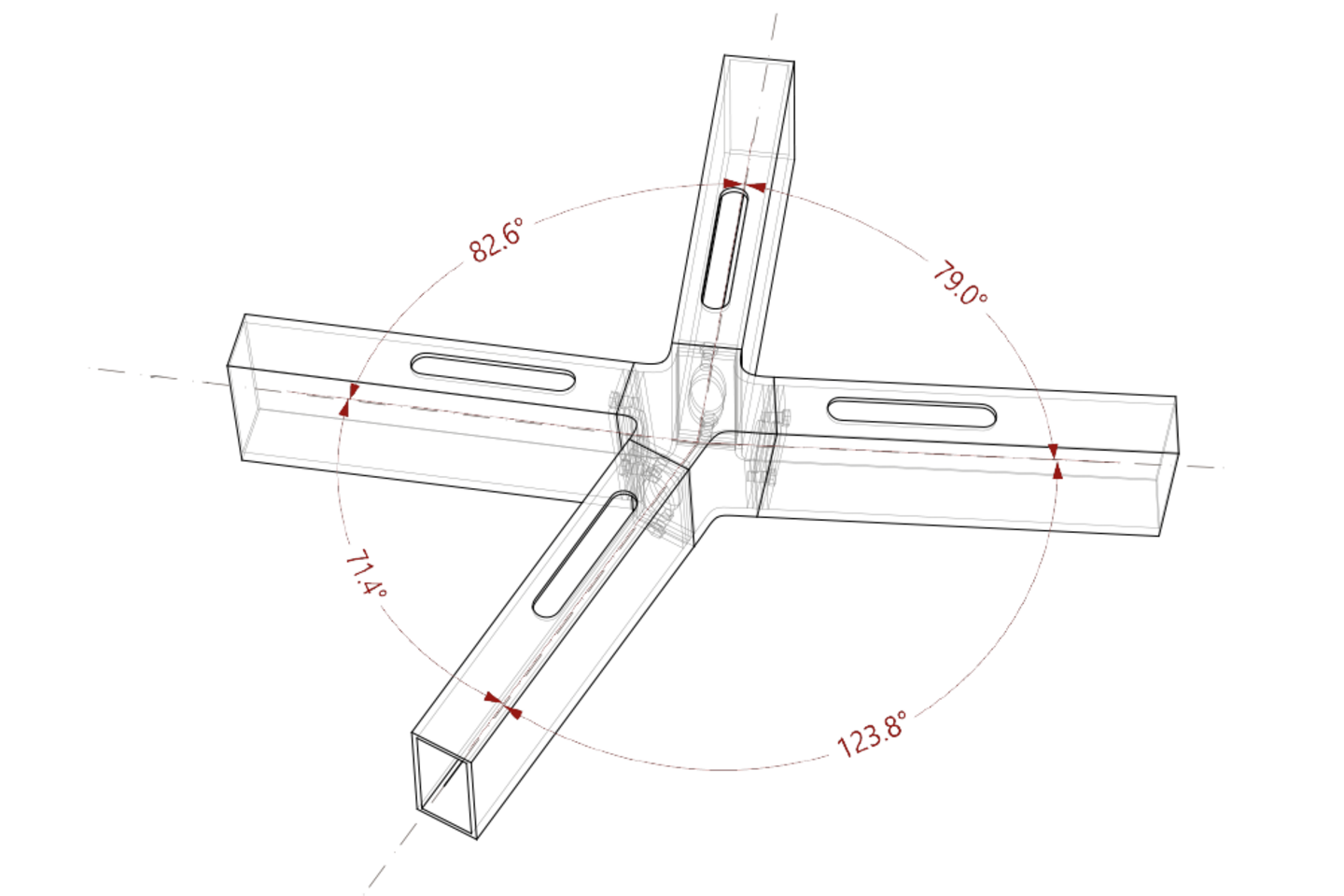
Geometric complexity and individuality in the knot
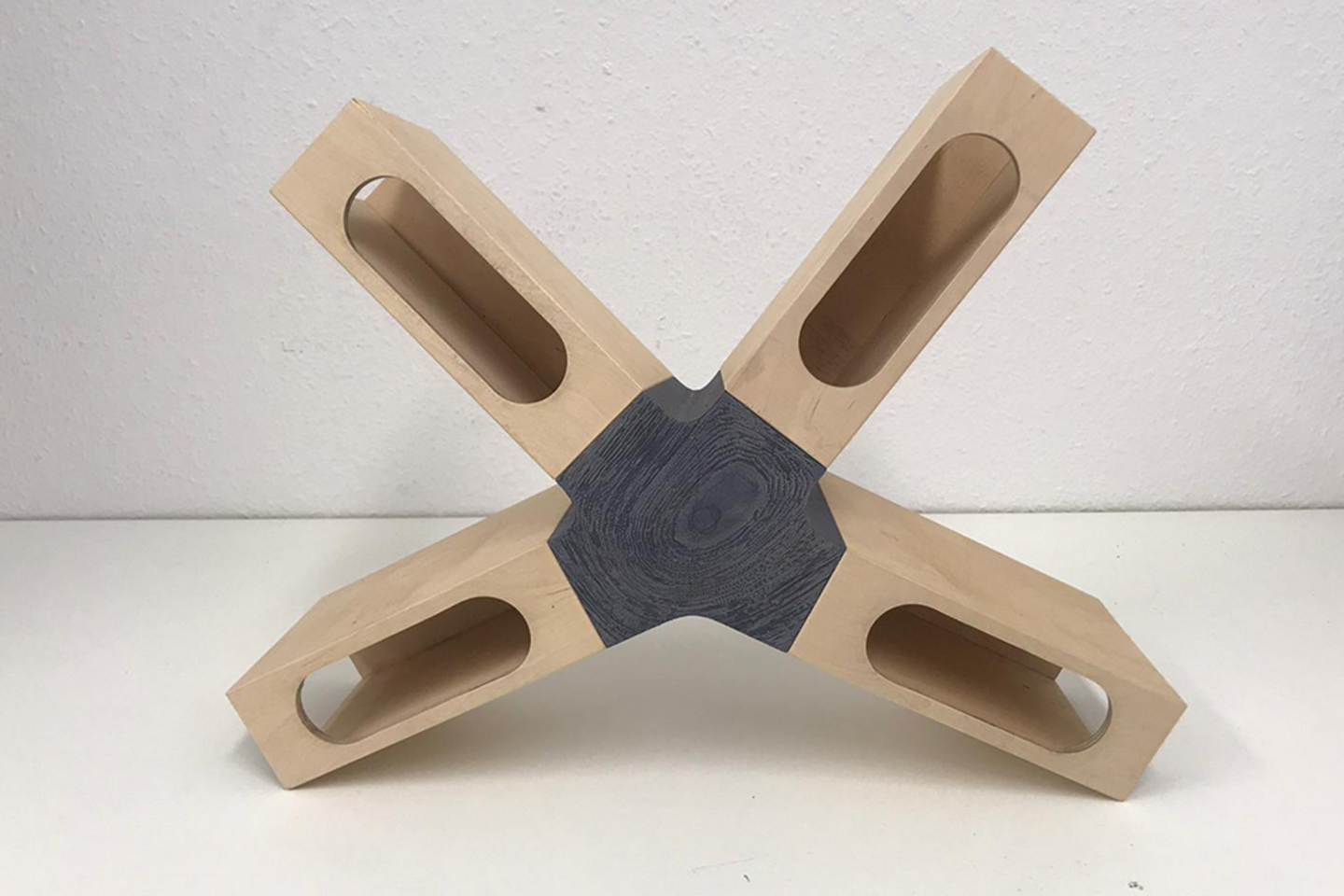
Prototype
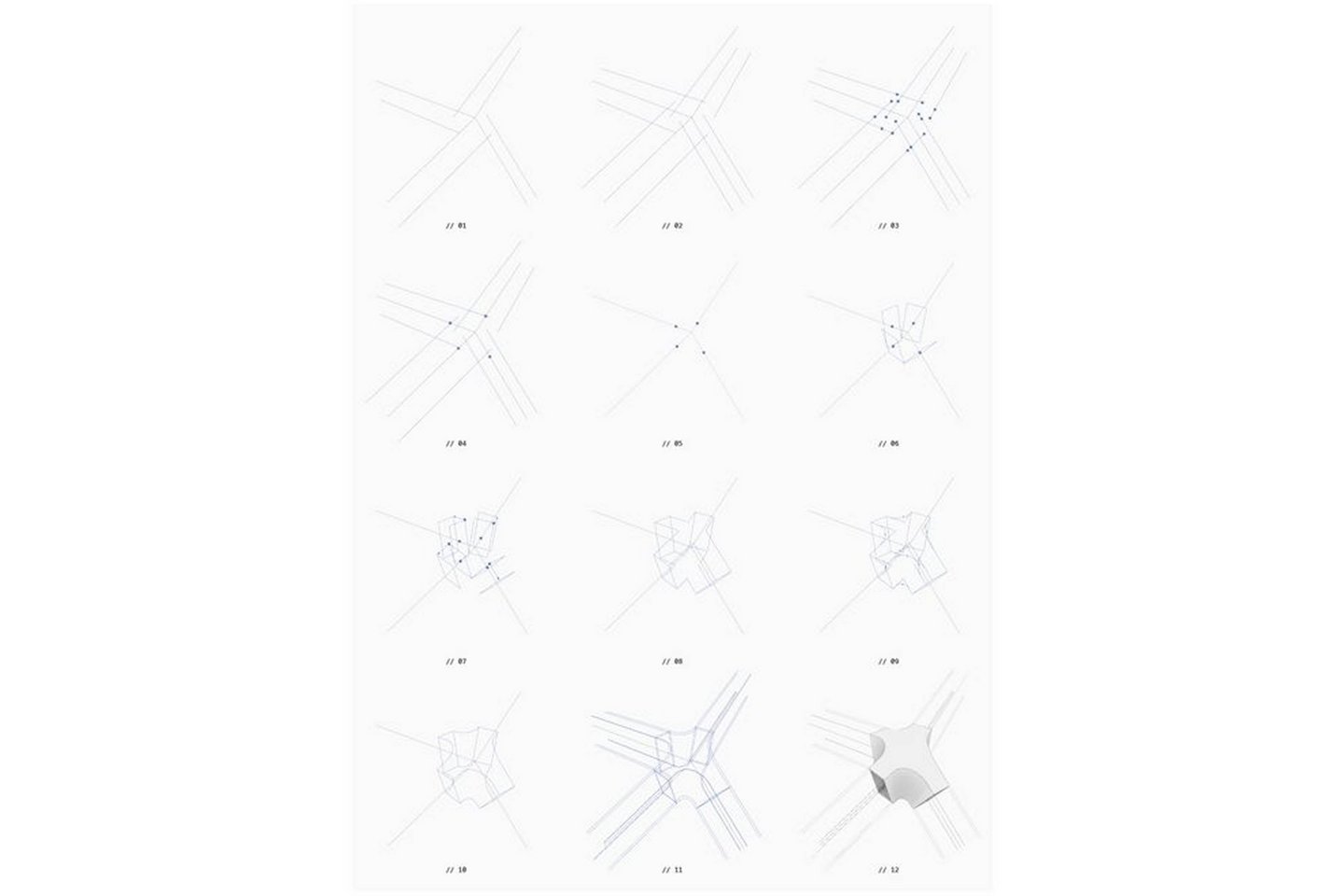
Sketches/Process
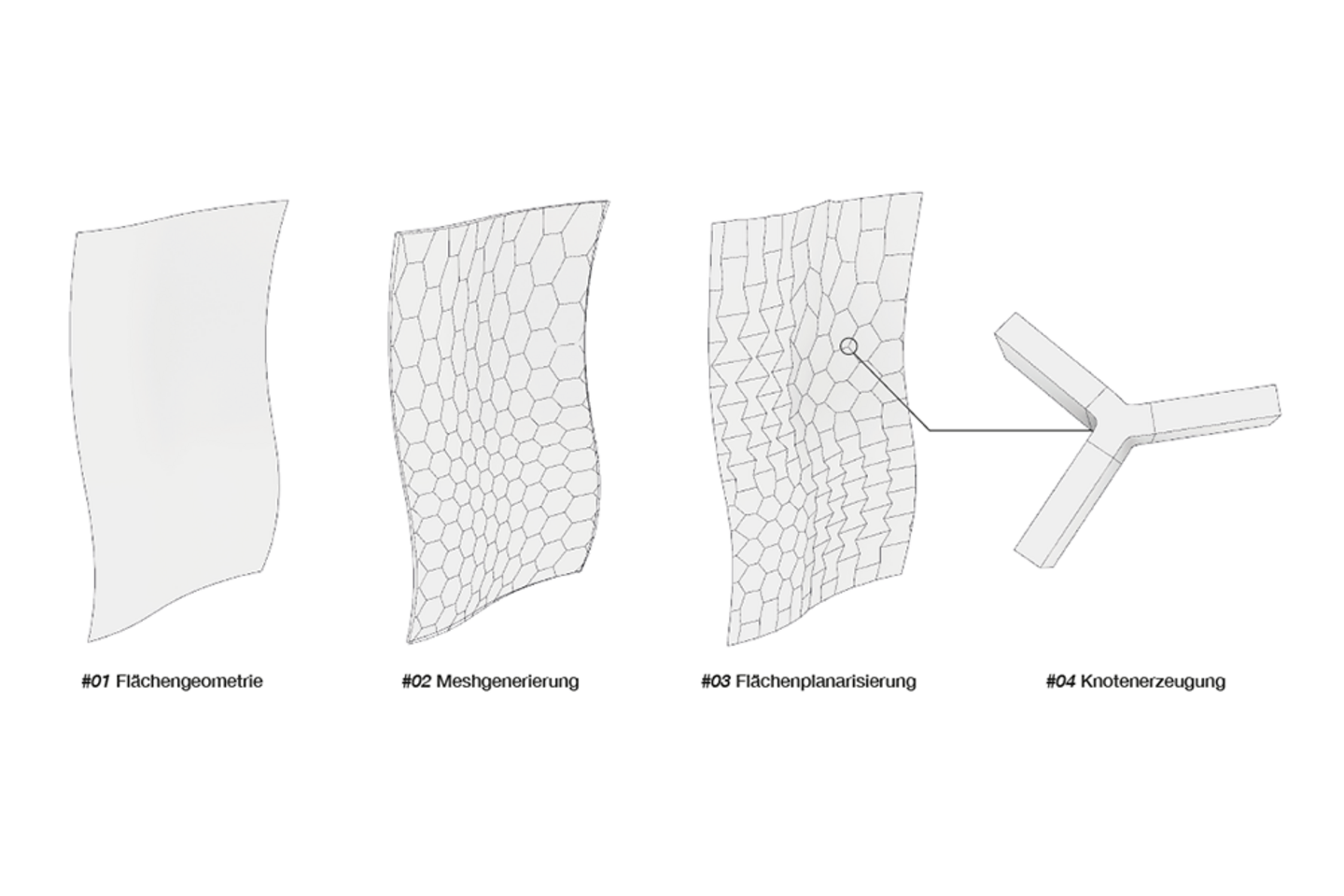
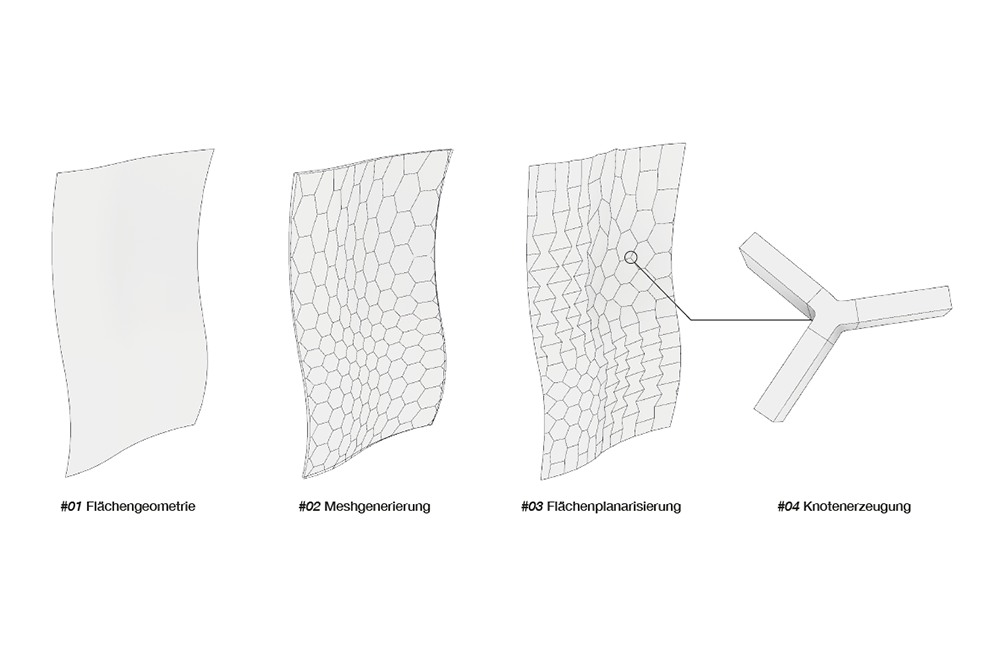
Translation of surface geometry into a node structure
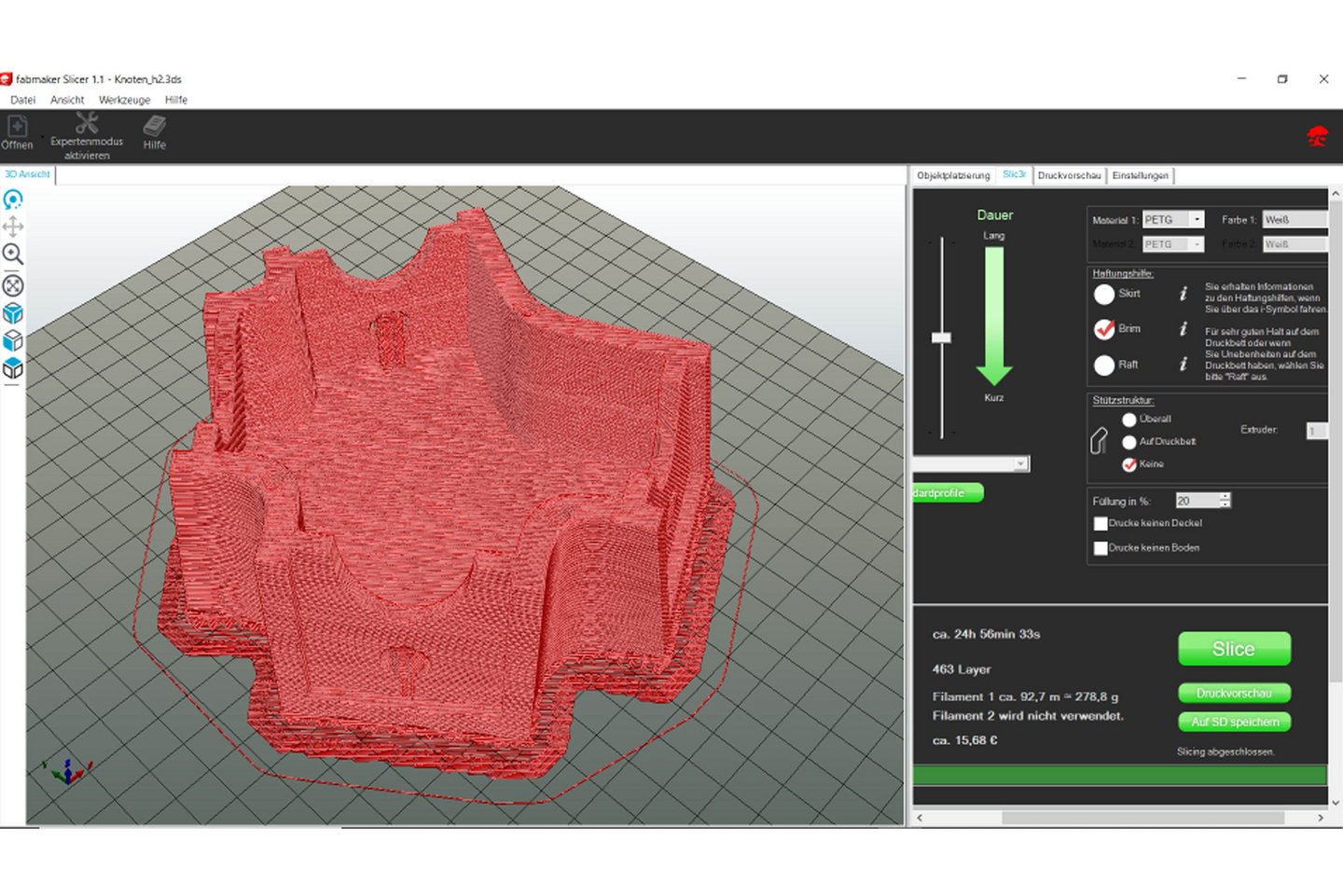
digital planning
The potential for lightweight construction offered by double-curved free-form structures often remains untapped in practice, as conventional manufacturing methods are too expensive and labour-intensive. The construction industry is therefore dominated by material-intensive standard solutions, which come at the expense of design freedom. The InNoFa and AMiCo projects overcome this conflict through a novel hybrid approach: the combination of standard industrial bars and additively manufactured connection nodes is intended to enable the cost-effective and resource-efficient realisation of highly complex architecture.
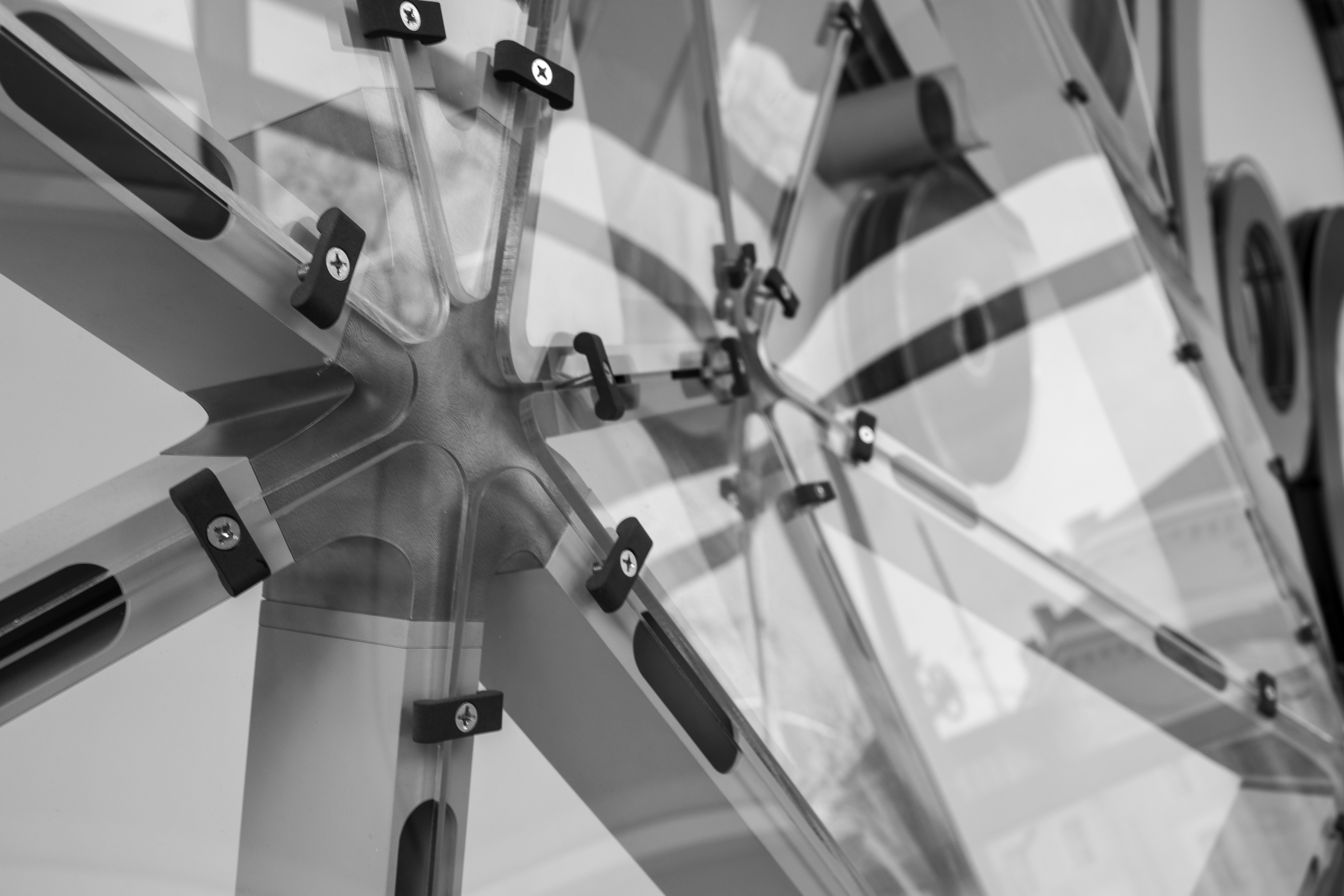
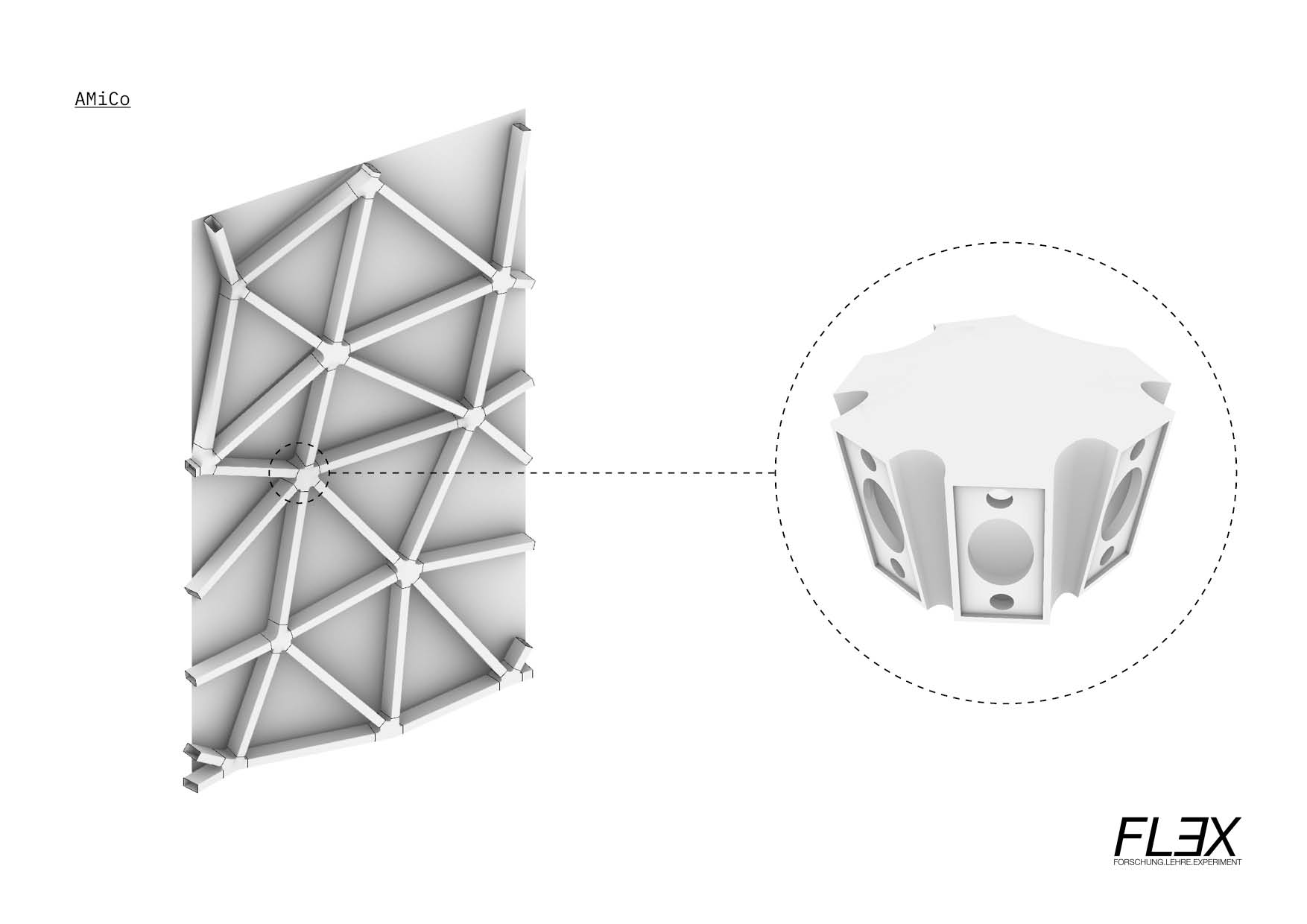
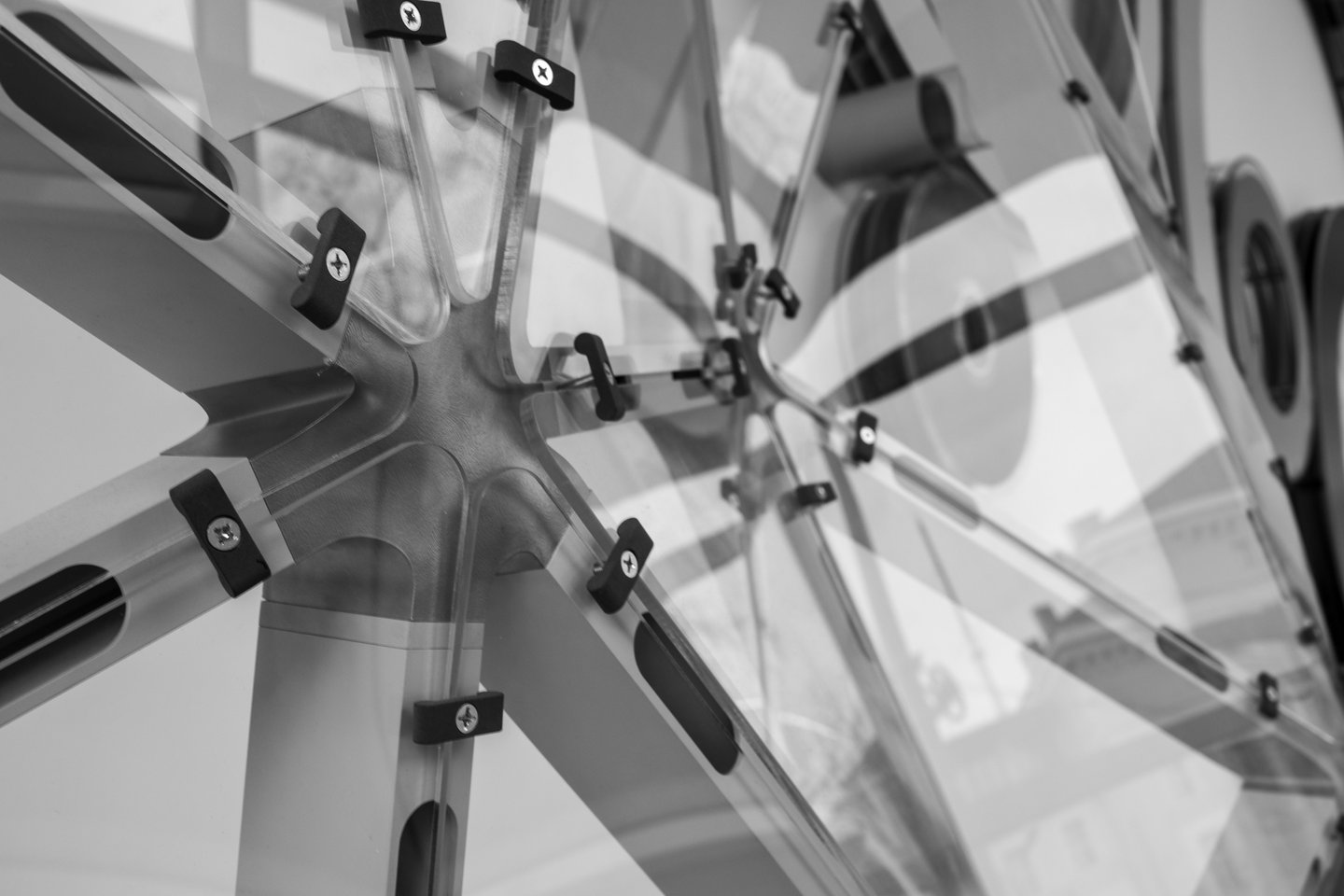
The development of this series of projects is based on the ‘ParaKnot3D’ system. The AMiCo project is responsible for the underlying IT and theoretical groundwork. Its task lies in the mathematical description and the automated generation of three-dimensional, printable construction data (see Figs. 7 and 8). The InNoFa collaborative project, built upon this, translated this theory into structural engineering practice and professionalisation. As part of InNoFa, the seamless digital workflow was applied to a real-world, large-scale application scenario, in which a polymorphic façade section was designed and implemented (see Figs. 1 and 2).
The underlying methodology concentrates the entire geometric complexity of the structural framework locally on the node connections produced by 3D printing (see Figs. 3 and 4), ensuring that the standard members all retain the same length despite the structure’s amorphous overall shape. To make this technology market-ready, it was significantly further developed as part of the InNoFa 2.0 project. The previous, cost-intensive SLM (Selective Laser Melting) technology for aluminium was replaced by the newly developed ‘coarse-grain’ process in collaboration with the Laser Institute at Mittweida University of Applied Sciences. Instead of fine powder, coarse steel granules are selectively fused together using high-power laser energy. This reduces printing time significantly and drastically lowers material costs, making the process suitable for macroscopic components. This series of work has resulted in a practical digital process chain, the effectiveness of which is demonstrated by the demonstrator publicly exhibited at HTWK Leipzig.
Keywords: Additive manufacturing, 3D printing, coarse-grain process, hybrid load-bearing structures, resource efficiency