
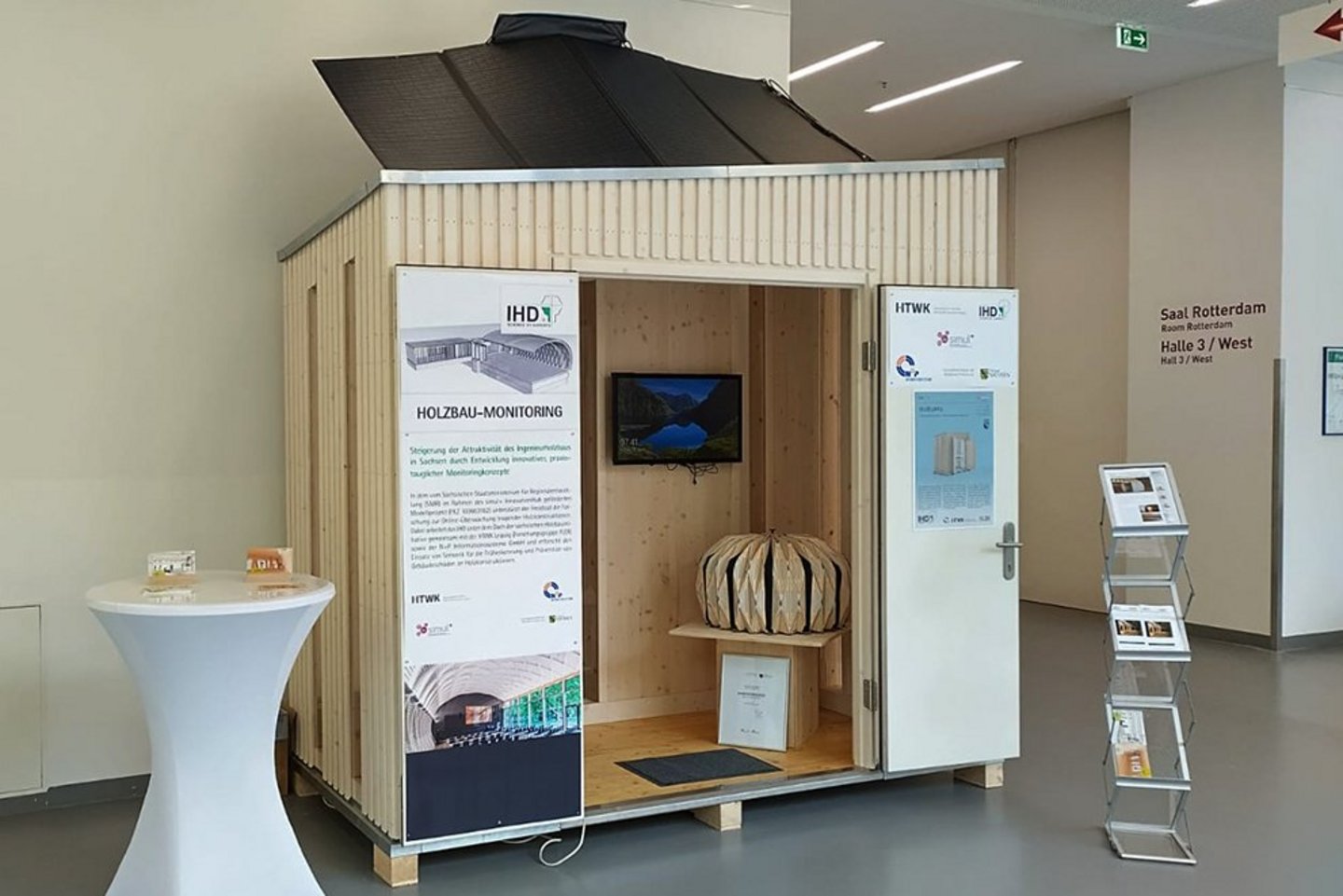
The completed ‘HumiDoor’ test specimen with its doors open © FLEX@HTWK Leipzig, Hannes Löschke
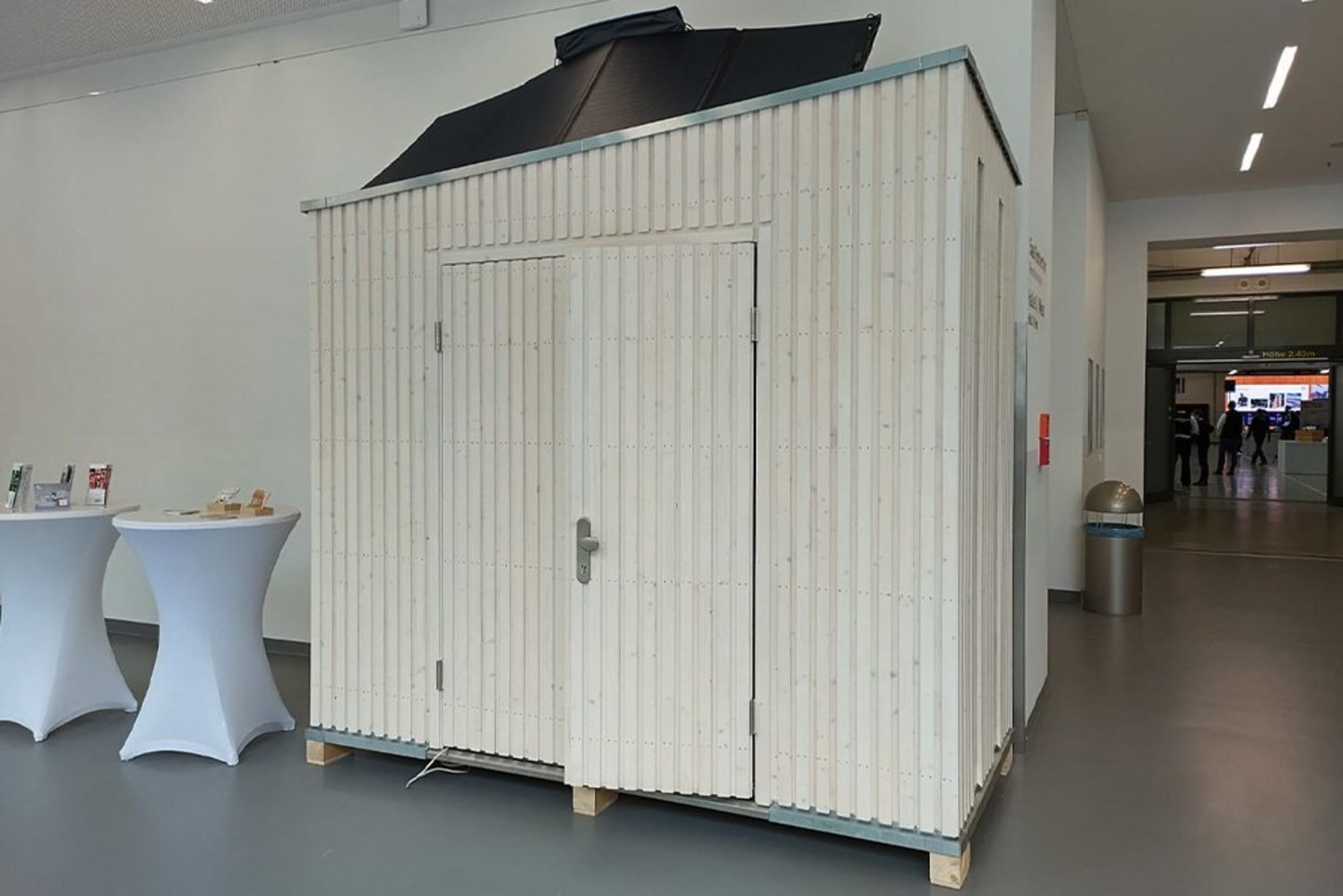
The completed ‘HumiDoor’ test specimen with the doors closed © FLEX@HTWK Leipzig, Hannes Löschke
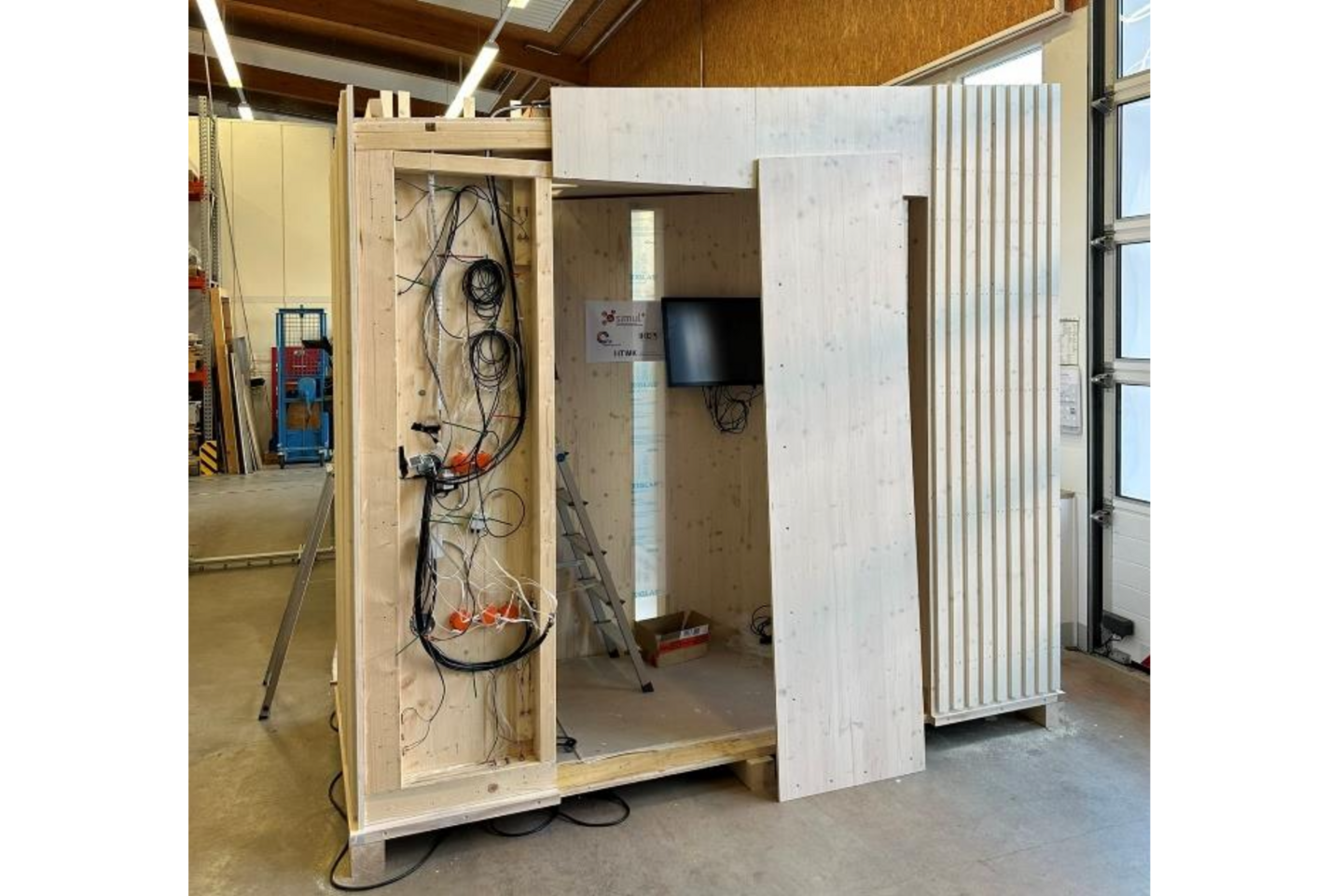
A snapshot of the test specimen’s construction progress: installation of the technical systems © FLEX@HTWK Leipzig, Hannes Löschke
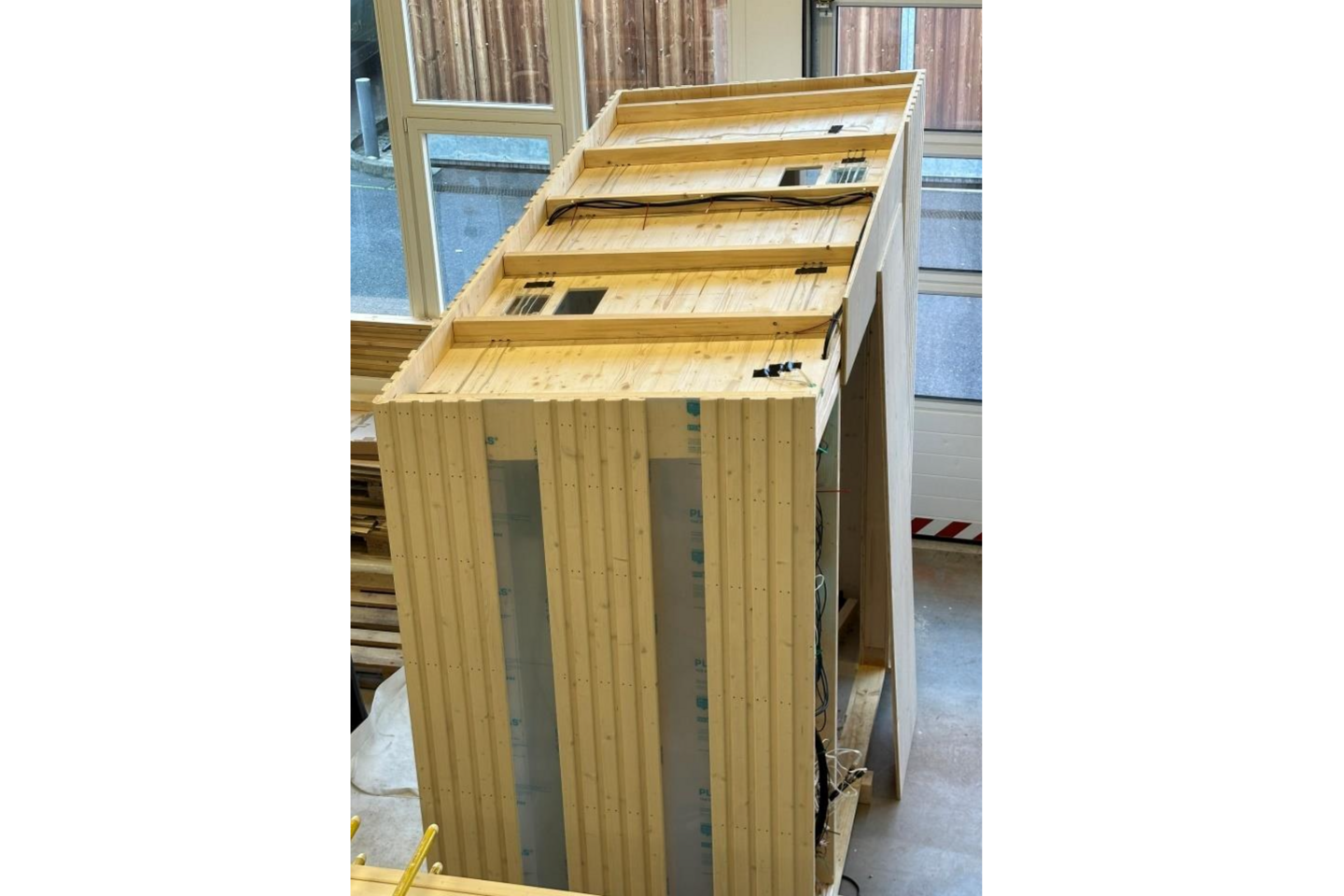
A snapshot of the test structure’s construction progress: installation of the technical systems © FLEX@HTWK Leipzig, Hannes Löschke
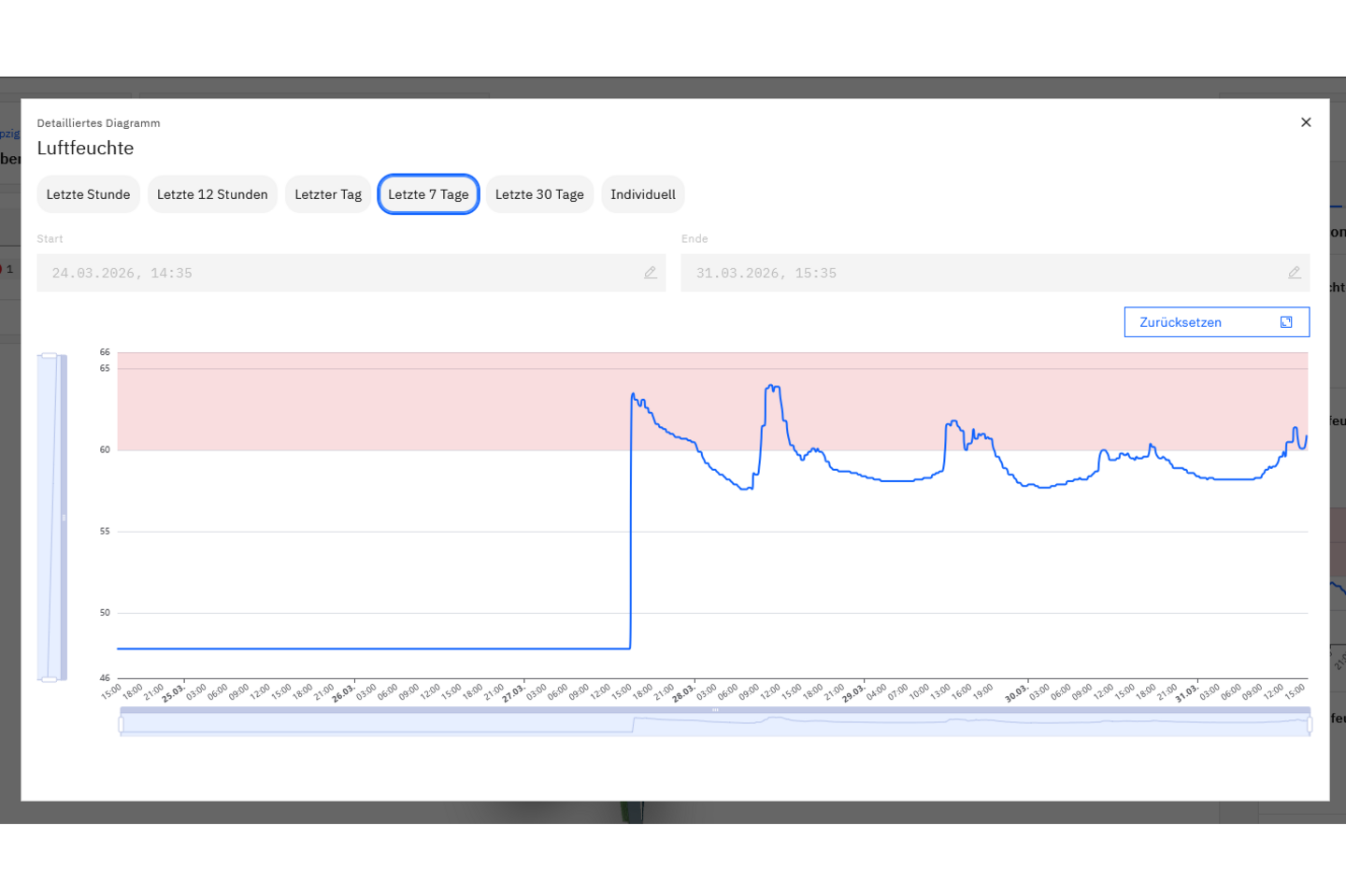
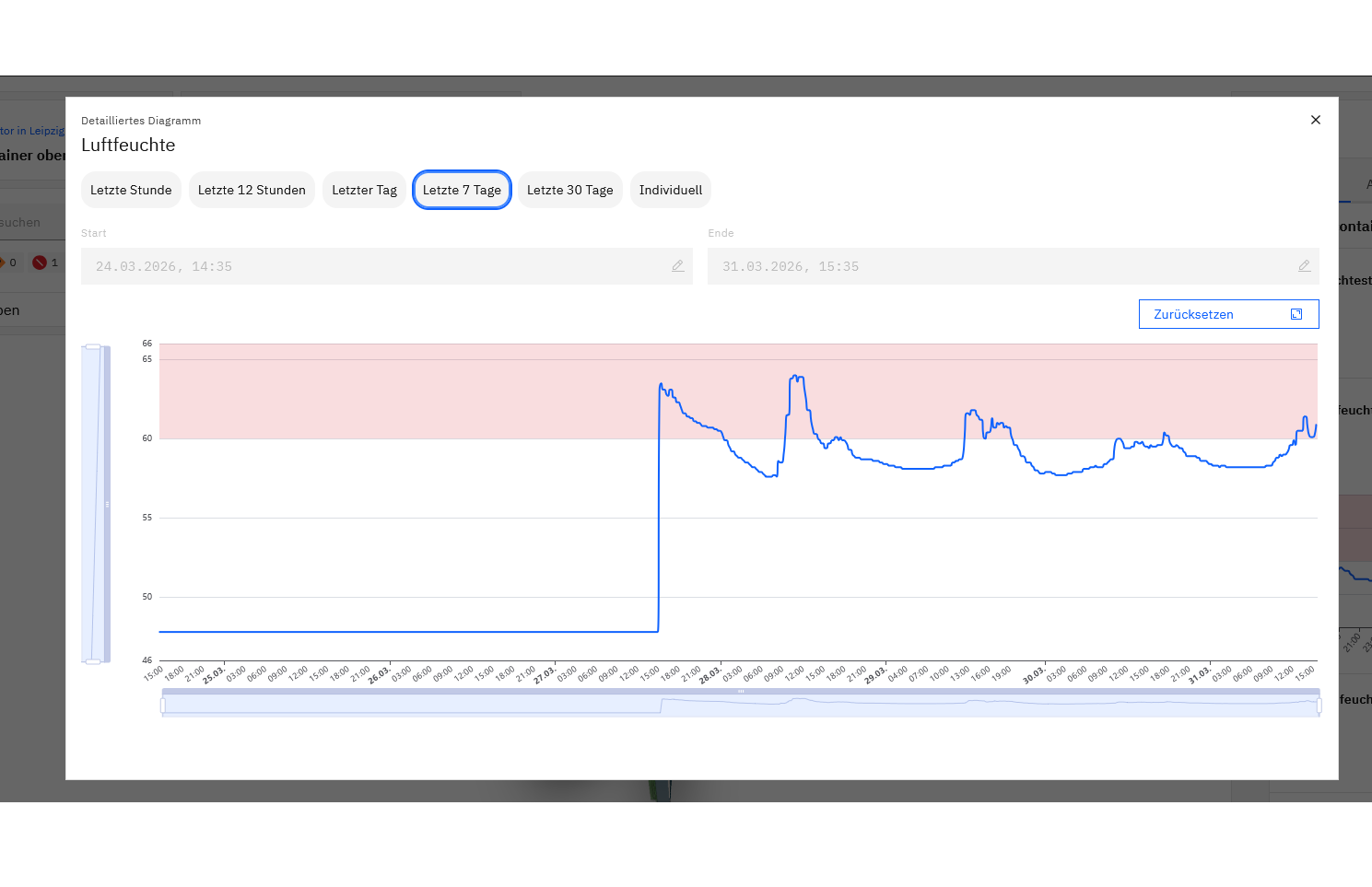
Recording of air humidity over a period of time © FLEX@HTWK Leipzig, Hannes Löschke
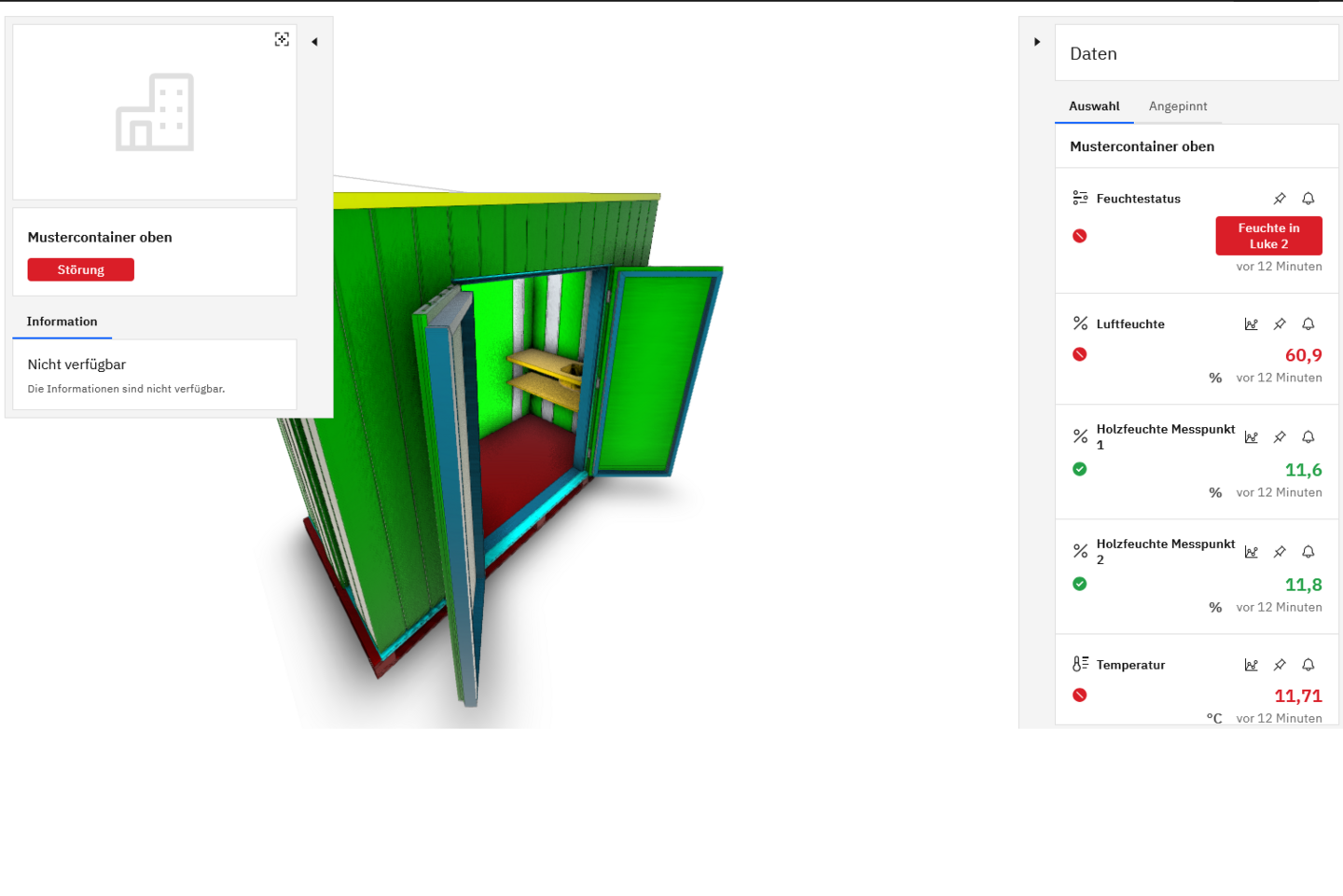
Screenshot of a measurement taken on the demonstrator © FLEX@HTWK Leipzig, Hannes Löschke
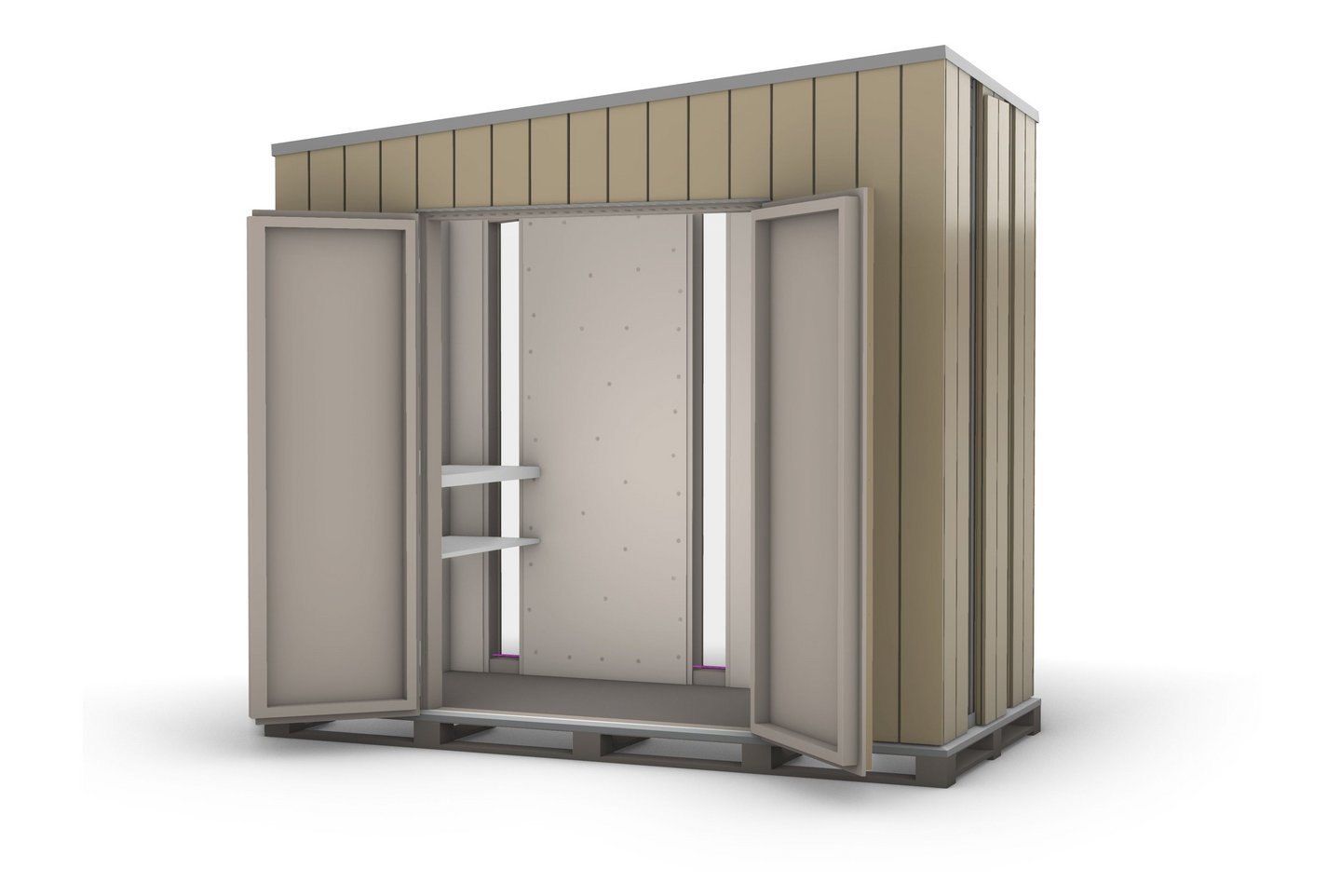
Computer model of the ‘HumiDoor’ as a perspective view © FLEX@HTWK Leipzig, Hannes Löschke
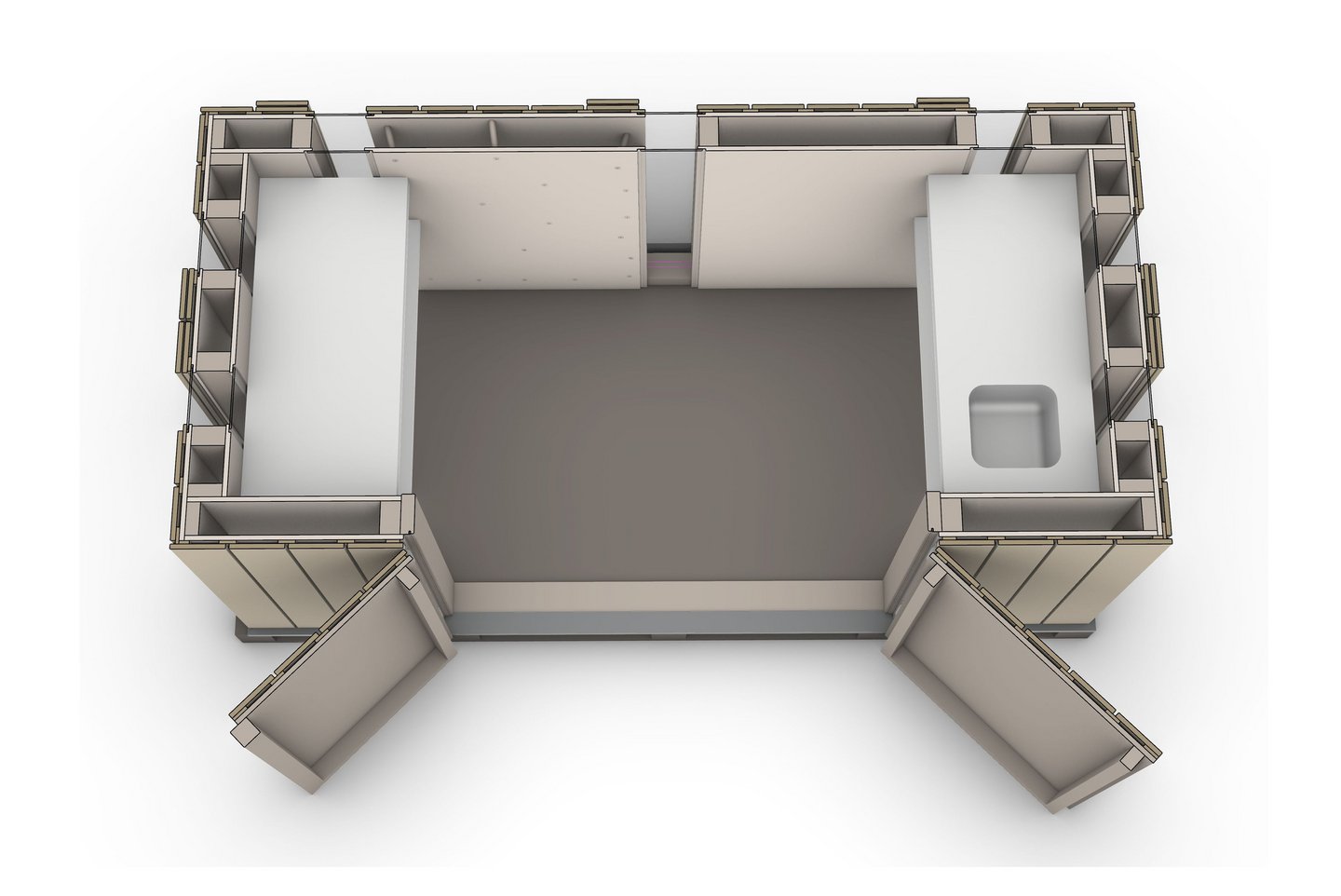
Computer model of the ‘HumiDoor’ (cross-section) © FLEX@HTWK Leipzig, Hannes Löschke
Despite the many advantages that wood offers as a potentially sustainable building material of the future, there are currently a number of structural engineering hurdles standing in the way of the wider adoption of timber construction. A key problem in this regard is the moisture content of components in timber structures. This is particularly true of timber components that are located within (enclosed/capsulated) wall or ceiling elements and are out of sight.
Moisture damage that is not detected in good time can spread beyond individual components, which may result in entire sections of the building requiring costly renovation. One approach to prevention involves monitoring the moisture content of timber components by installing moisture sensors within the structure. Monitoring specific areas can thus ensure that any rise in moisture content is detected early and with precision, allowing countermeasures to be taken before actual damage occurs.
The placement of the moisture sensors is currently carried out on the basis of project-specific individual planning by specialist planners. Building on theoretical and practical findings, an algorithm for positioning the moisture sensors has been developed, enabling their integration into the planning process in an integral and digitally parametric manner (see Figs. 5 and 6). A key factor here is the definition of various probability factors, such as room usage, weather conditions or the orientation of building components.
The measurement technology used is demonstrated on a test specimen – the HumiDoor (see Figs. 1 and 2). This can be set up at various locations using a car trailer and thus exposed to different conditions. Linear measuring strips (TDR) are installed to measure moisture; these run around the entire building and determine the location of damp spots via signal transit time (see Figs. 3 and 4). For demonstration purposes, water can be introduced into the test specimen through several openings, whereupon the measurement system immediately indicates the location.
Keywords: timber construction, sustainability, timber structures, monitoring, control engineering, sensor technology, moisture damage
Facts
Project Management
Project Management
Research
- Laurenz Andritz, Dipl. Ing.
- Theodor Reinhardt, B.A.
Collaborating partner
Funding body
: Saxon Ministry for Regional Development
Project organiser
: Simul+ Initiative
Project duration
:02/2023 – 11/2023
Funding reference –
Funding amount –