
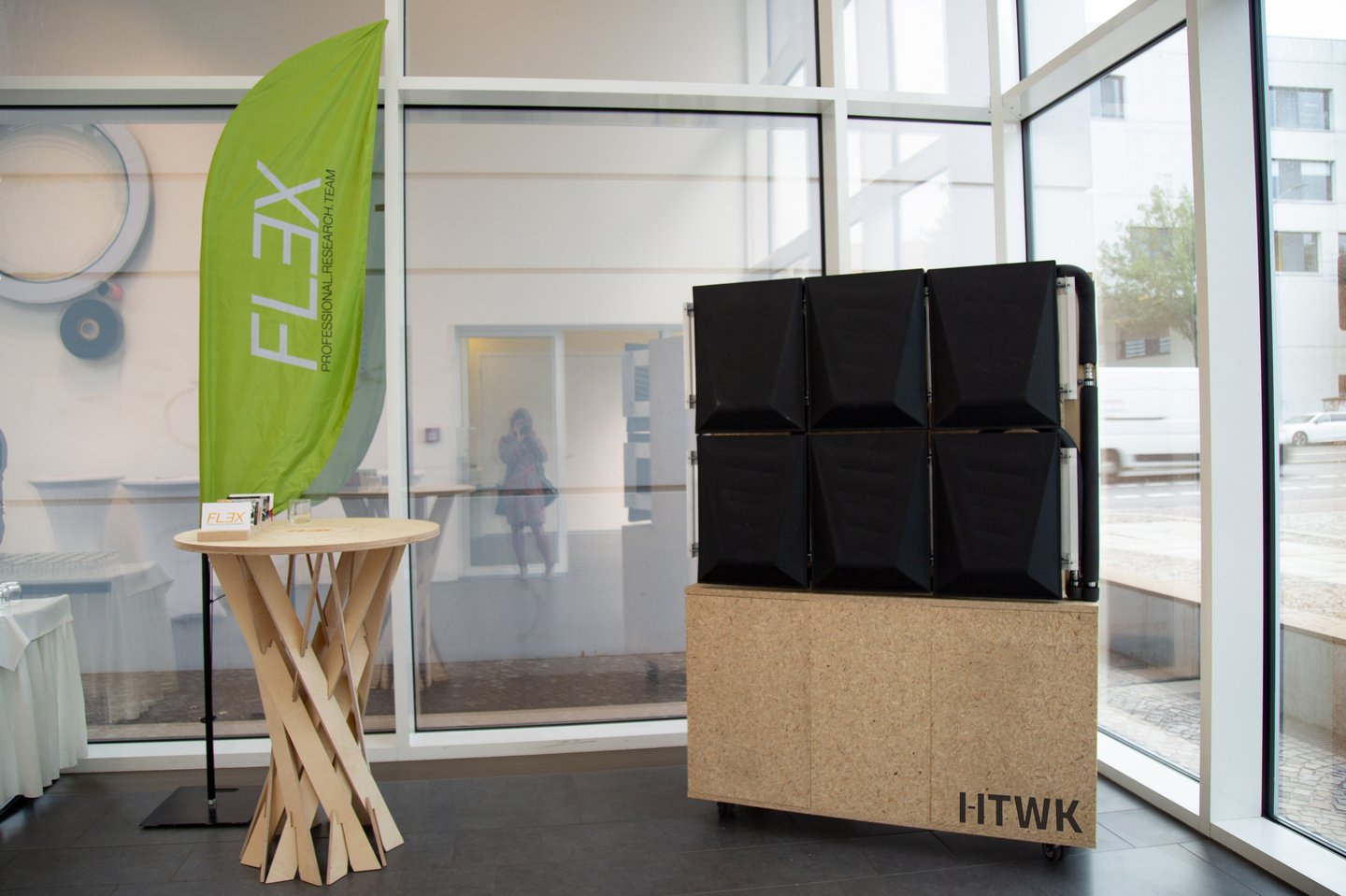
Installed prototype demonstrator in use at a conference

Panel on substructure
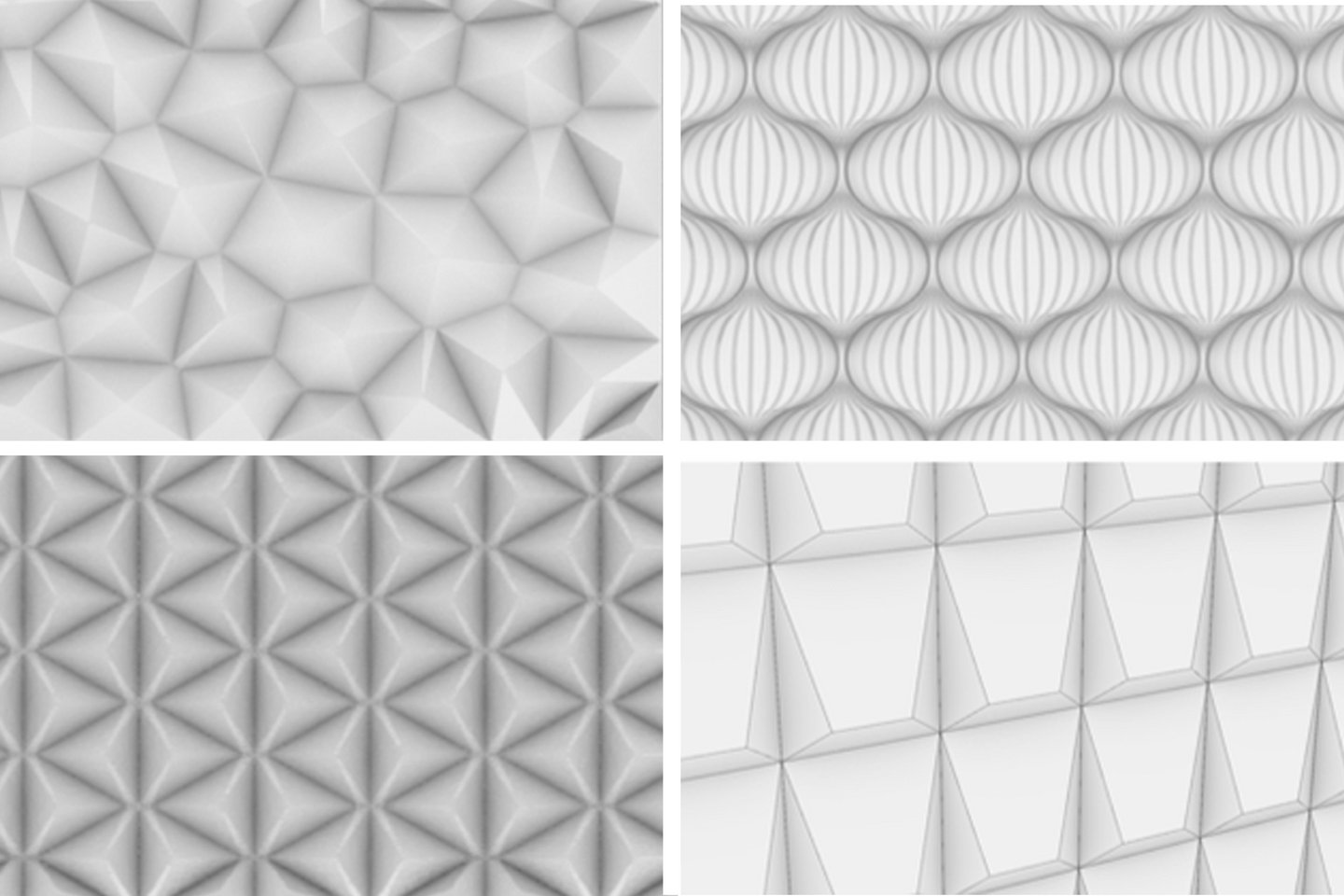
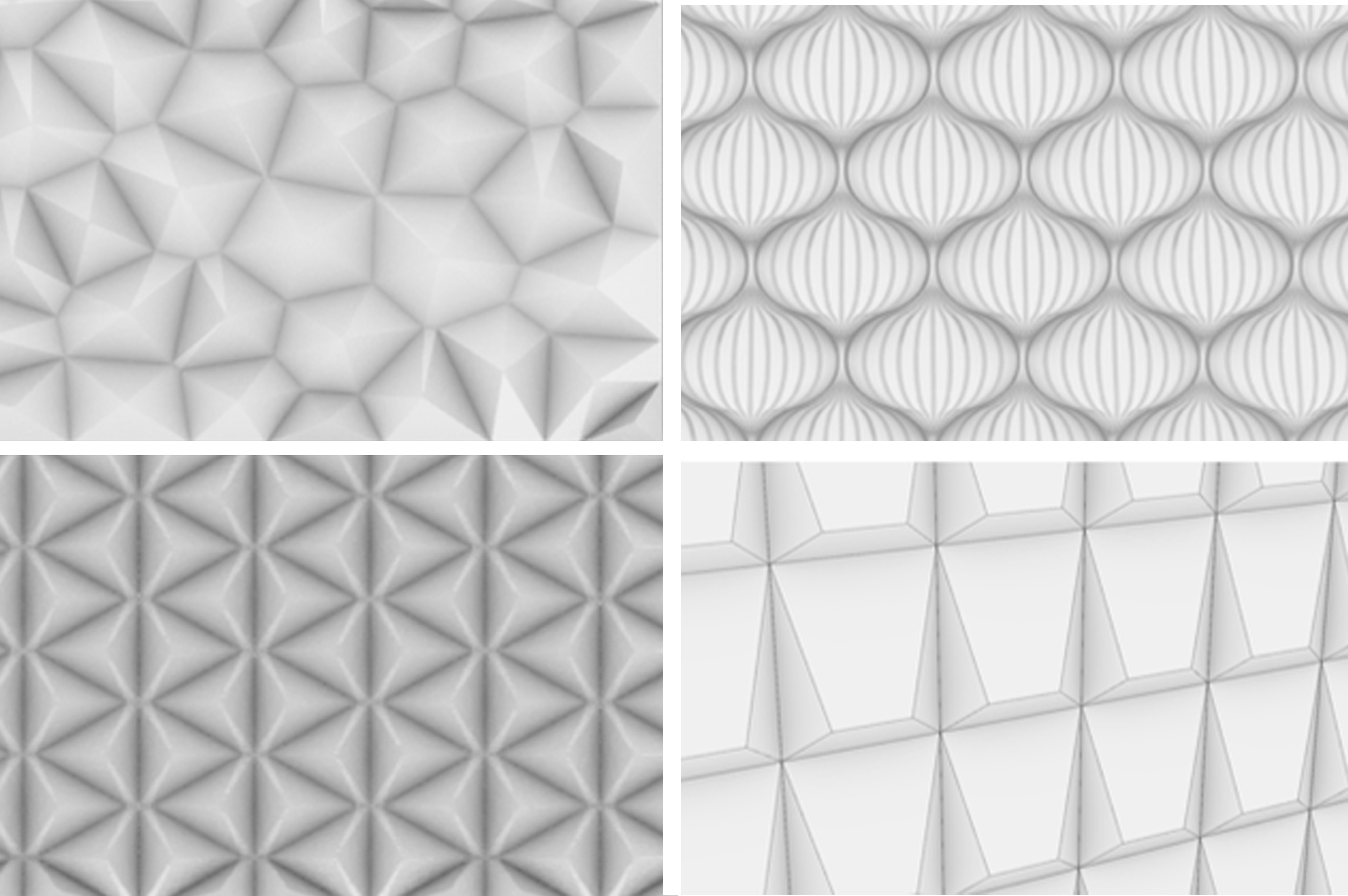
Design studies and the design process for determining the shape of the panels
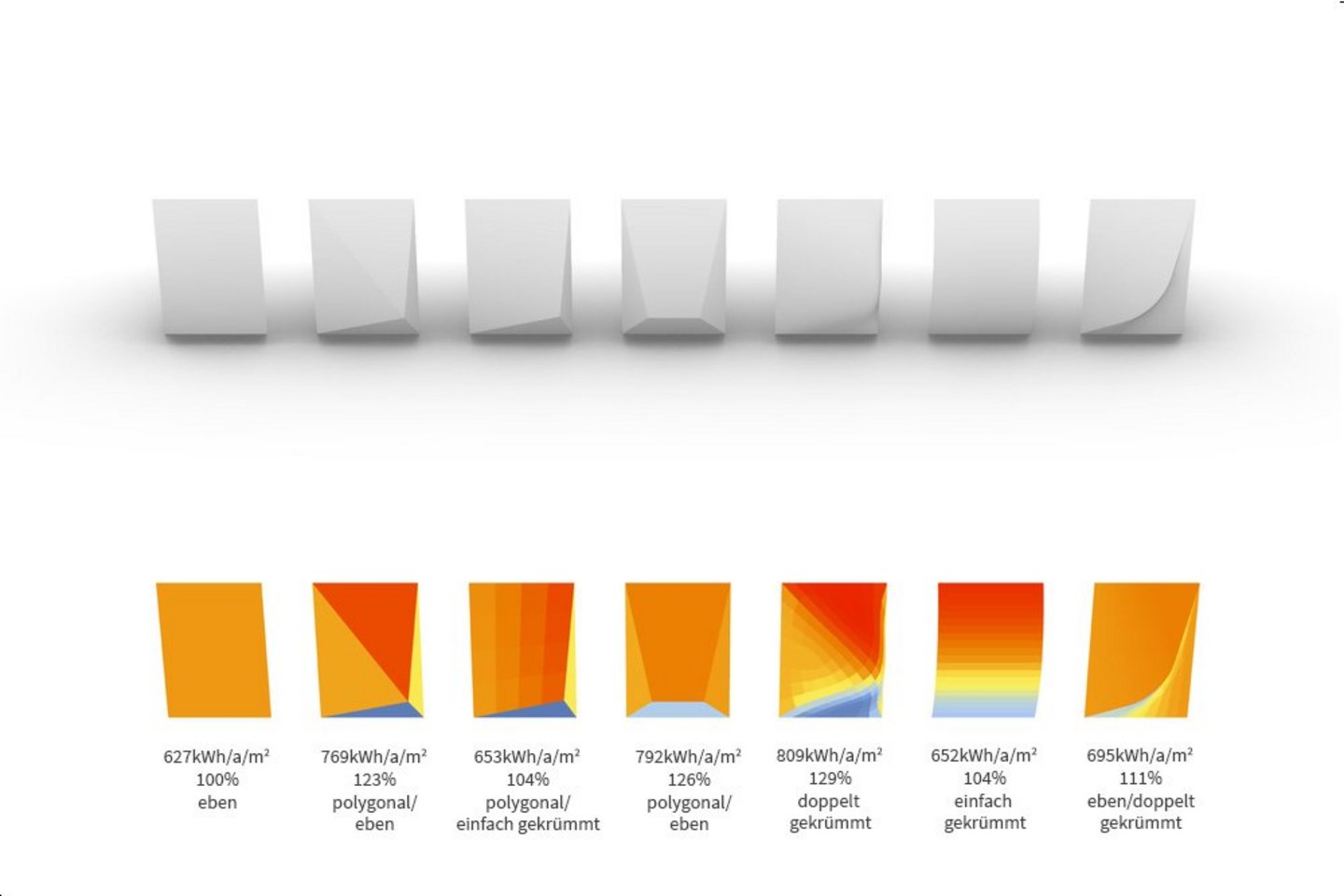
Solar yields on a hypothetical reference façade (south-facing, annual average, Chemnitz)

Panel layout with a regular channel structure
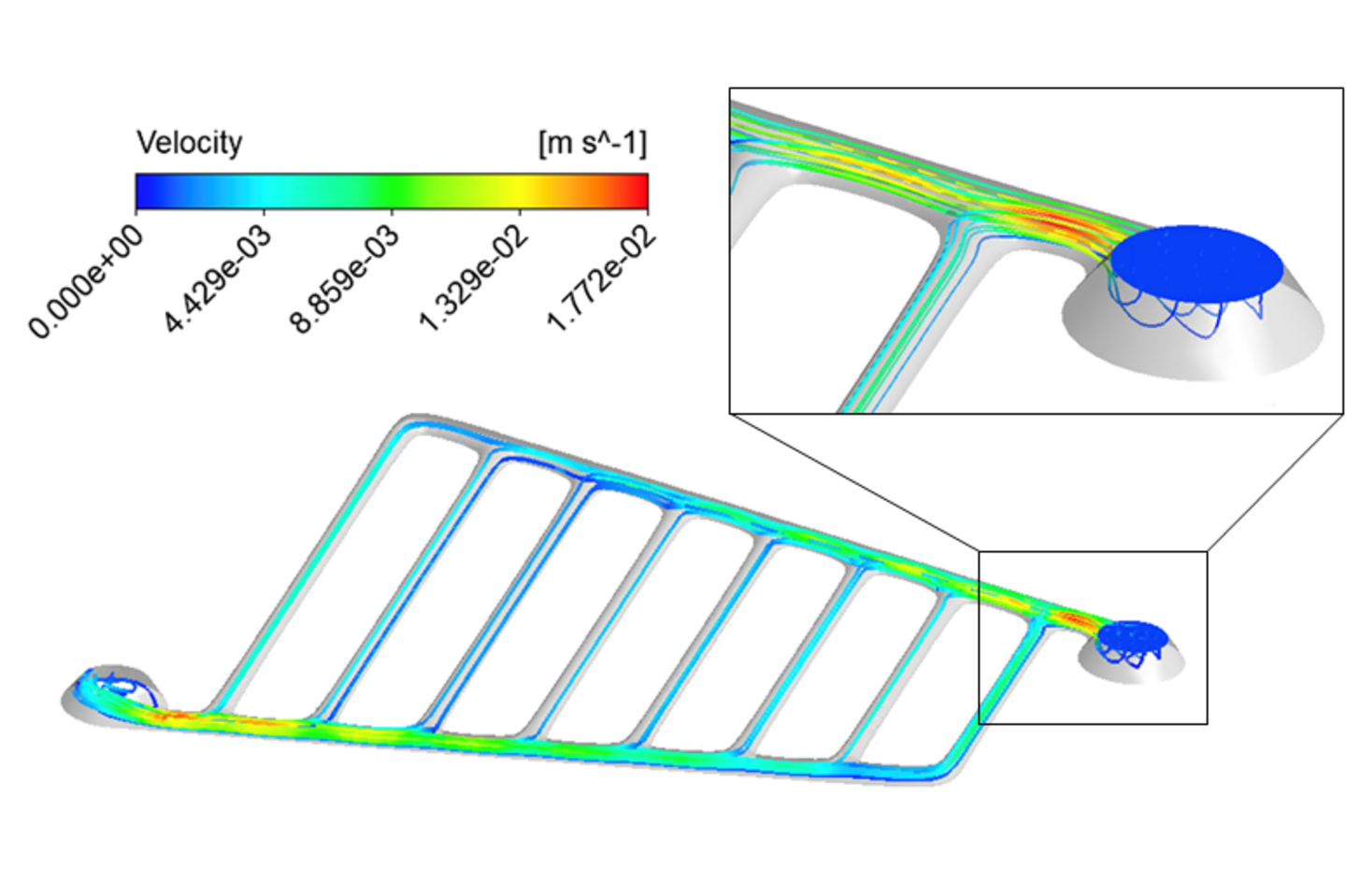
CFD simulation of flow behaviour (graphic: HTWK Leipzig, FING, Lara Möller)
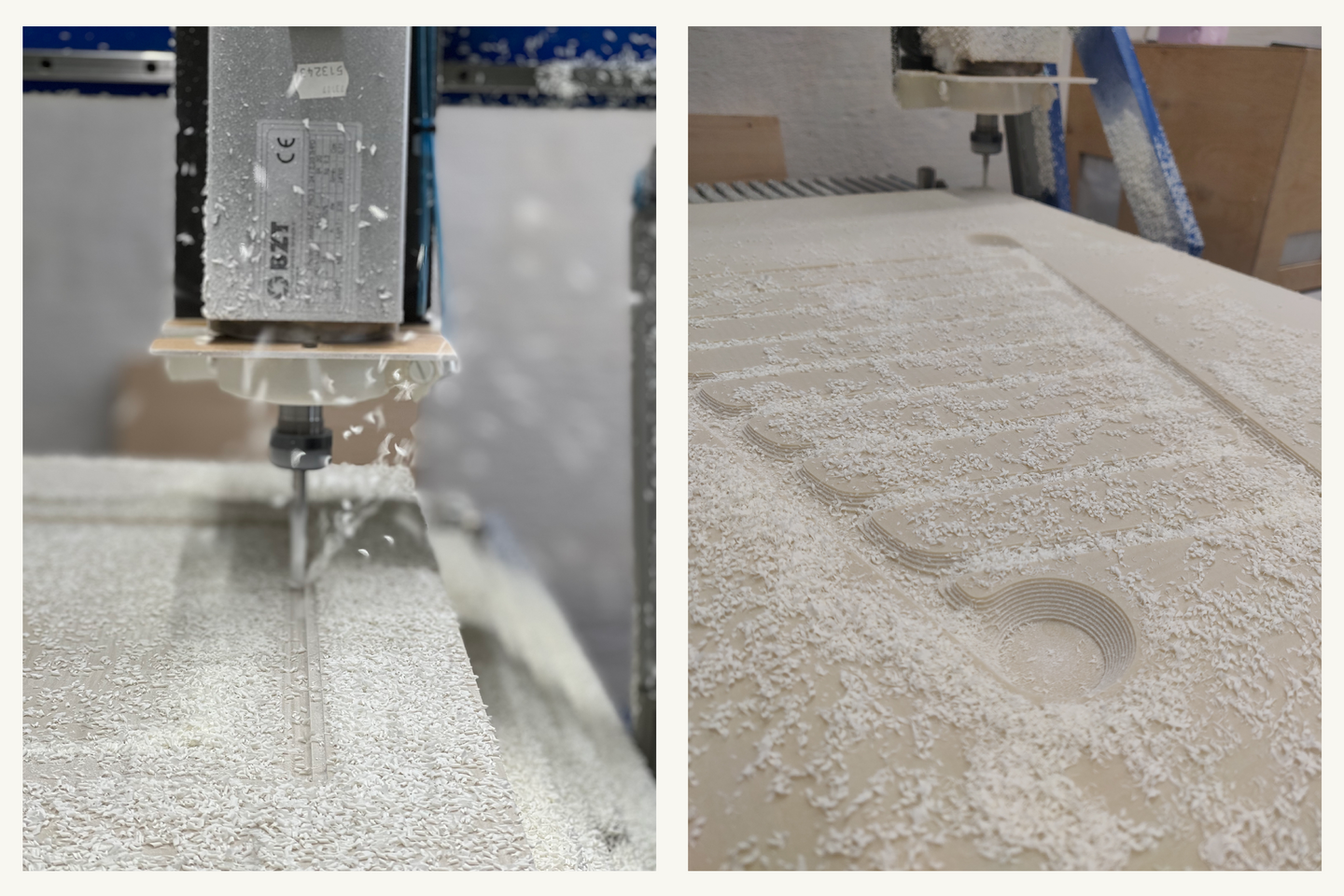
CNC milling of dies for incremental sheet metal forming
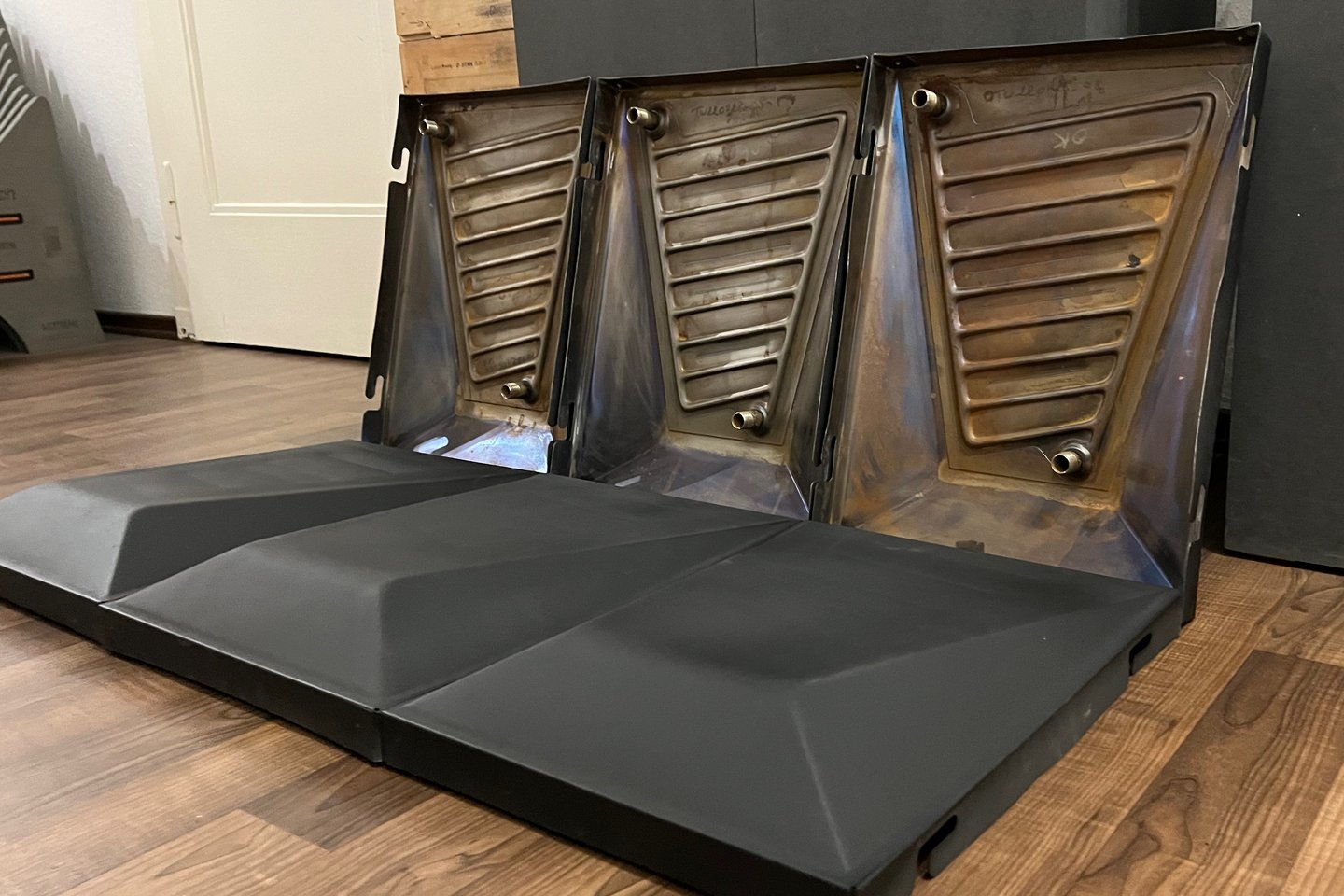
Prototype façade panels (interior and exterior views)
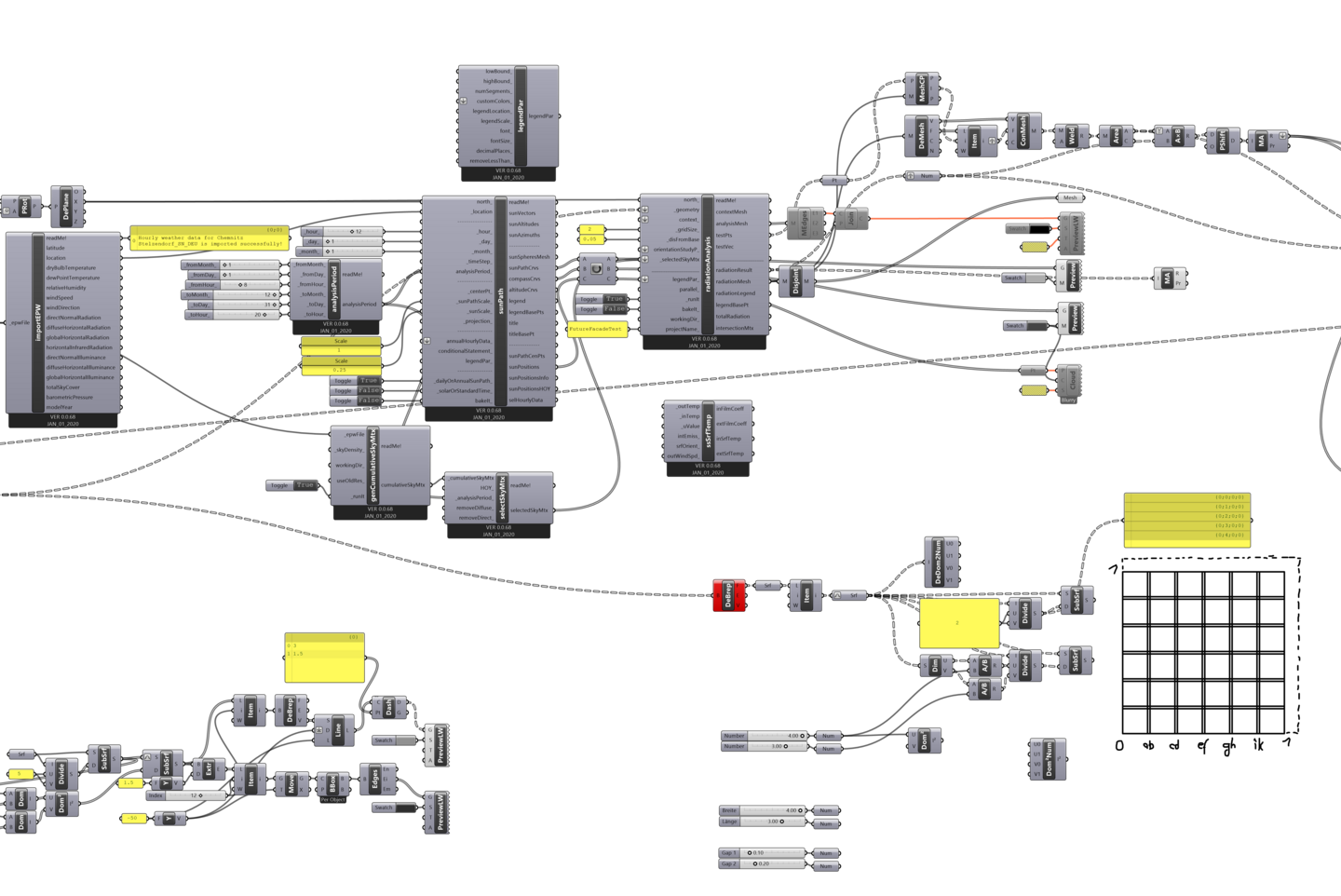
Parametric definition of panel geometry (Rhino/Grasshopper)
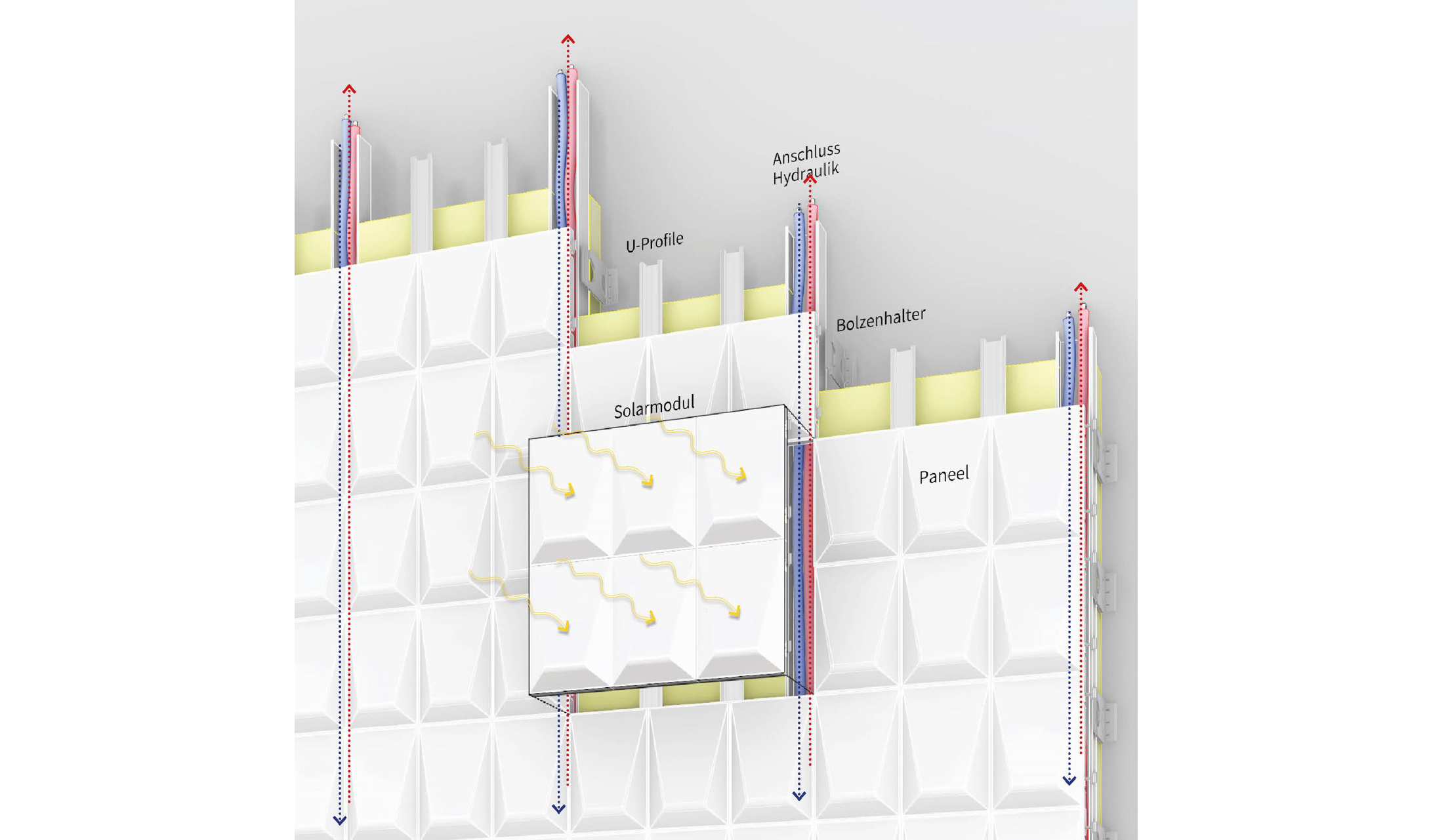
As part of the energy transition, decentralised energy generation directly at the point of consumption is becoming increasingly important. Existing solar concepts in urban areas are mostly limited to roof surfaces, whilst large façade areas remain largely unused. The reason for this is that existing solar collectors often fail to impress, either visually or in terms of their efficiency. The international collaborative research project “FutureFacade” is addressing this challenge with the aim of developing a modern, solar-thermal façade system. In future, energy is to be generated in a space-saving manner via the external walls of buildings, which can then be used directly on site for heating or cooling (see Fig. 2). The project aims to deliver a practical, fully digital solution that harmoniously combines technology, functionality and individual design.
The research focus is on establishing a seamless, digital strategy for the design, planning, construction and prefabrication of these solar-thermal façades. The technological basis is a new method of incremental sheet metal forming developed at Fraunhofer IWU. In this low-contact method, the metal is placed on a negative mould based on a 3D CAD model and precisely formed by a pressure ram along pre-programmed paths. As no complex special tools are required, even highly complex, customised components can be manufactured quickly and cost-effectively in small batches. The interdisciplinary FLEX.team contributes creative and technical expertise, devises various design variants and simulates their solar thermal yield for different orientations (see Figs. 3 and 4).
A key project outcome is the development of a scale model demonstrator in DIN A2 format, on which the new design and planning approaches are successfully tested (see Figs. 1 and 8). What makes FutureFacade unique is the transfer from fundamental research to direct application in architecture. The project thus demonstrates a pioneering approach to how building envelopes can be further developed into aesthetic, highly efficient energy sources through the combination of innovative sheet metal forming, bionics and digitalisation.
Keywords: façade, building envelope, solar thermal energy, incremental sheet metal forming, digitalisation, bionics
Facts
Project Management
Project Management
Research
- Linda Schmidt, M.A.
- Max Höhne, M.A.
Collaborating partners
- Fraunhofer Institute for Machine Tools and Forming Technology IWU
- CRM Group (Centre for Research in Metallurgy)
- Research Association for Steel Applications (FOSTA)
Supporting companies
Funding body
Federal Ministry for Economic Affairs and Energy
Project organiser
• ‘Otto von Guericke’ Association of Industrial Research Organisations (AiF)
• CORNET: Collective Research Networking
Project duration
March 2020 – August 2022
Funding reference
–
Funding amount
–