
TimberPlan+
Collaborative project: A digital, integrated planning methodology for timber-framed industrial hall roofs, with a focus on automated manufacturing and pre-assembly processes
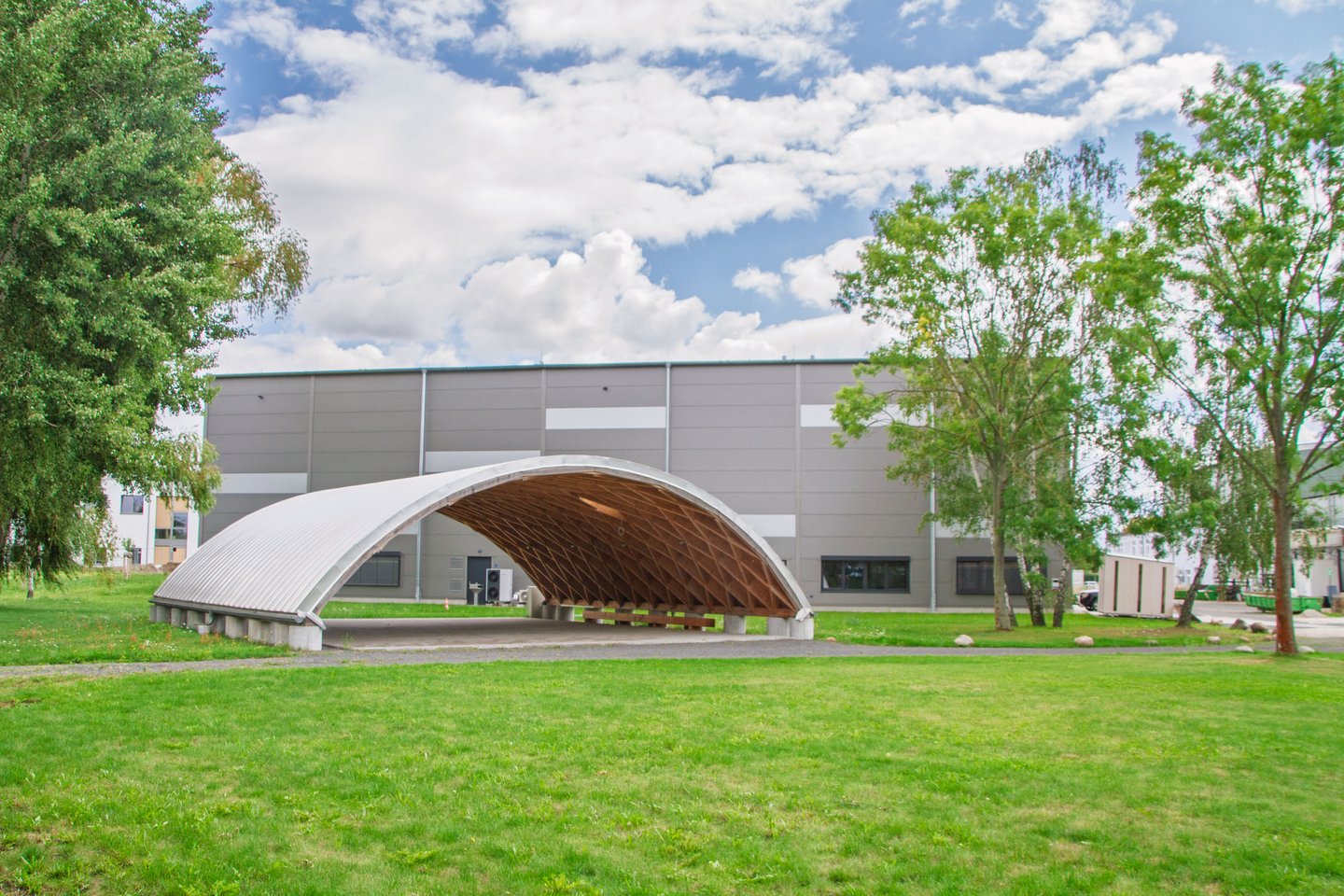
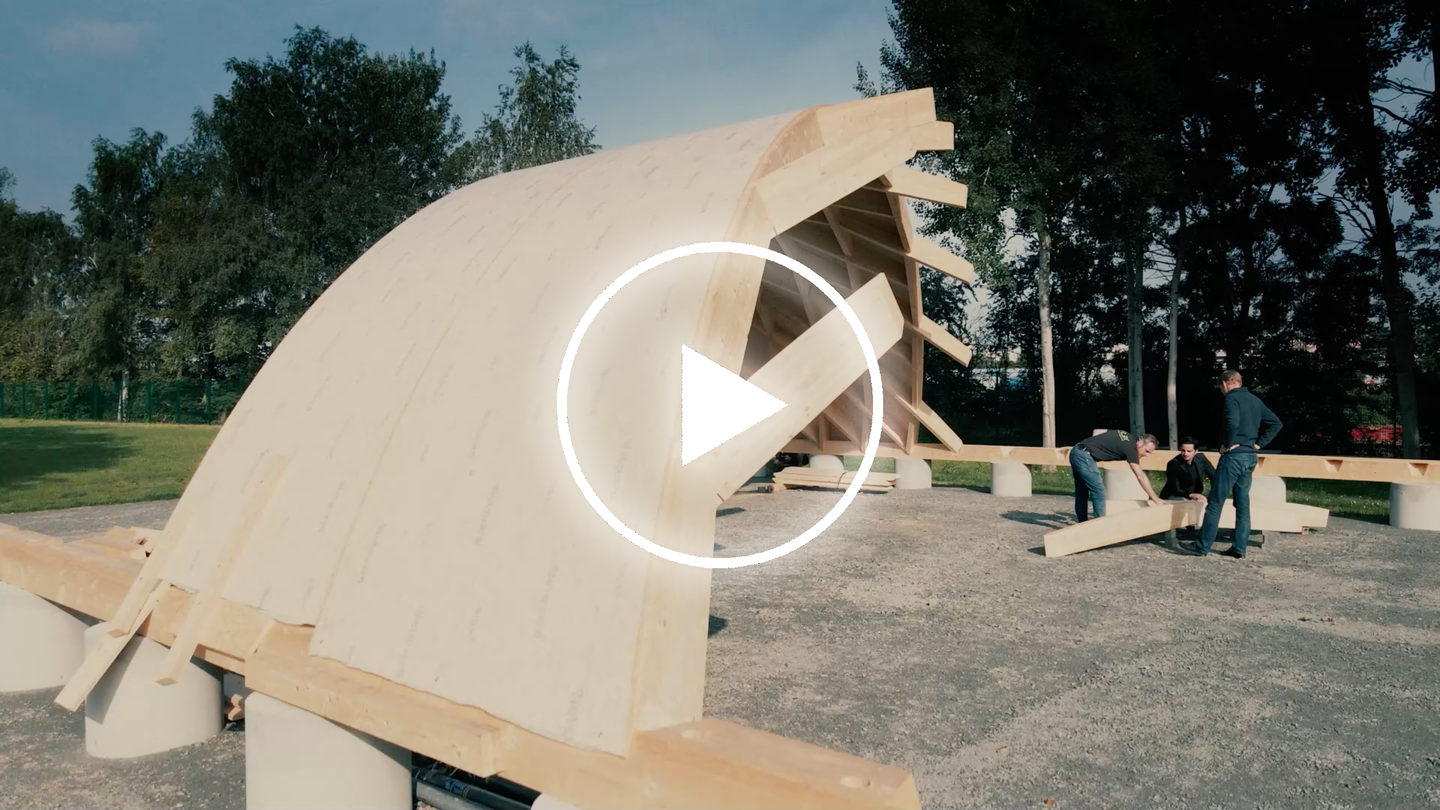
1:1 demonstrator at Leipzig HBFZ © FLEX@HTWK Leipzig, Hannes Löschke
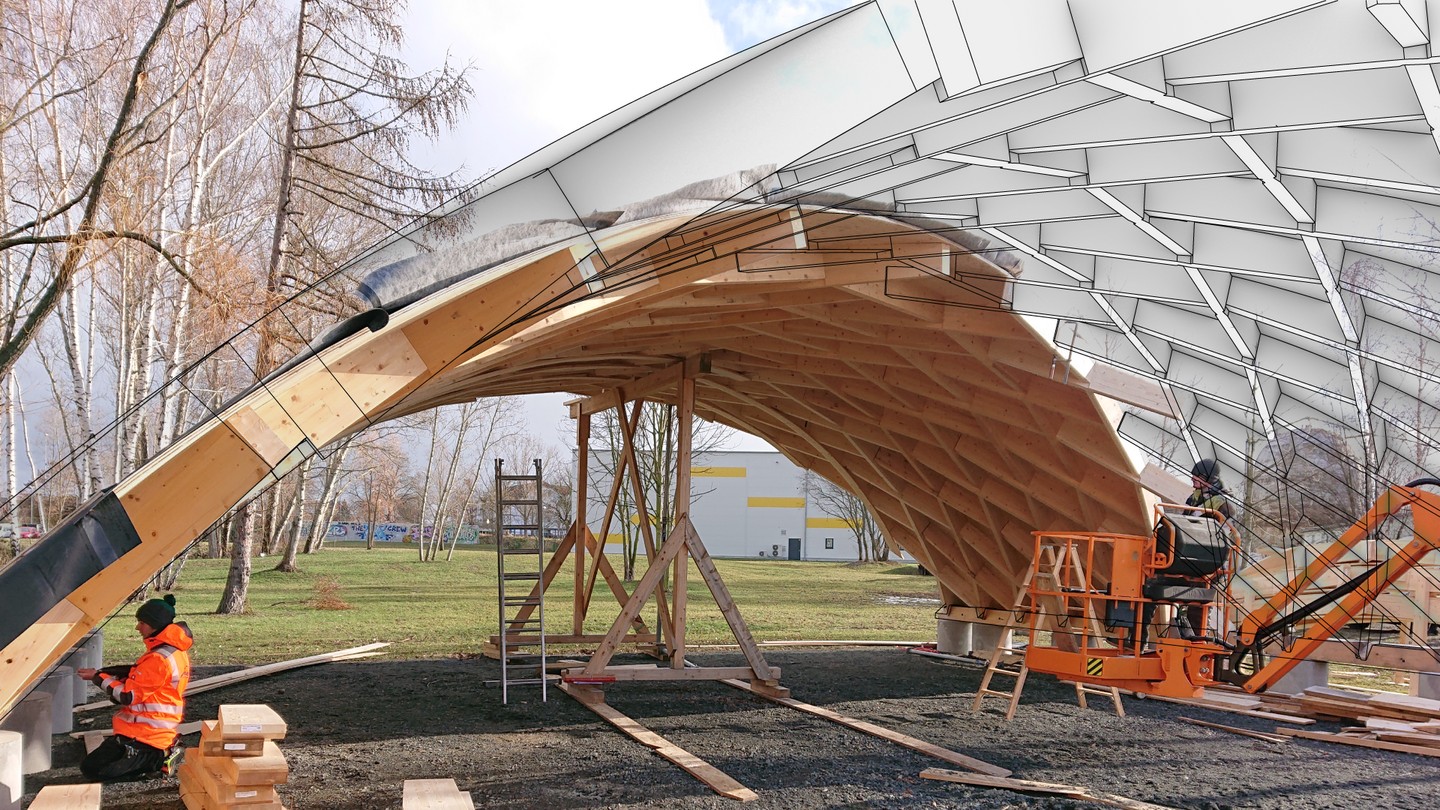
Implementation of the digitally designed louvre structure © FLEX@HTWK Leipzig, Marius Zwigart
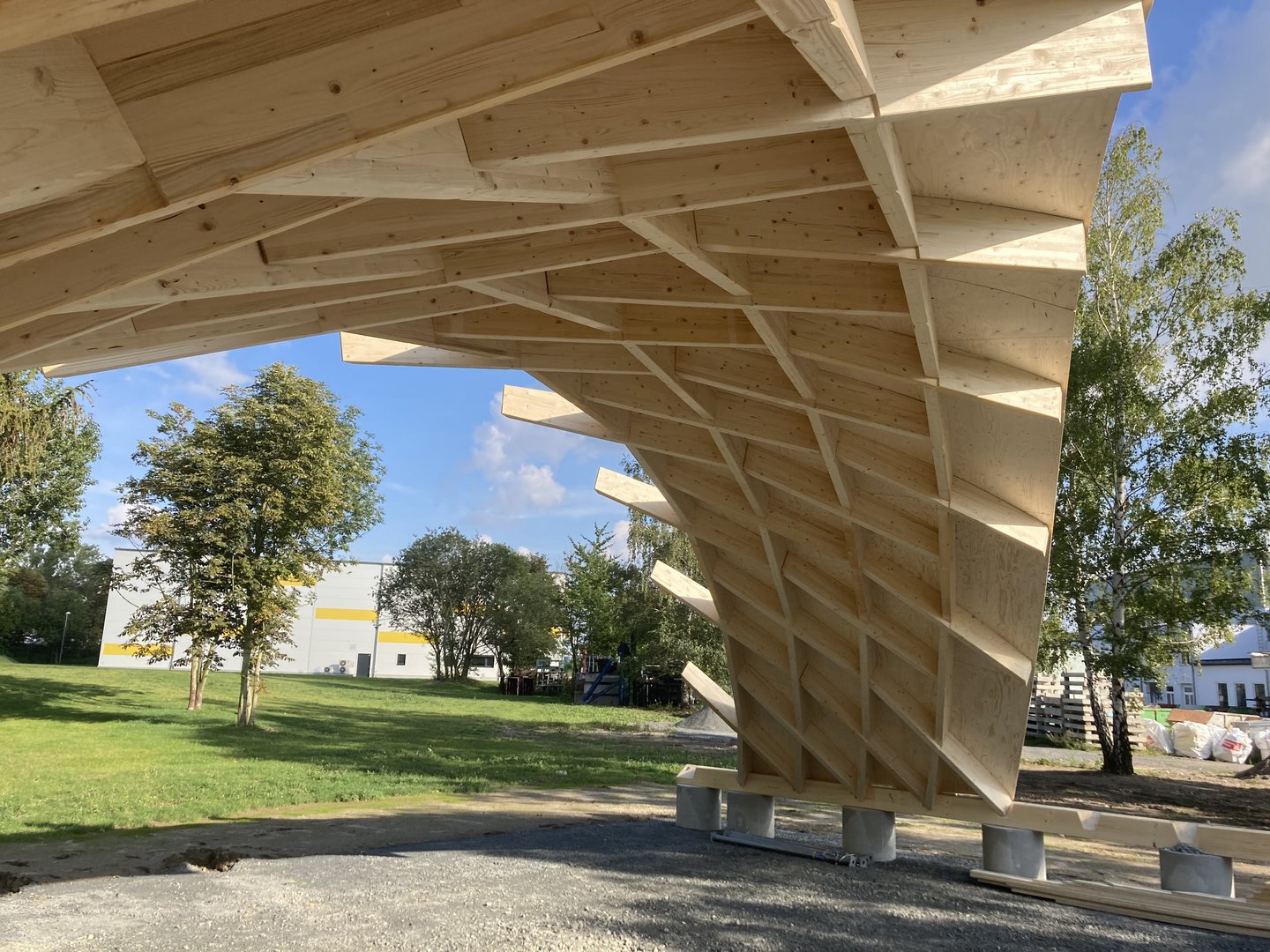
Demonstrator featuring Zollinger lamellae during the manufacturing process © FLEX@HTWK Leipzig, Alexander Stahr
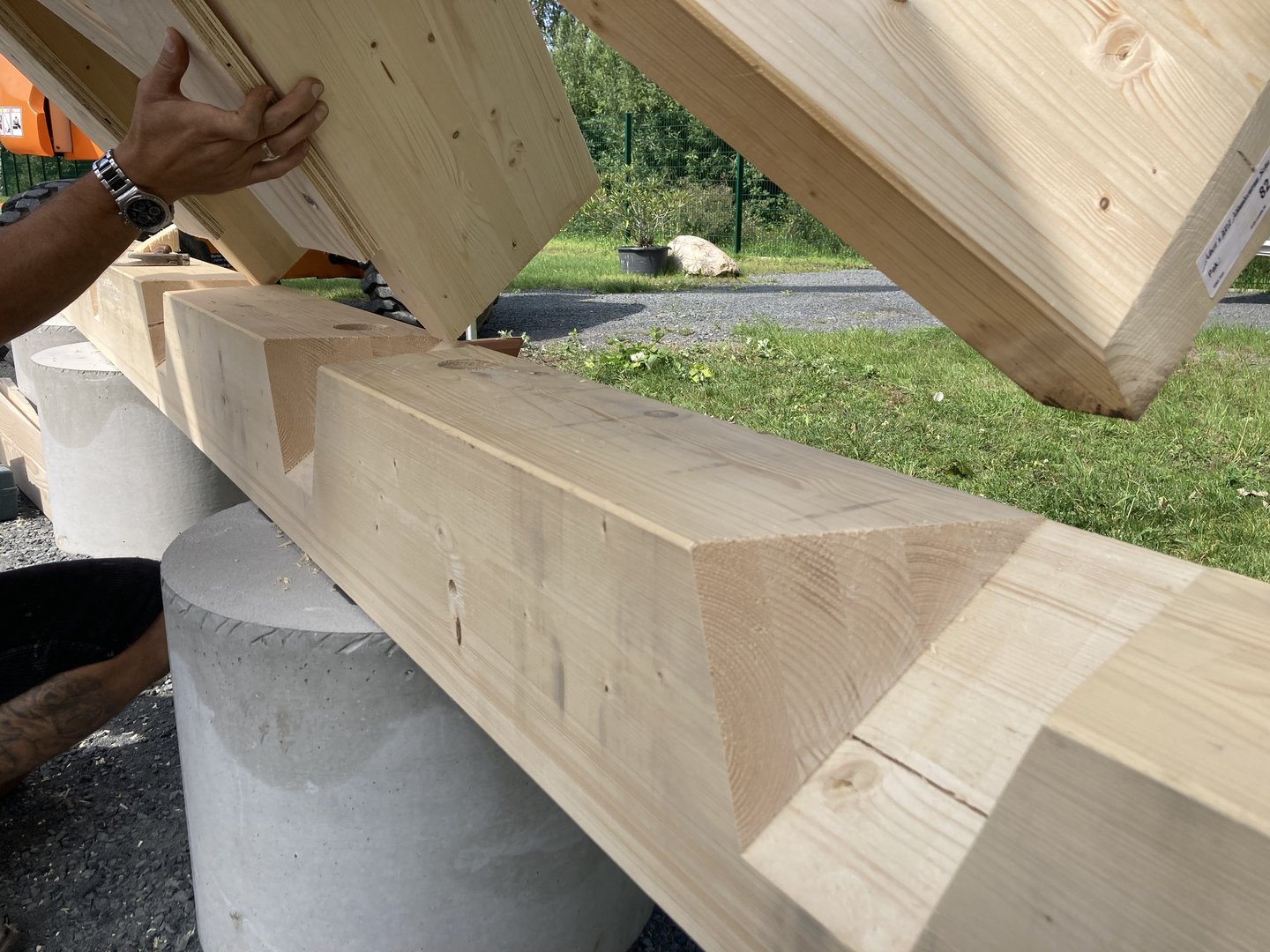
Connection of the timber structure to the foundation, © FLEX@HTWK Leipzig, Alexander Stahr

Screenshot of Grasshopper © FLEX@HTWK Leipzig, Marius Zwigart
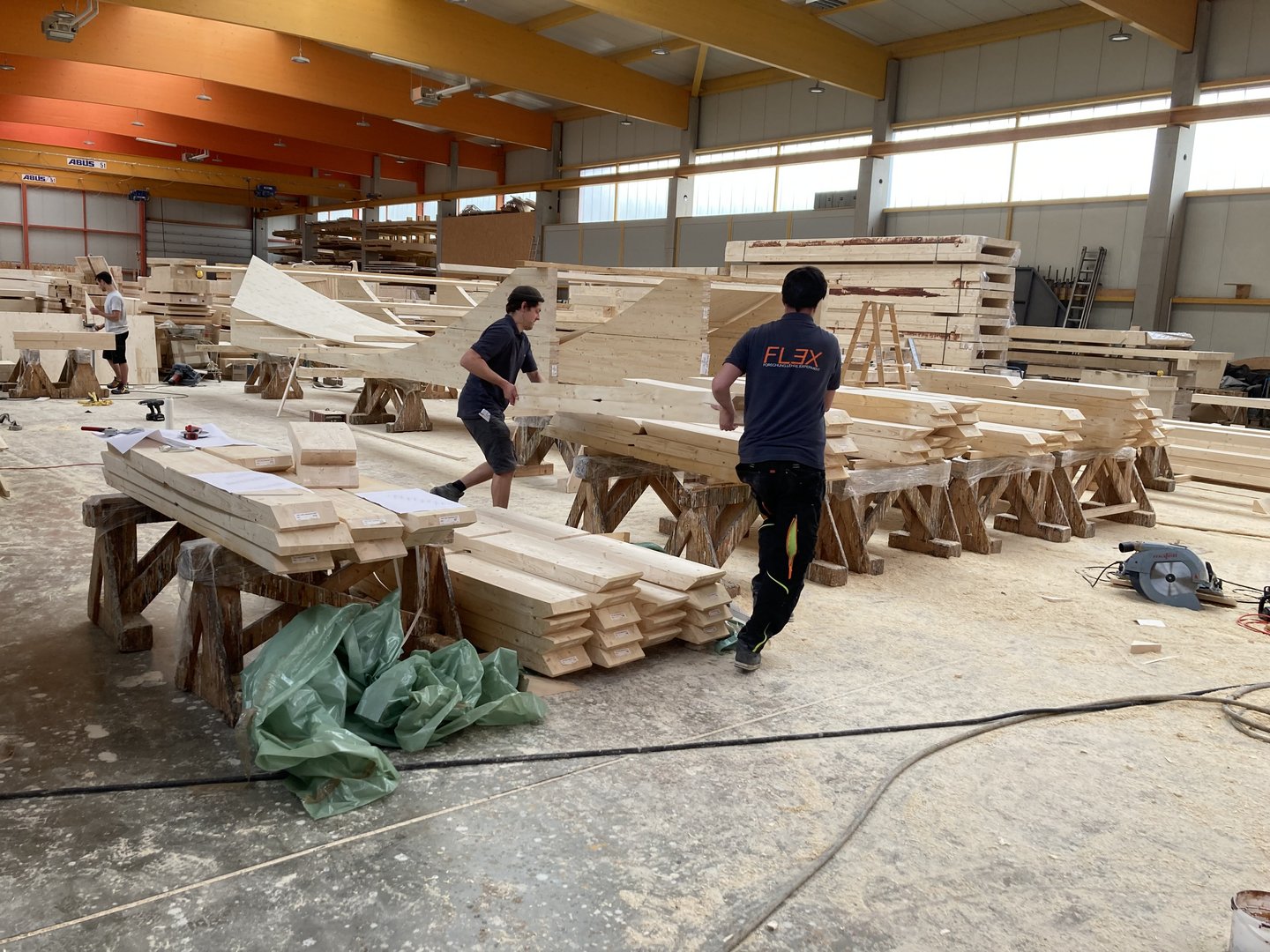
Prefabrication of the components © FLEX@HTWK Leipzig, Alexander Stahr
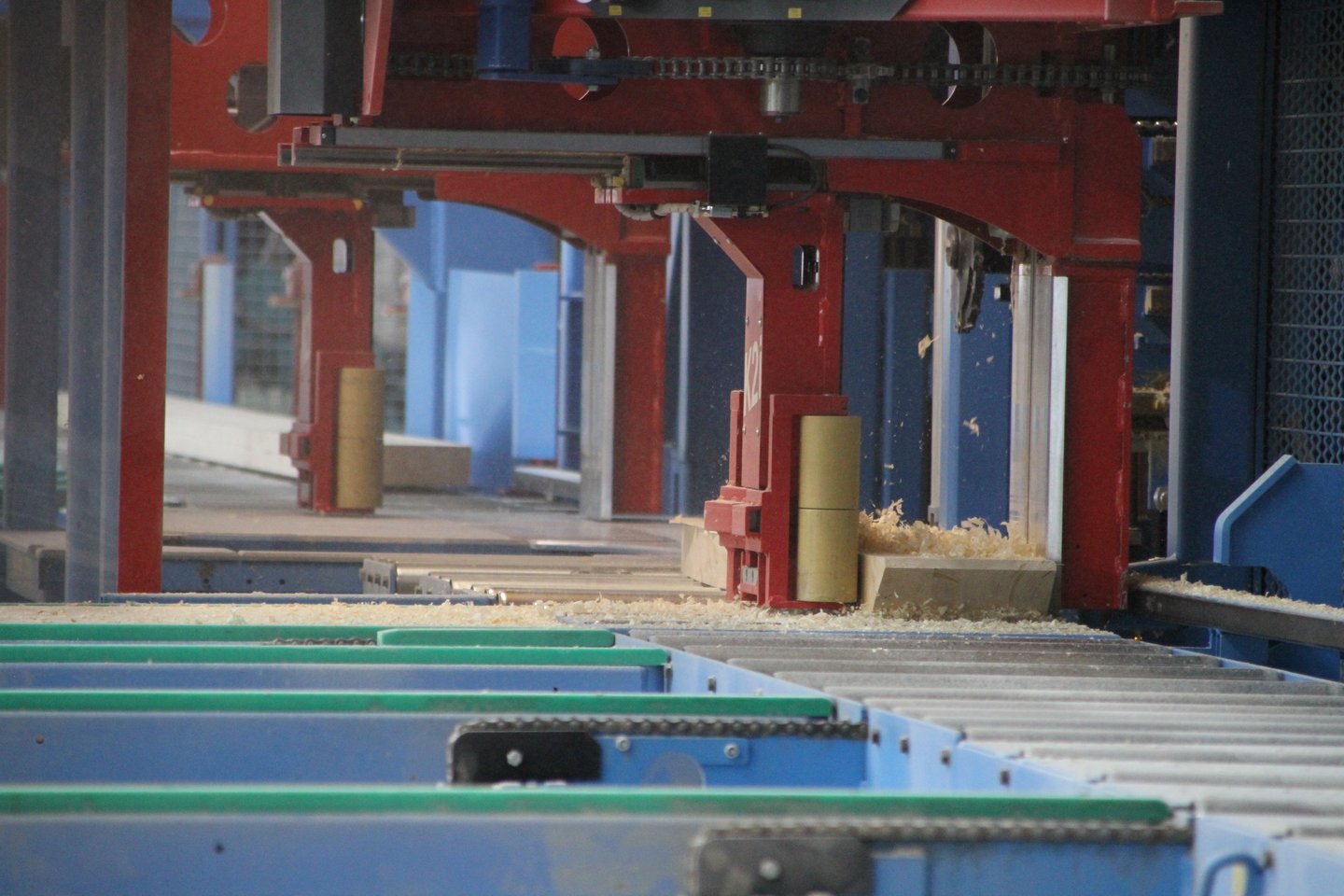
Joinery of the timber components
The digital transformation of modern timber construction for the agricultural
sector At a time when resource efficiency and environmental sustainability have become central guiding principles in the construction industry, the TimberPlan+ research project is setting new standards for the construction of agricultural halls. The main objective of this project was to develop a fully digital planning methodology that seamlessly integrates all specialist disciplines – from architecture and structural engineering to building physics and fire safety – without any loss of information.
The renaissance of a vision: the ReFlexRoof system
At the heart of the project lies the so-called ReFlexRoof system, a modern interpretation of the historic Zollinger construction method. This is characterised by a distinctive diamond-shaped grid, which is not only aesthetically pleasing but also offers enormous environmental potential: Analyses carried out as part of the project showed that Zollinger structures – consisting of a left and a right slat, plus a top shell – enable timber savings of up to 55 per cent compared with conventional timber truss constructions.
To harness this potential for modern agriculture, a methodology was developed that is geared towards fully or partially automated, NC-controlled manufacturing processes in regional small and medium-sized enterprises (SMEs) in the carpentry and roofing trades.
The digital twin as an
integration platform The key technological innovation lies in the use of a parametric design environment (Grasshopper/Rhinoceros) (see Fig. 5). Instead of creating static designs, a comprehensive digital model was developed that responds flexibly to site-specific parameters such as wind and snow loads, as well as individual usage requirements (see Fig. 2).
This digital workflow integrates different specialist disciplines in an innovative way:
- Integrated structural design: via a direct interface between the geometric model and the structural analysis (within the parametric system), the minimum cross-sections required for structural stability can be calculated automatically and fed directly back into the design.
- Building physics in the barn environment: Long-term measurements in real-world structures, such as eco-pig barns and riding halls, provided precise data on changes in timber moisture content. This data was incorporated into hygrothermal simulations to ensure the long-term durability of the structure without the need for chemical timber preservation.
- Experimental fire safety: As specific requirements often apply to timber structures in the agricultural sector, fire tests were carried out on both a small and large scale. These not only confirmed the theoretical burn-through rates but also provided valuable insights into the optimisation of joint connections.
From algorithm to structure: the 1:1 demonstrator
The practical viability of the planning method developed was demonstrated through the construction of a 1:1 demonstrator (see Figs. 1 to 4). The entire process chain – from the automated generation of joinery data to the assembly of the segmented half-shell elements – was evaluated. Specific technical details, such as a specially developed, diamond-shaped roof window that integrates seamlessly into the lattice structure, were successfully tested.
Despite the successful implementation, measurements taken on the demonstrator (including via 3D scanning) showed that manufacturing and assembly tolerances play a crucial role. These findings are being directly incorporated into the refinement of the planning methodology to further increase the precision of future construction projects.
Regional value creation and cooperation
TimberPlan+ sees itself not only as a technical project, but also as a catalyst for the regional economy. An interaction model for SMEs has been developed to strengthen collaborative working. By providing digital planning data and establishing certified business networks, regional companies will in future be able to offer complex and material-efficient timber roofs at competitive prices.
Conclusion and outlook
The TimberPlan+ project has successfully laid the foundations for a sustainable planning, construction and sales system. It impressively demonstrates that combining traditional craftsmanship with state-of-the-art digital technology produces solutions that are both economically attractive and environmentally pioneering.
Keywords: Parametric design, Zollinger construction, agricultural timber construction, digital process chain, resource efficiency, regional SME network
Facts
Project Management
Project Management
Implementation
- Marius Zwigart, M.A. | Architect
- Hannes Löschke, Dipl.-Ing., M.A.
- Martin Dembski, M.Sc.
- Felix Schmidt-Kleespies, M.A.
- Max Höhne, M.A.
- Jana Gentele
Co-operating partners
- Dresden University of Applied Sciences
- Braunschweig University of Technology
- Fraunhofer IMW
- STRAB Ingenieurholzbau Hermsdorf GmbH
- Bau-Werk-Architekt, Prenzlau
- holz[bau]physik – Office for Timber Construction and Building Physics, Leipzig
- STEIN.Ing, Droyßig
- Lars Janke Engineering Office
Funding body:
Federal Ministry of Food and Agriculture
Project organiser
Fachagentur für Nachwachsende Rohstoffe e. V. (FNR)
Project duration
06|2020 – 06|2023
Funding reference
2220HV003A
Funding amount
953,237.94 EUR (full funding)