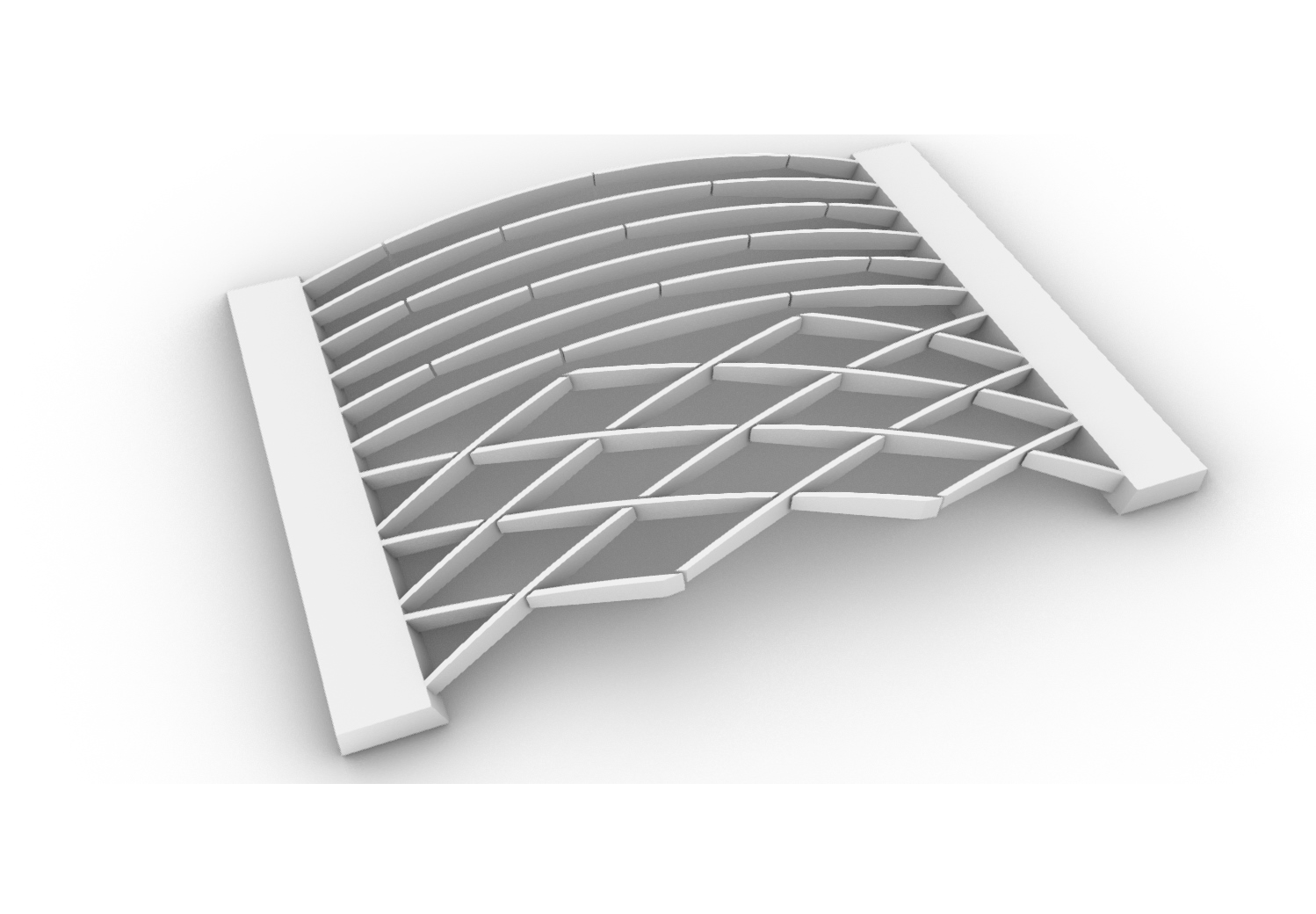

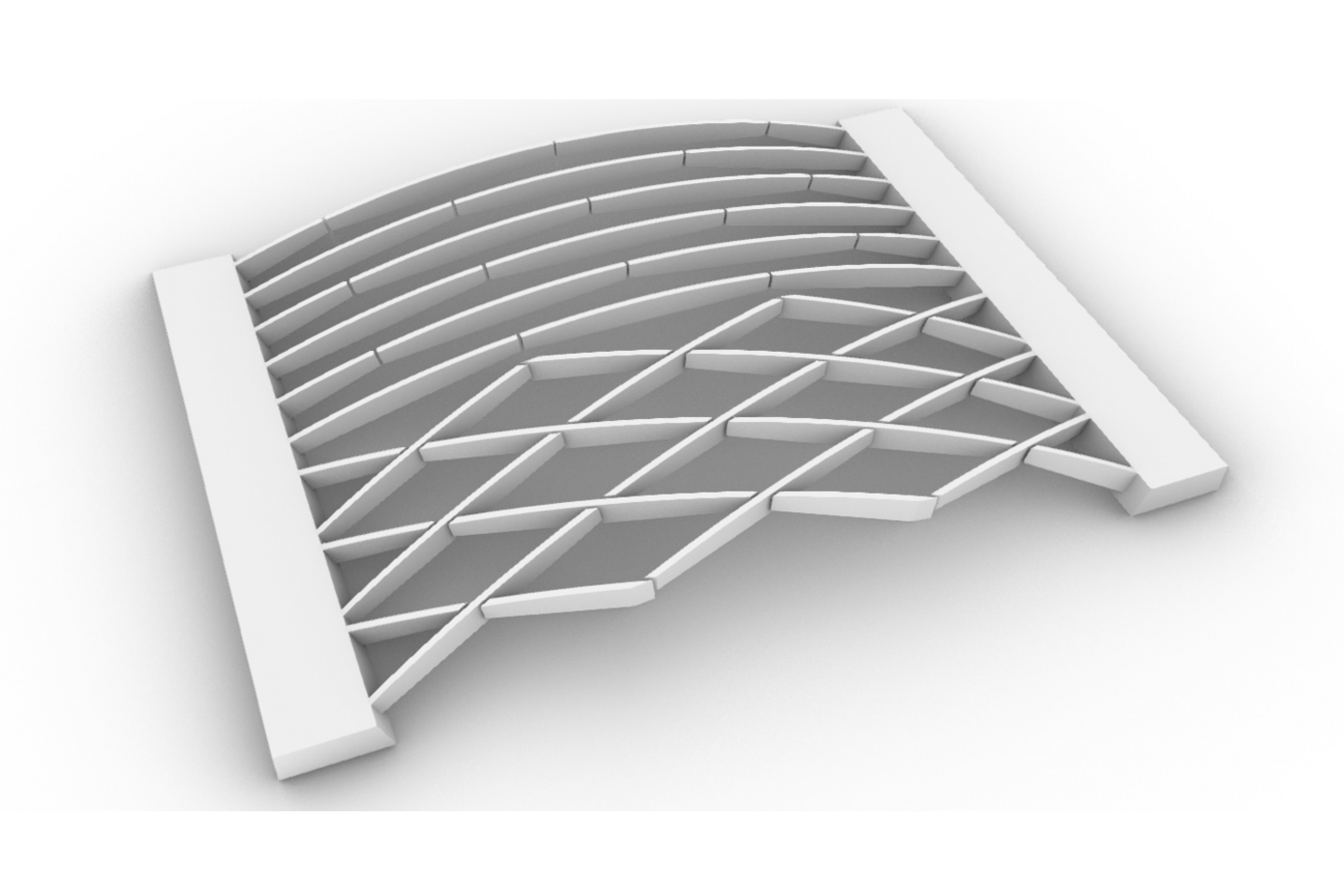
Design variants
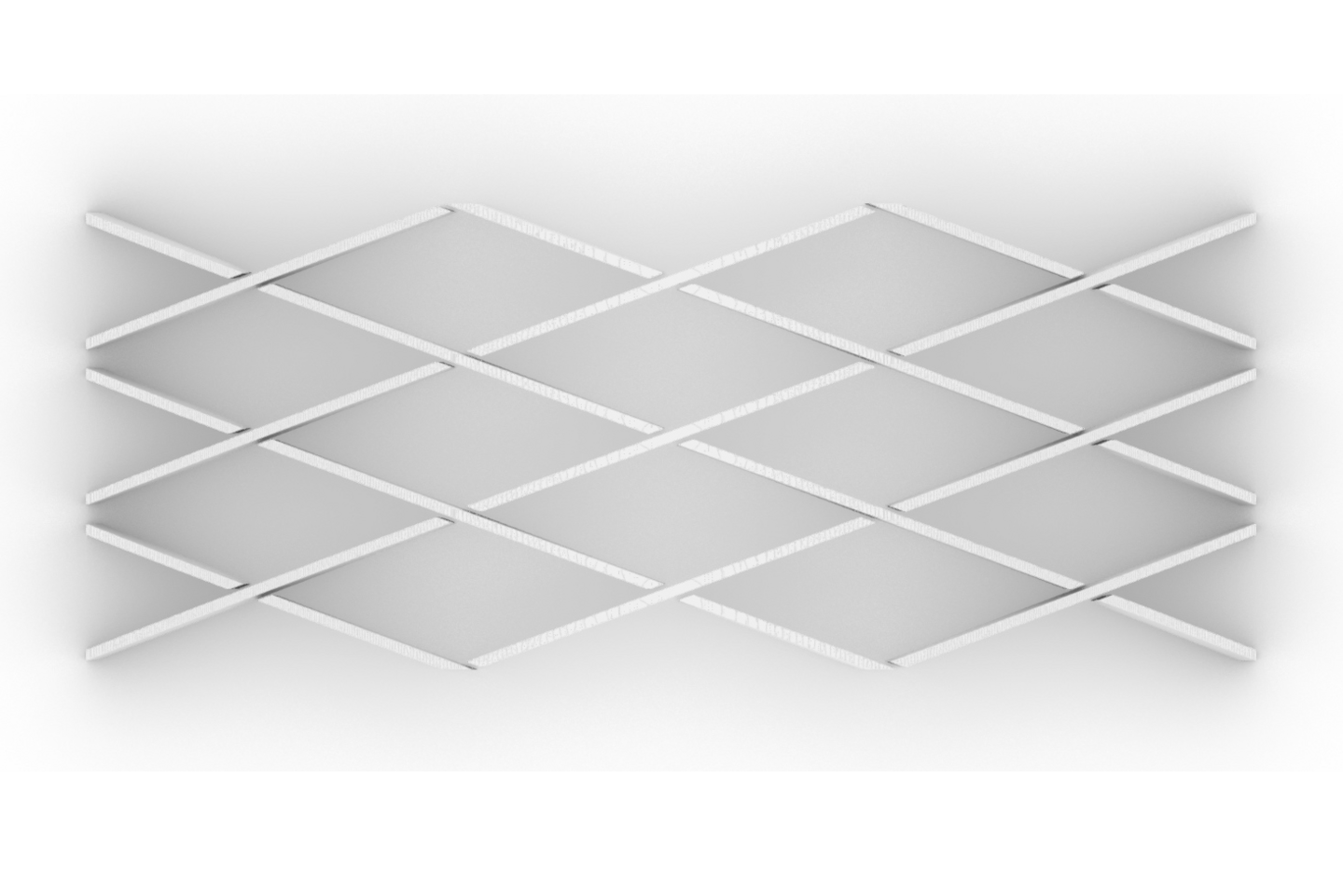
Top view of the slats
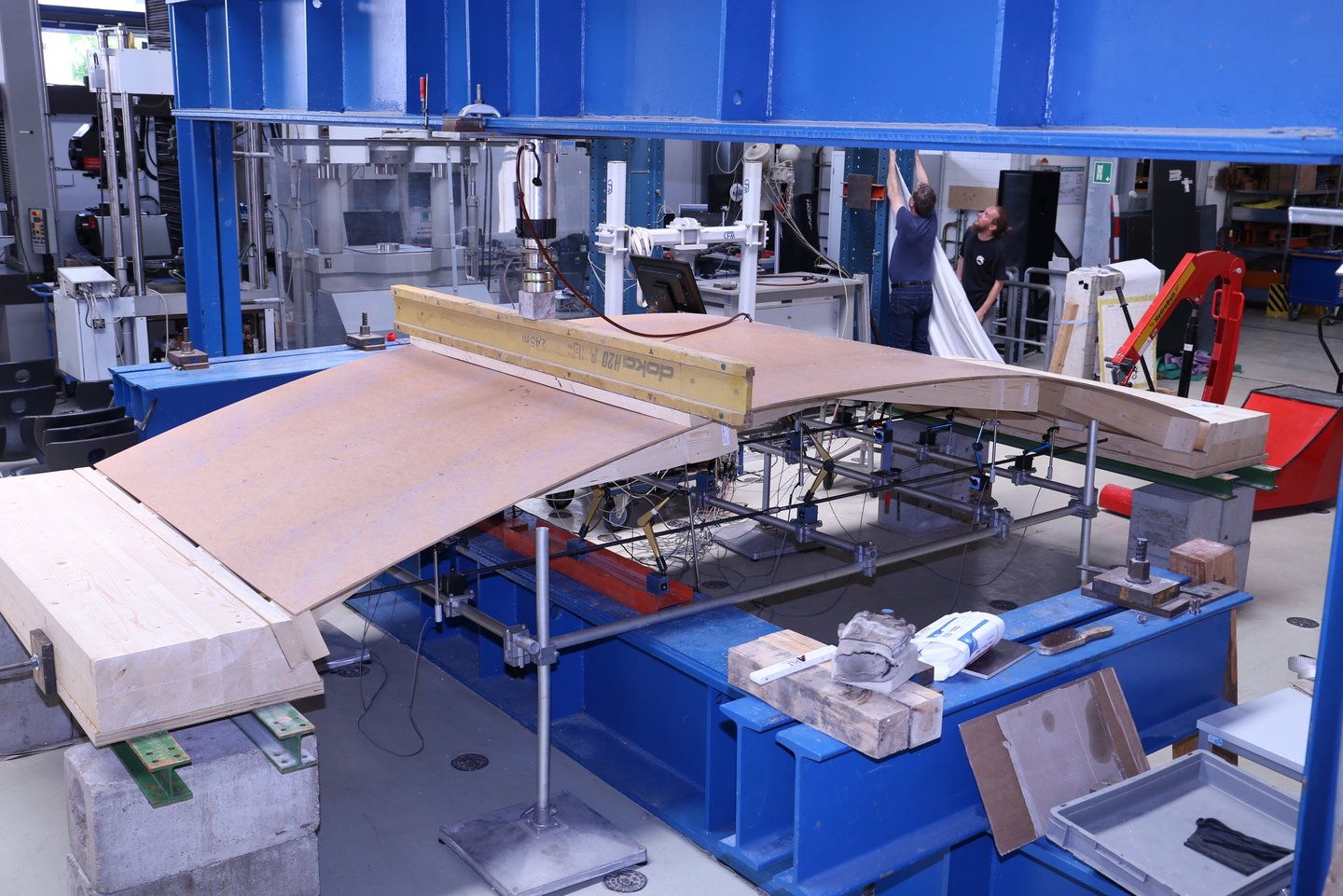
Load test on the roof structure
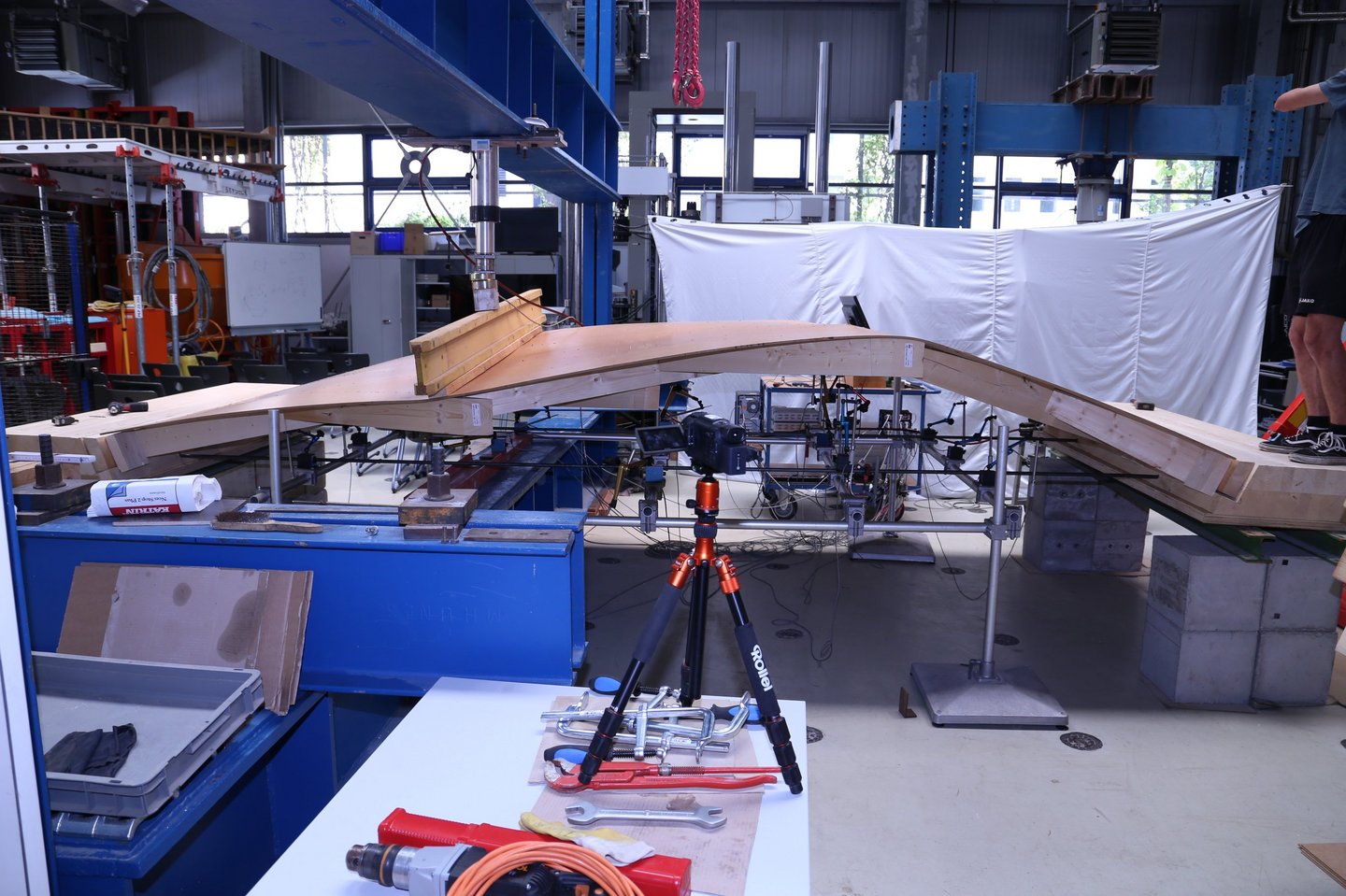
Load test failure
The KLIMA-Dach project (Curved, High-performance, Innovative, Material-efficient, Adaptable) takes the board-ribbed roof (‘Zollinger roof’), patented by Friedrich Zollinger in 1921, to the next stage of its evolution (see Figs. 1 and 2). Building on the findings of the FLEX research group (ReFlexRoof, TimberPlan+), it optimises the roof system in line with contemporary standards and develops a concept that offers a climate-friendly alternative to steel and reinforced concrete structures. Its overarching aim is to make the construction industry more sustainable and construction processes more cost-effective.
The roof structure, made from the renewable raw material wood, sequesters CO₂from the atmosphere, uses up to 30 per cent less material than roofs of the same size made from glued-laminated timber trusses, and can be prefabricated in modular sections; this, combined with its favourable weight-to-strength ratio, leads to cost and emissions savings during transport. The optimised orientation of the slats also allows for the installation of insulation materials without any off-cuts.
Seamless slats, which compensate for material-related dimensional variations, and their optimised alignment significantly reduce the complexity of the structure. Large-format wood-based panels ensure the structural integrity. The resulting ease of specification and calculation using CAD tools, which provide data for numerical joinery, facilitates adoption in production facilities and opens up an attractive market segment for small and medium-sized enterprises.
Both the simplification and the digitalisation of processes ensure increased cost-effectiveness and thus greater appeal. Building materials can be saved, production volume and speed increased, and manufacturing and assembly processes simplified and accelerated.
Keywords: Zollinger roof, material efficiency, digital prefabrication, shell construction