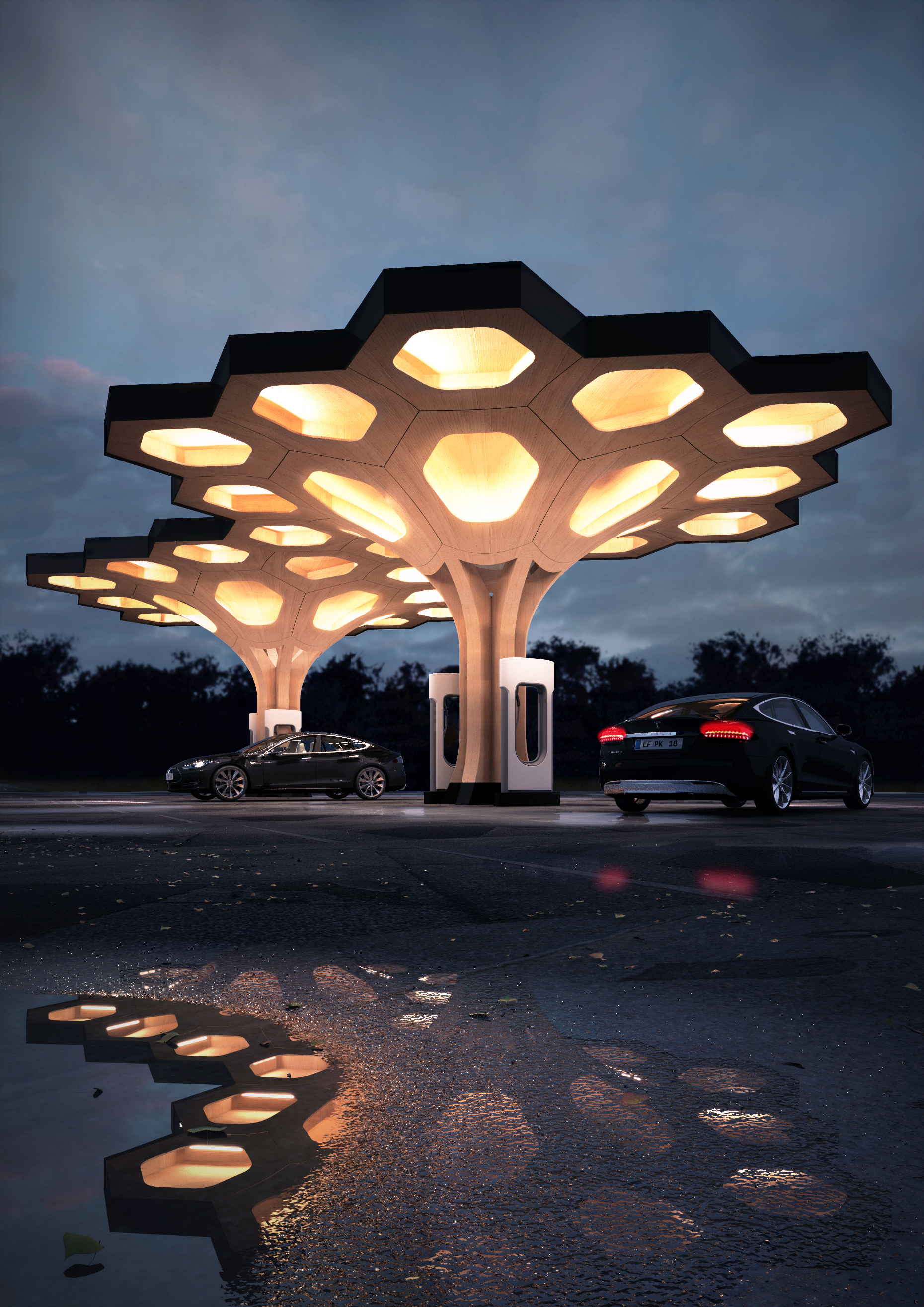

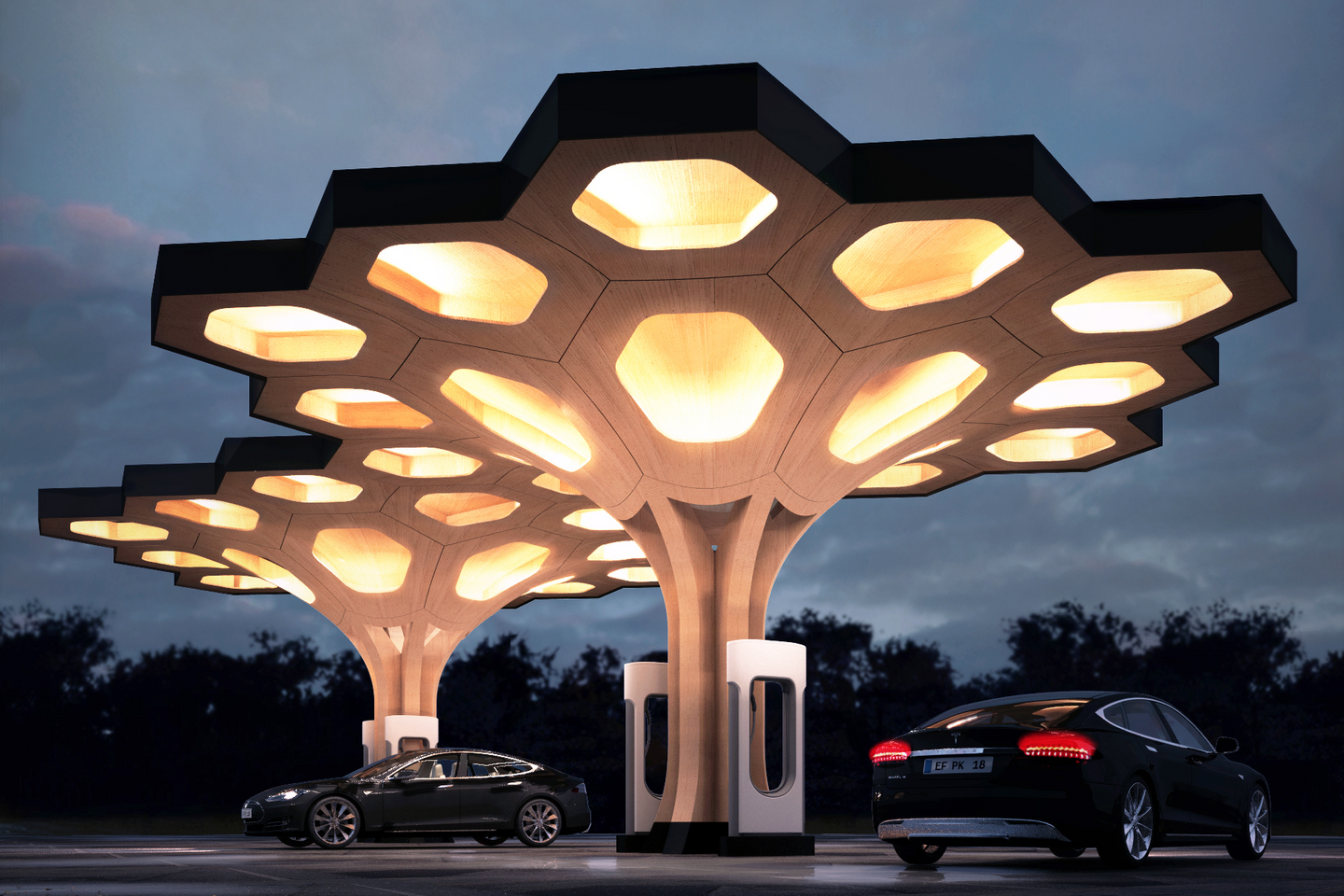
eHIVE Perspective © FLEX@HTWK Leipzig
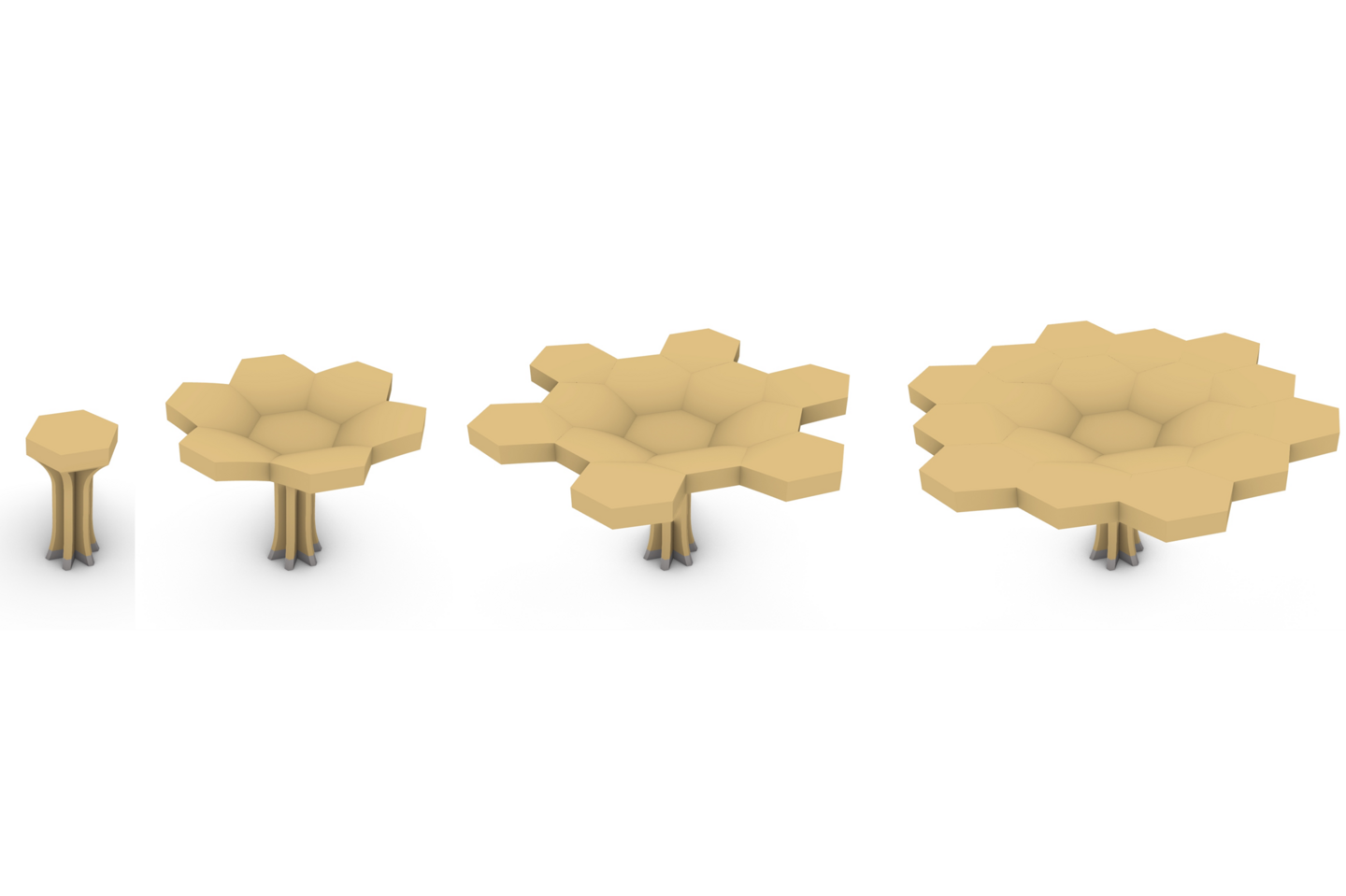
Assembly process © FLEX@HTWK Leipzig
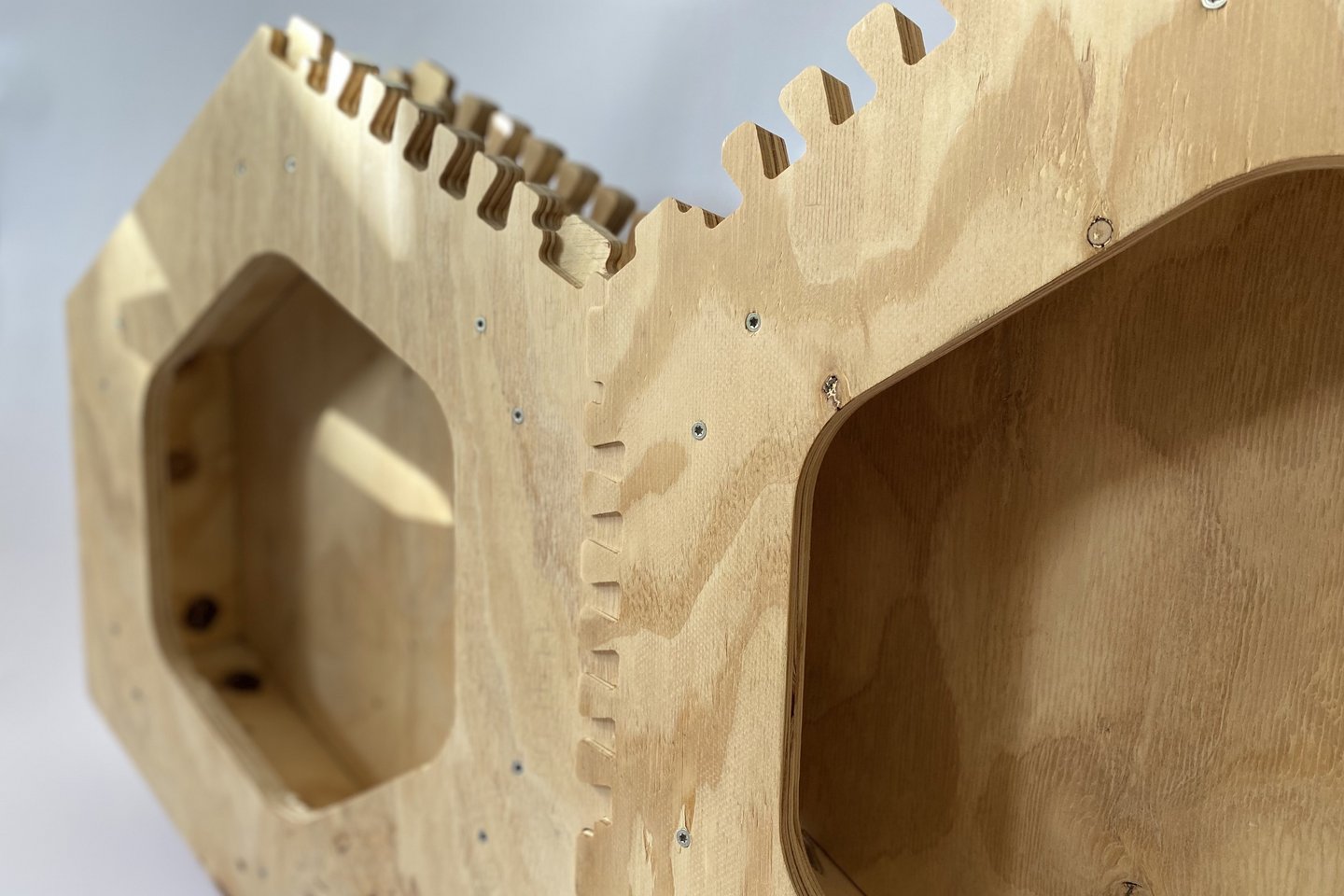
Model of the honeycomb modules © FLEX@HTWK Leipzig
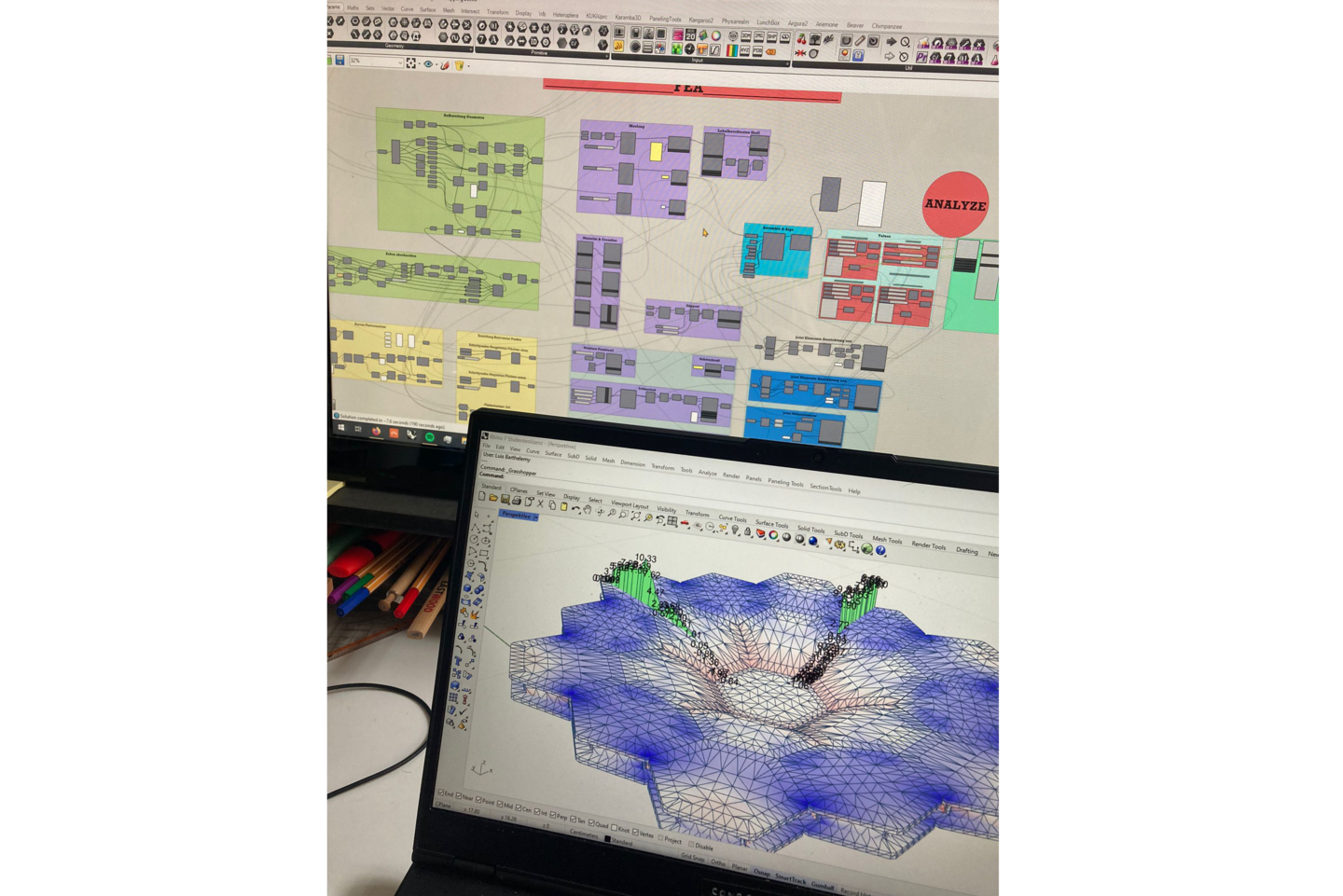
Workflow © FLEX@HTWK Leipzig
The eHIVE design and research project is dedicated to developing innovative, modular electric vehicle charging stations of the future, which, as decentralised and adaptive mobility hubs, are made entirely of wood. Given the pressing societal need to fundamentally rethink construction, the project faces the challenge of realising the transition to a genuine circular economy in the construction sector, both conceptually and in practice. Traditional petrol station and charging infrastructures often fail to meet today’s requirements for resource efficiency, flexibility and sustainability. The primary aim of eHIVE is therefore to combine a contemporary, sophisticated architectural concept with a consistently circular construction concept based on maximised use of timber, which remains fully demountable throughout all life-cycle phases.
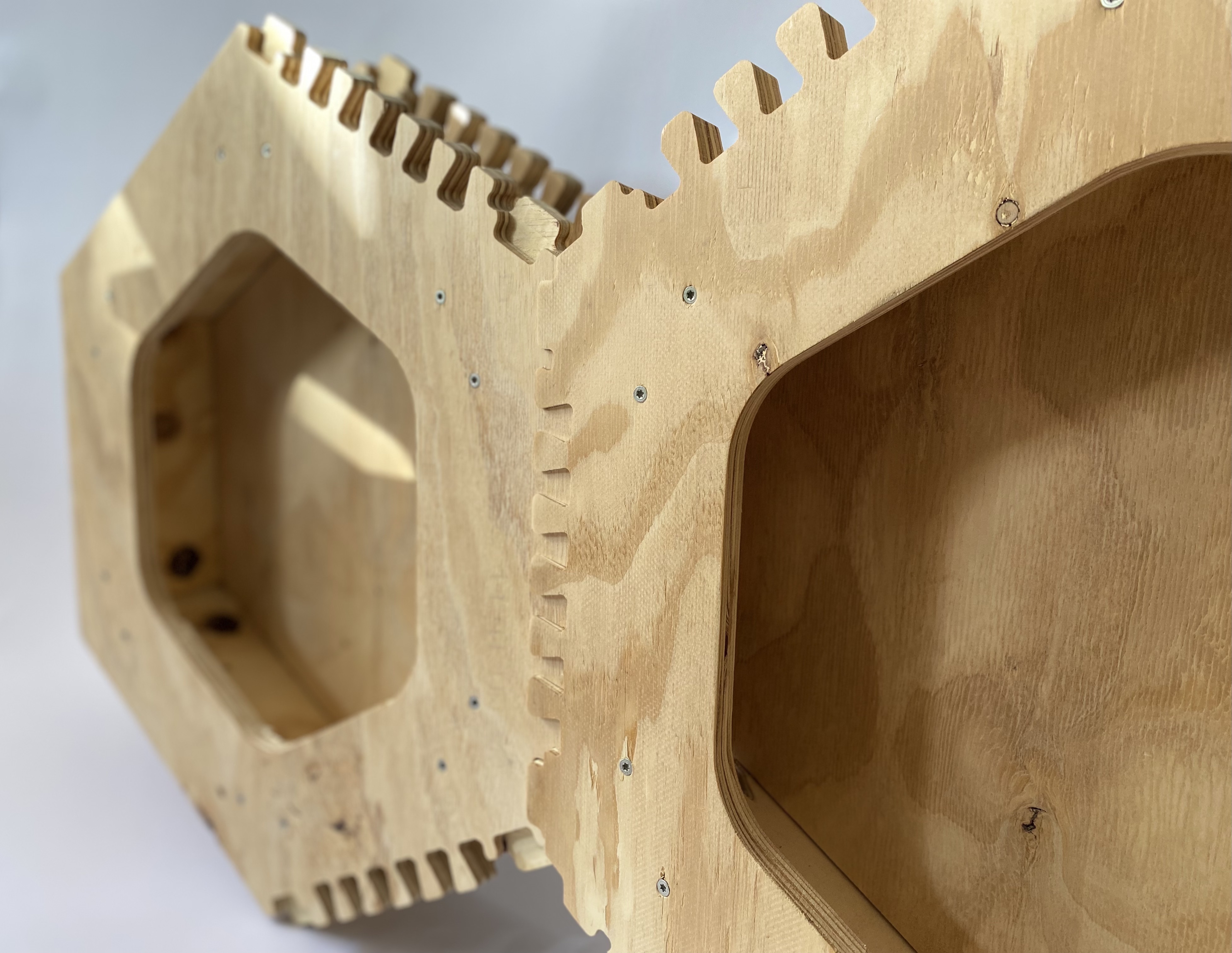
This holistic approach focuses on a modular spatial framework based on a honeycomb arrangement in a hexagonal grid (see Fig. 2). At the heart of the scientific research questions lies the establishment of a fully digital process chain, from parametric design through to robot-assisted manufacturing. The structural focus is on minimising the use of metal fasteners in favour of form-fit, all-timber joints, as well as on the targeted utilisation of curvature effects under the maxim ‘curvature bears the load’, in order to significantly reduce material consumption (see Fig. 3). The methodology is based on fully parameter-controlled 3D modelling (BIM+), which allows the geometries of box elements, columns and connections to be flexibly adjusted and structural analyses to be integrated (see Fig. 4). This data is seamlessly transferred to automated joinery machines and industrial robots, enabling all elements to be prefabricated with precision under workshop conditions.
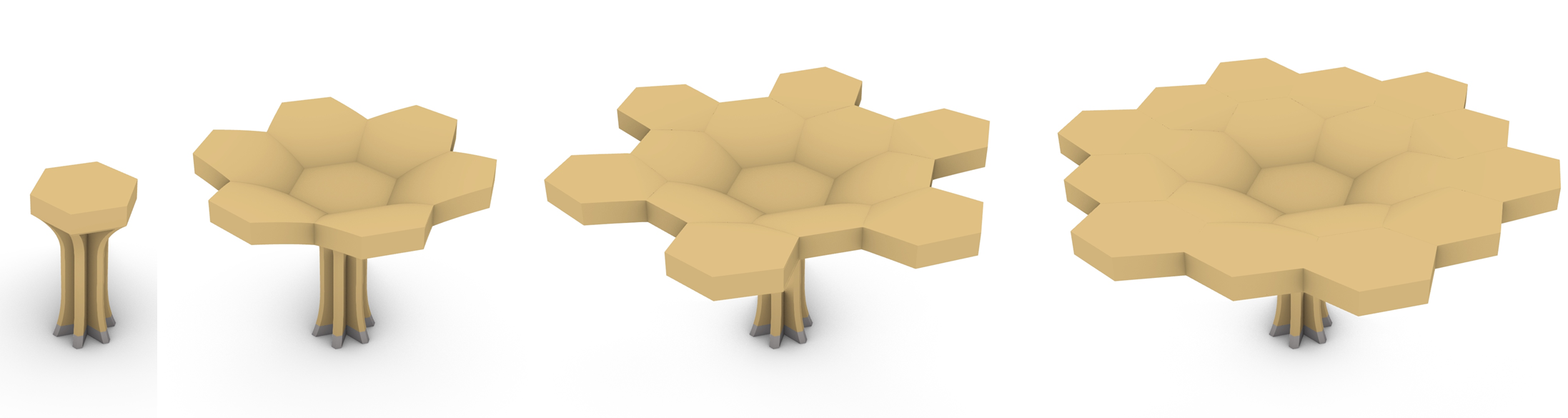
The result is a highly adaptable, scalable system consisting of individual hexagonal panels that can be grouped as desired within the grid to form larger, freely scalable roof landscapes (see Fig. 1). In detail, innovative timber connection solutions such as dowel connectors, conical adaptors and CNC-milled dovetail joints were designed and evaluated, guaranteeing rapid, error-free assembly and non-destructive dismantling. What makes eHIVE unique is its holistic approach, which deliberately goes beyond purely technological aspects. By harmoniously combining ecological circularity, digital fabrication methods and an expressive architectural language, the concept addresses socio-cultural sustainability criteria to the same extent and creates an inspiring aesthetic for the mobility of tomorrow.
Keywords: timber construction, circular economy, parametric design, e-mobility, resource efficiency, modular architecture
Facts
Project Management
Project Management
Implementation
- Markus Schaller
- Christopher Stolle
- Cristoph Dijoux, M.Sc.
- Martin Dembski, M.Sc.
- Luis Barthelemy
Funding body–
Project organiser
–Project
duration10|2021 – 03|2023
Funding reference number–
Fundingamount-