

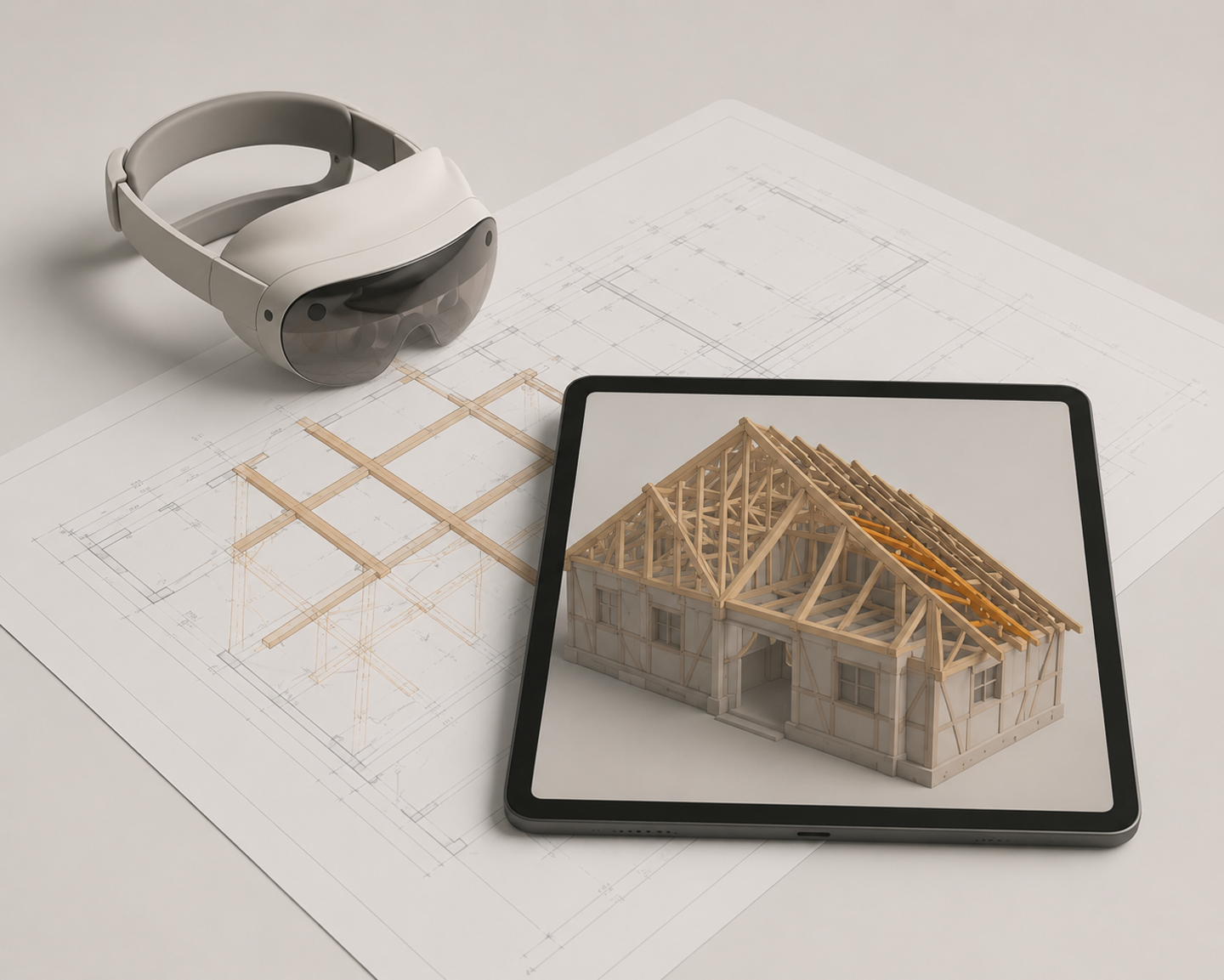
Three-dimensional virtual reality in technical construction planning and renovation works (illustrative image, AI-generated using OpenAI DALL·E, 2026)
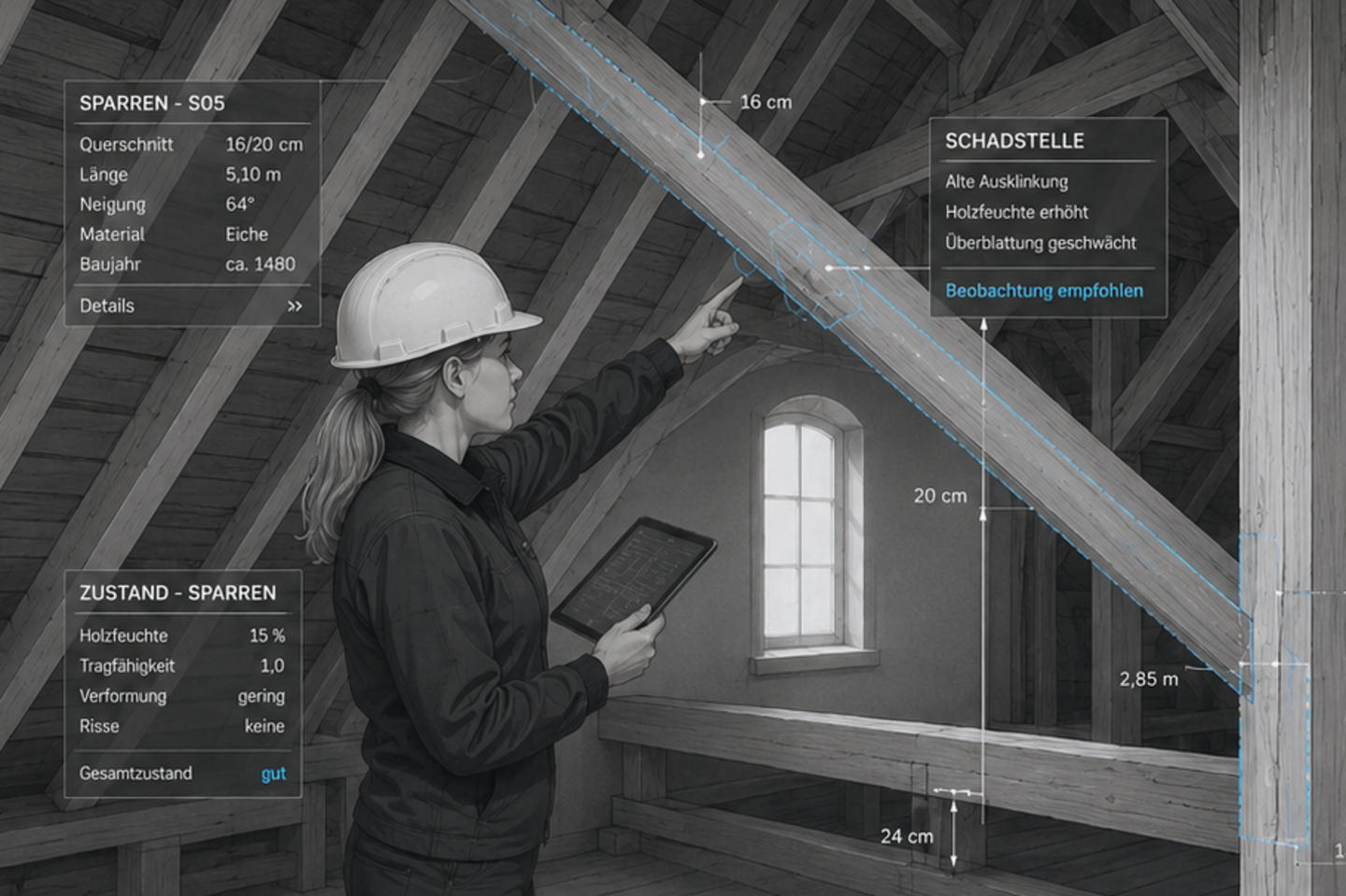
Augmented reality in use (illustrative image, AI-generated using OpenAI DALL·E, 2026)
ARsist is investigating how augmented reality assistance systems can support craftsmanship and planning activities in the conservation of historic buildings and the refurbishment of existing structures. The focus is on historic timber construction: from the survey of existing structures and work preparation, through visual support on site, to the documentation of information within digital project structures. The aim is to develop a transferable methodology and workflow that demonstrates how digital information can be utilised in a context-specific manner on-site at the building component level.
The restoration of historic buildings is characterised by unique geometries, varied material conditions, incomplete existing data and interventions that must be documented. Unlike in new-build projects, these work processes can only be standardised to a limited extent. Planning and execution information is often held separately, whilst findings, damage or deviations must be assessed and processed directly on site. This results in data silos between site surveying, planning, the workshop, the construction site and documentation, which can compromise quality, traceability and resource efficiency.
ARsist addresses this interface between digital planning, craftsmanship and heritage conservation practice. The research is guided by the question of what information can be usefully provided via AR in which work situations, how building components should be uniquely referenced and documented, and which data structures enable subsequent reuse.
Methodologically, the project adopts a scenario-based and practice-oriented approach. In collaboration with craft enterprises, typical workflows, roles, information objects and handover points are analysed. Building on this, prioritised application scenarios, a tool-independent data and documentation model, and exemplary AR reference workflows are developed. The approaches developed are evaluated using selected workshop and site situations and translated into structured scenarios, model and process descriptions, as well as transferable evaluation criteria for AR-supported applications in historic buildings. ARsist thus creates a conceptual foundation for the digital support of heritage conservation processes and strengthens the interoperability between the skilled trades, planning, training and further research in the field of digital building renovation.
Keywords: Augmented Reality, heritage conservation, building renovation, timber construction, digital stock survey, modular workflow system